In modern high-rise building construction and large-scale infrastructure projects, vertical transportation safety demands a highly controlled, stringent safety system and relies on daily hazard checks and regular maintenance.
This comprehensive guide details the critical safety protocols, safety features, and site controls necessary to protect workers, minimize risks, and ensure safe lifting operations throughout the service life of the hoist equipment.
Match the Construction Hoist to Uses and Rated Capacity
Separate Material Hoists From Personnel Hoists
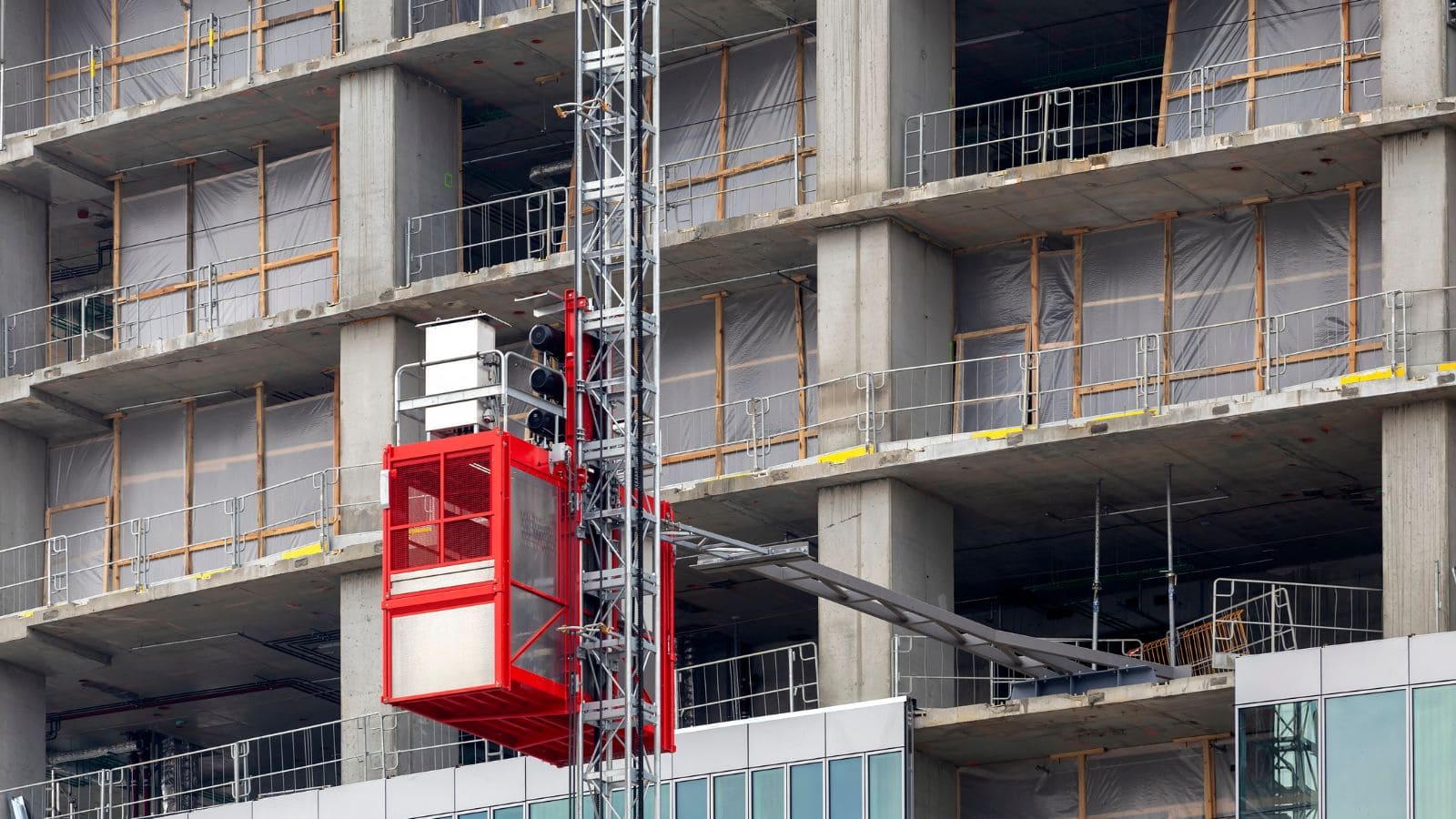
Material hoists, personnel hoists (often called construction elevators), and permanently installed building elevators carry entirely different safety standards, load capacities, and regulatory requirements.
| Hoist Category | Intended Purpose | Critical Safety Restrictions |
|---|---|---|
| Material Hoists | Moving tools, formwork, scaffolding, and bulk building supplies. | NO RIDERS ALLOWED. The hoist cage is strictly for cargo. It lacks the redundant safety devices required to protect construction workers. |
| Personnel Hoists | Safe vertical transportation for workers alongside their personal tools. | Built and tested explicitly for riders. Includes mandatory anti-fall safety mechanisms, emergency brakes, and reinforced cage strength. |
| Permanent Elevators | Designed strictly for post-construction passenger use. | NEVER use as a substitute for a heavy-duty construction hoist during the active building phase to avoid severe mechanical damage. |
Adhere Strictly to Load Capacities and Operating Speeds
Ignoring the rated load is a primary cause of mechanical failure. Always verify the rated load capacities, hoist cage dimensions, and maximum occupant counts listed on the machine’s manufacturer data plate before beginning any loading and unloading operations.
Modern hoists are equipped with overload protection devices that automatically cut power to the drive motor if the weight exceeds safe limits. However, relying solely on this electronic backup is a dangerous practice.
Site supervisors must proactively calculate loads, factoring in the weight of pallets, carts, and personnel, as well as the even weight distribution within the hoist cage to prevent unequal stress.
Control Site Hazards Before the Lift
Continuous monitoring of the environment around the equipment is also important. Operators and site managers must conduct daily site hazard checks before initiating the lift:
- Weather and Wind Limitations: High-rise construction sites are highly susceptible to wind shear. Advanced construction hoists now feature microcomputer wind speed monitoring systems. These systems provide real-time data to the operator’s cabin and automatically trigger alarms if wind speeds exceed safe operational limits (typically around 15-20 m/s).
- Ground and Base Stability: Inspect the concrete foundation pad and base frame. Look for pooling water, soil settlement, or cracking. A compromised base will immediately shift the alignment of the entire hoist tower, creating dangerous friction and stress on the mast.
- Site Clearance and Barricades: Ensure robust hazard warnings, exclusion zones, and physical barricades are intact around the ground-level landing. Ground workers must be kept entirely clear of the hoist’s travel path and counterweight drop zones.
- Crew Alignment and Communication: Establish crystal-clear communication protocols. Instead of relying purely on hand signals, modern sites should utilize integrated wireless paging systems and controls across all floors to ensure seamless, error-free communication between landing attendants and the operator.
Verify Protective Systems and Anti-Fall Safety Devices
A construction hoist is equipped with numerous redundant safety devices designed to protect workers in case of a primary mechanical failure. These systems must be physically tested daily.
Inspect Locking Mechanisms and Enclosures
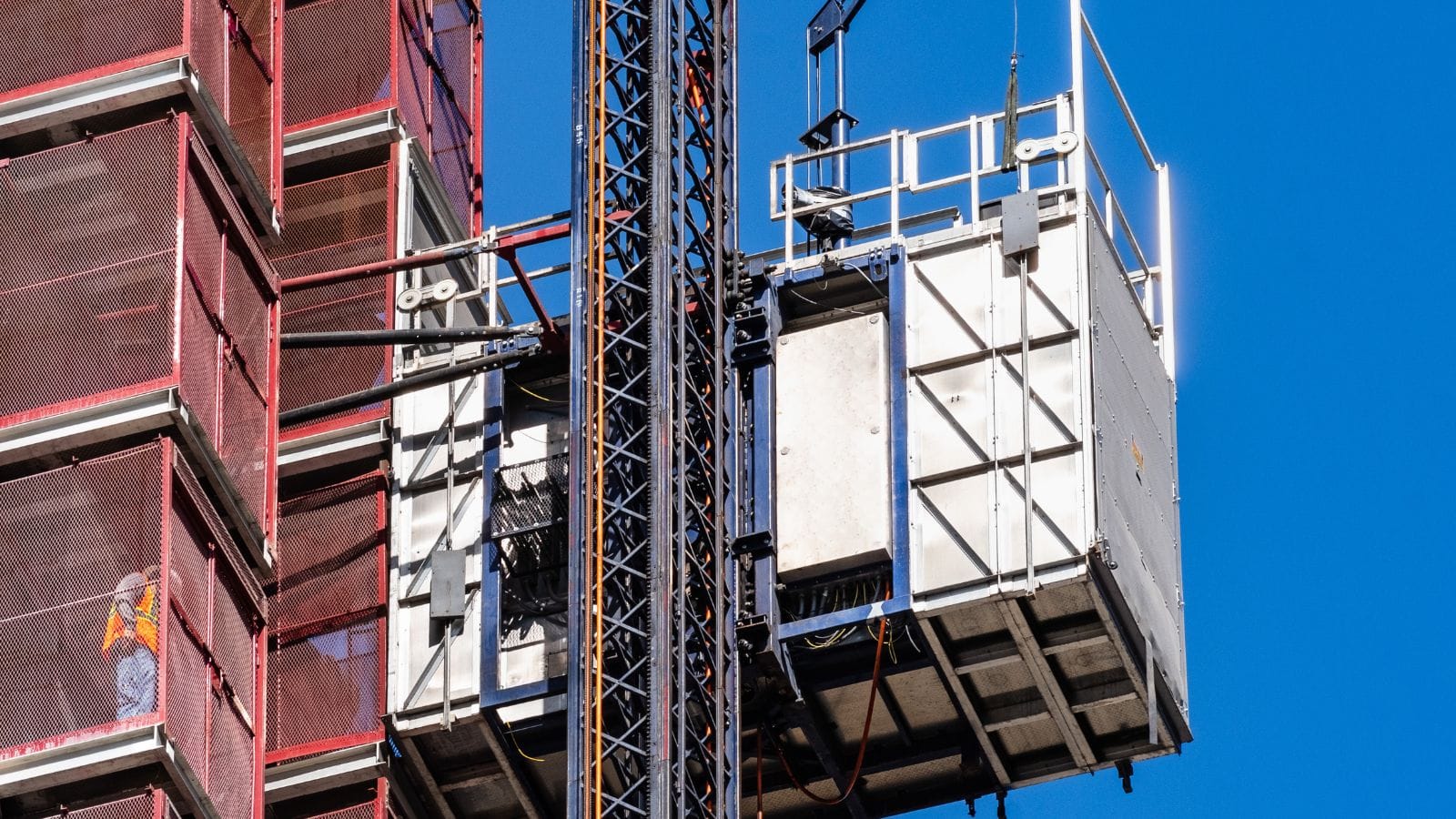
Physical barriers and smart locks prevent workers from accidentally stepping into an open hoistway.
- Door Interlocks: Verify that locking mechanisms prevent the hoist cage from moving if any door is open. Likewise, landing doors must not open unless the cage is perfectly aligned at that floor.
- Cage Integrity: Ensure the platform enclosure is intact. The wire mesh must be tight enough to prevent tools from falling out, and the overhead canopy must be robust enough to shield riders from falling debris.
Test Limit Switches and Emergency Brakes
These components act as the equipment’s spatial awareness and immediate response system.
- Limit Switches: Test the upper and lower terminal stopping devices. These ensure the cage automatically halts before over-traveling past its designed vertical limits.
- Emergency Stops: Manually verify the emergency stop buttons. In the event of power loss or safety trigger, the system relies on electromagnetic brakes. These must engage instantly to lock the cage in place and prevent any downward slipping.
Verify the Anti-Fall Device
The single most critical safety component on a passenger hoist is the anti-fall device, most commonly utilizing an overspeed safety governor.
If the primary braking system fails, this is how the anti-fall safety unit protects construction workers:
- Detection: The device actively monitors the cage’s downward acceleration.
- Activation: Once the descent crosses a specific manufacturer-set tripping speed, the mechanism triggers.
- Controlled Stop: It smoothly but forcefully grips the mast guide rails, halting the fully loaded cage and preventing a catastrophic free-fall.
This unit must be calibrated, drop-tested, and certified by authorized technicians strictly according to the manufacturer’s mandated schedule.
Inspection of Structural, Rope, and Mechanical Components
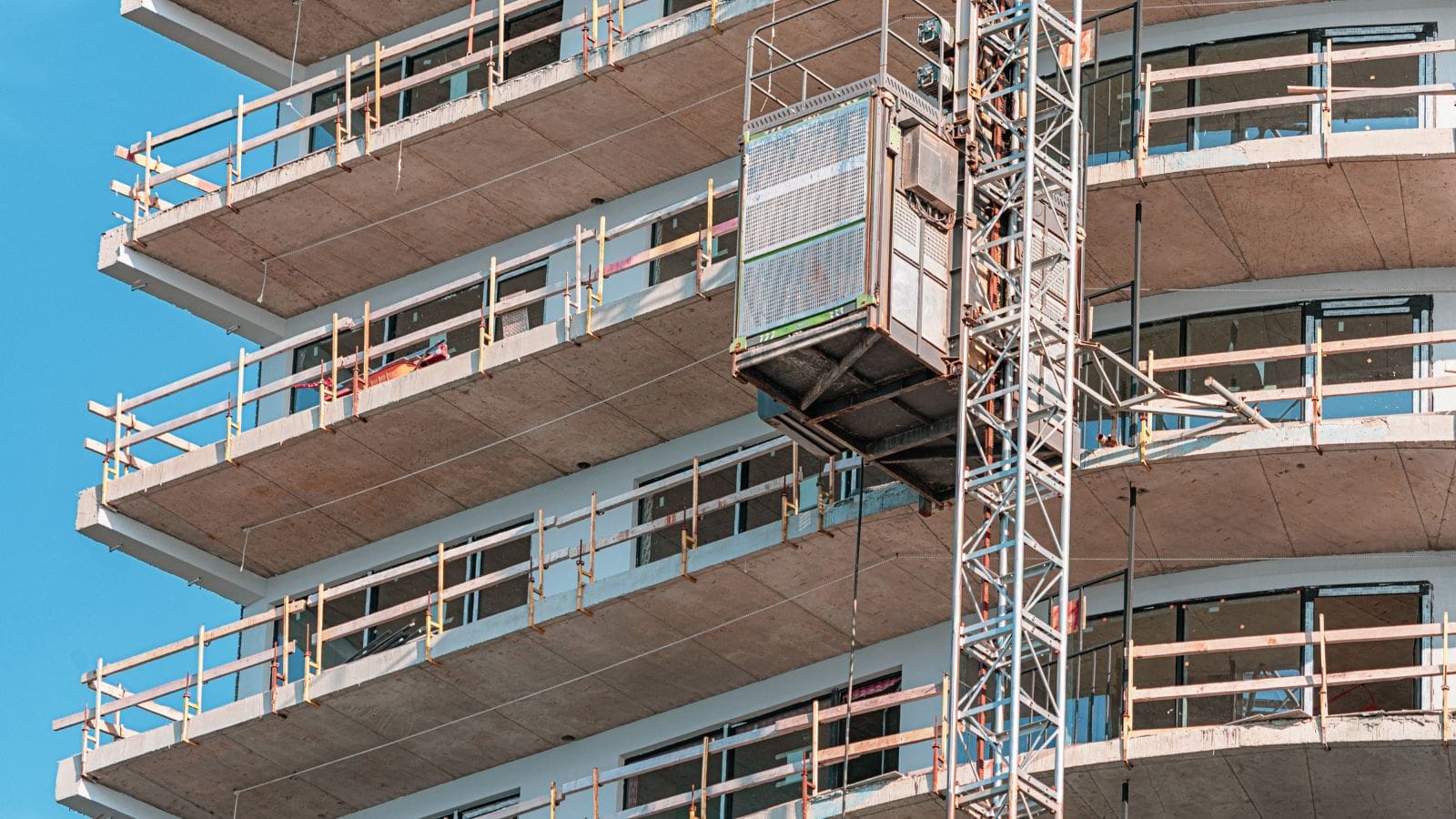
Preventative maintenance is the cornerstone of operational safety, so safety inspectors and site managers should perform regular inspections focusing on these three core areas:
1. Masts, Guide Rails, and Torque Specifications
- Visual Inspection: Check the galvanized mast sections, guide rails, and structural tie-ins daily for signs of corrosion, metal fatigue, or cracked welds.
- Torque Checks: Because construction elevators endure immense vibration, bolted connections inevitably loosen. Technicians must strictly enforce torque specifications, integrating calibrated tightening into all regular maintenance routines, not just during initial erection.
2. Wire Rope Inspection and Removal Criteria
For wire rope suspended hoists, the integrity of the steel cables is paramount.
- Identify Wear: Conduct full-length visual inspections, searching meticulously for broken wires, bird caging (strand separation), kinks, crushing, or core degradation.
- Enforce Limits: Safety rules regarding wire rope are absolute. Once a rope reaches the manufacturer’s maximum allowed broken wires per lay length, it must be permanently removed from service immediately. Never delay this until a “convenient” maintenance window.
3. Drive Systems and Preventative Monitoring
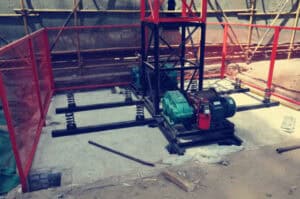
- Mechanical Warning Signs: Monitor the electric or hydraulic hoists’ drive motors. Unusual grinding noises, excessive heat generation, or a delayed engagement of the braking system are clear precursors to mechanical failure.
- Electrical Hazards: Inspect all electrical cables running along the hoist tower for chafing, exposed wires, or moisture intrusion to prevent electrical fires.
Engineered Installation and Stringent Regulatory Compliance
Correct Installation and Commissioning Steps
A hoist is only as safe as its installation. This highly technical process requires strict oversight:
- Engineering Approval: Before erection begins, a licensed professional engineer must approve the foundation design and the tie-in plan, ensuring anchor forces do not exceed the high-rise building’s structural capacity.
- Erection: Installers must follow the approved schematics, ensuring the hoist tower is perfectly plumb to prevent uneven roller wear.
- Commissioning Tests: Once erected, a competent person must conduct rigorous functional tests. This includes testing the load capacities, drop-testing the anti-fall devices, and verifying all limit switches before the equipment is cleared for use.
Adhering to Global Safety Standards
Site managers must navigate and strictly enforce applicable safety regulations based on their project’s specific jurisdiction to ensure compliance and proper safety:
- North America (OSHA & ANSI): In the United States, operations must adhere to the Occupational Safety and Health Administration (OSHA) 1926 Subpart N standards, supplemented by the American National Standard (ANSI/ASSP A10.4) which provides the industry baseline for inspection and testing.
- European Union (EN Standards): Projects within the EU (and many countries that adopt its frameworks) must comply with EN 12159, the rigorous European standard for builders’ hoists for persons and materials. This ensures all equipment meets strict CE certification requirements for interlocking systems and anti-fall devices.
- United Kingdom (LOLER & BS): UK construction sites operate under LOLER (Lifting Operations and Lifting Equipment Regulations) and BS EN 12159, which mandate legally binding “thorough examination” schedules by competent persons.
- Australia (AS Standards): In Australia, vertical transportation equipment must meet the stringent design and operational safety rules outlined in AS 1418.7 (Cranes, hoists and winches – Builders’ hoists).
- International Equivalents: Many other regions utilize ISO frameworks or local equivalents (such as GB standards in China). Always consult a local licensed engineer to verify the exact regulatory framework that governs your specific job site before erection begins.
Put Safety Standards into Practice: The IHURMO SC Series
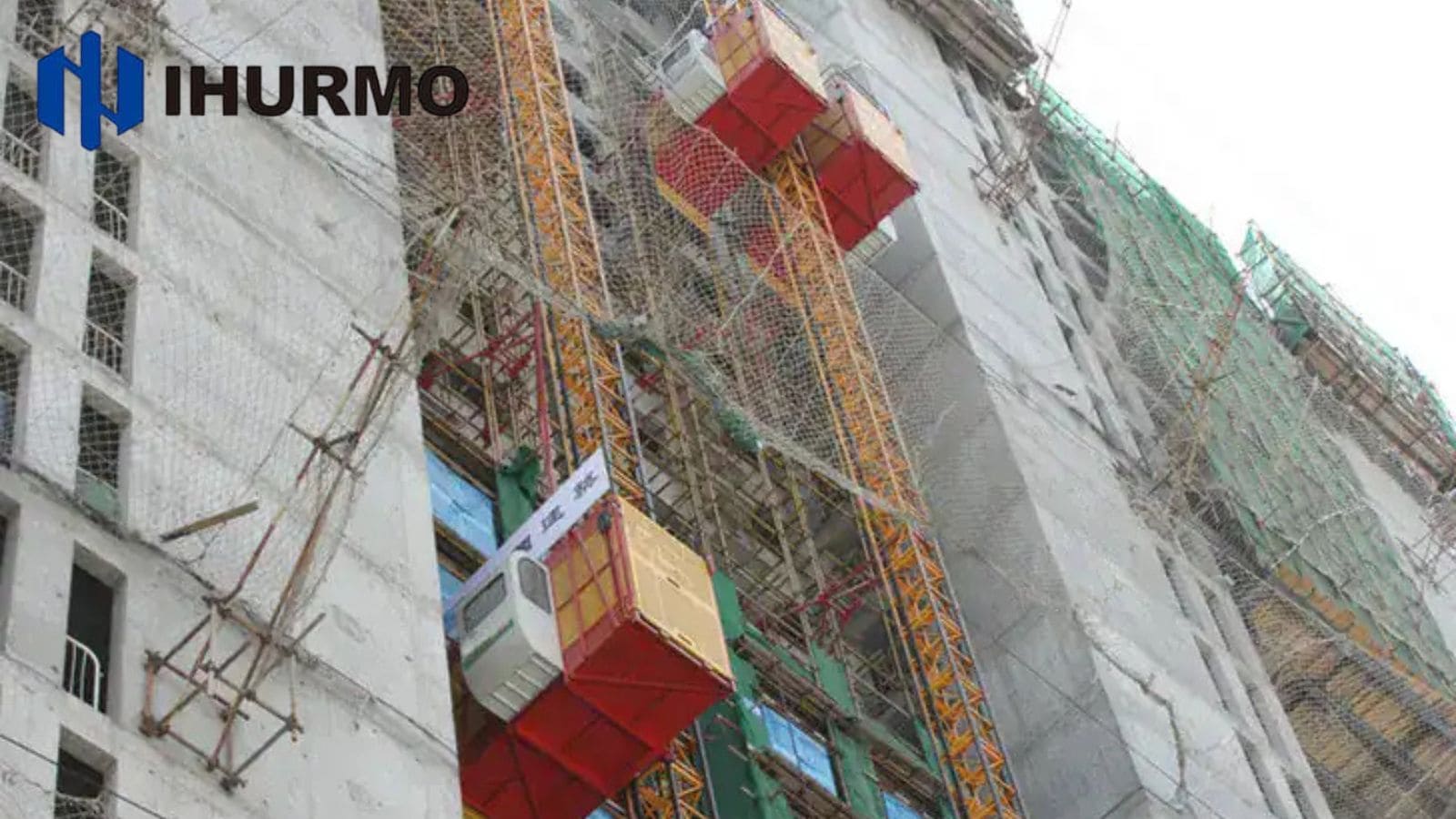
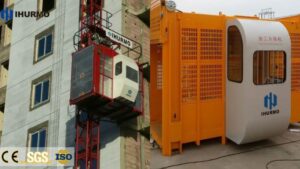
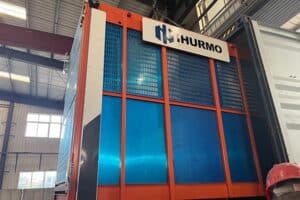
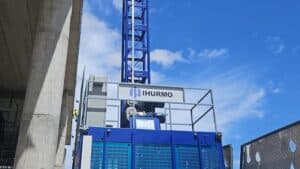
Theoretical safety controls require reliable hardware to function. If you are looking for vertical transportation that strictly adheres to CE, ISO, and GOST standards, the IHURMO SC Series Construction Hoists (such as the SC100/100 and SC200/200) serve as perfect industry benchmarks.
Engineered for load capacities ranging from 1 to 3 tons and lifting speeds up to 36m/min, these hoists don’t just meet basic safety requirements—they exceed them. They come standard with:
- Advanced VFD (Variable Frequency Drive) for shock-free operation.
- Microcomputer wind speed monitoring and wireless paging systems.
- Core electrical components from trusted global leaders like Siemens and Schneider, guaranteeing low failure rates in harsh environments.
- Robust overspeed safety governors and electromagnetic brakes.
Ready to upgrade your high-rise site safety? Contact our global sales team today to discuss your project requirements, or browse our product page and discover why leading builders trust IHURMO for their construction hoist needs.
Frequently Asked Questions
How long is the service life of a construction hoist’s anti-fall safety device?
Even with proper maintenance, safety gears have a strict legal expiration date. According to most international standards (including CE and GB), the anti-fall safety device must be completely replaced (not just repaired) every 5 years from its manufacturing date, regardless of its usage frequency. It also requires a formal drop-test every 3 to 6 months by certified technicians.
What specific checks are required after a severe weather event or storm?
While operations must halt when wind speeds exceed 15-18 m/s, the post-storm inspection is equally critical. Before restarting the hoist, technicians must inspect the mast tie-ins for structural shifting, check the foundation for waterlogging or washout, ensure the VFD and electrical panels (even if IP65 rated) have no moisture intrusion, and clear the mast tracks of any wind-blown debris.