Suspended scaffolding is a critical tool for vertical operations on buildings. However, since the platform hangs rather than stands on the ground, the entire system must be equipped with a secure suspension setup and a properly rigged fall arrest system. This guide will break down the safety details you need to keep workers safe once the platform is in the air.
While this guide focuses on practical site safety and daily operations, ensuring strict legal compliance is equally important. For a detailed breakdown of the exact load formulas and legal regulations in the US, review our comprehensive guide on OSHA suspended scaffolding requirements.
How Suspended Scaffold Systems Work
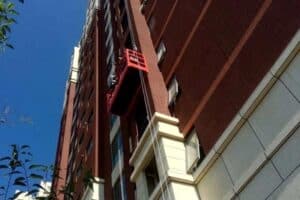
A suspended scaffold hangs from ropes or cables connected to a structure above the work area, rather than resting on the ground like supported scaffolds.
Core Components of a Suspension System
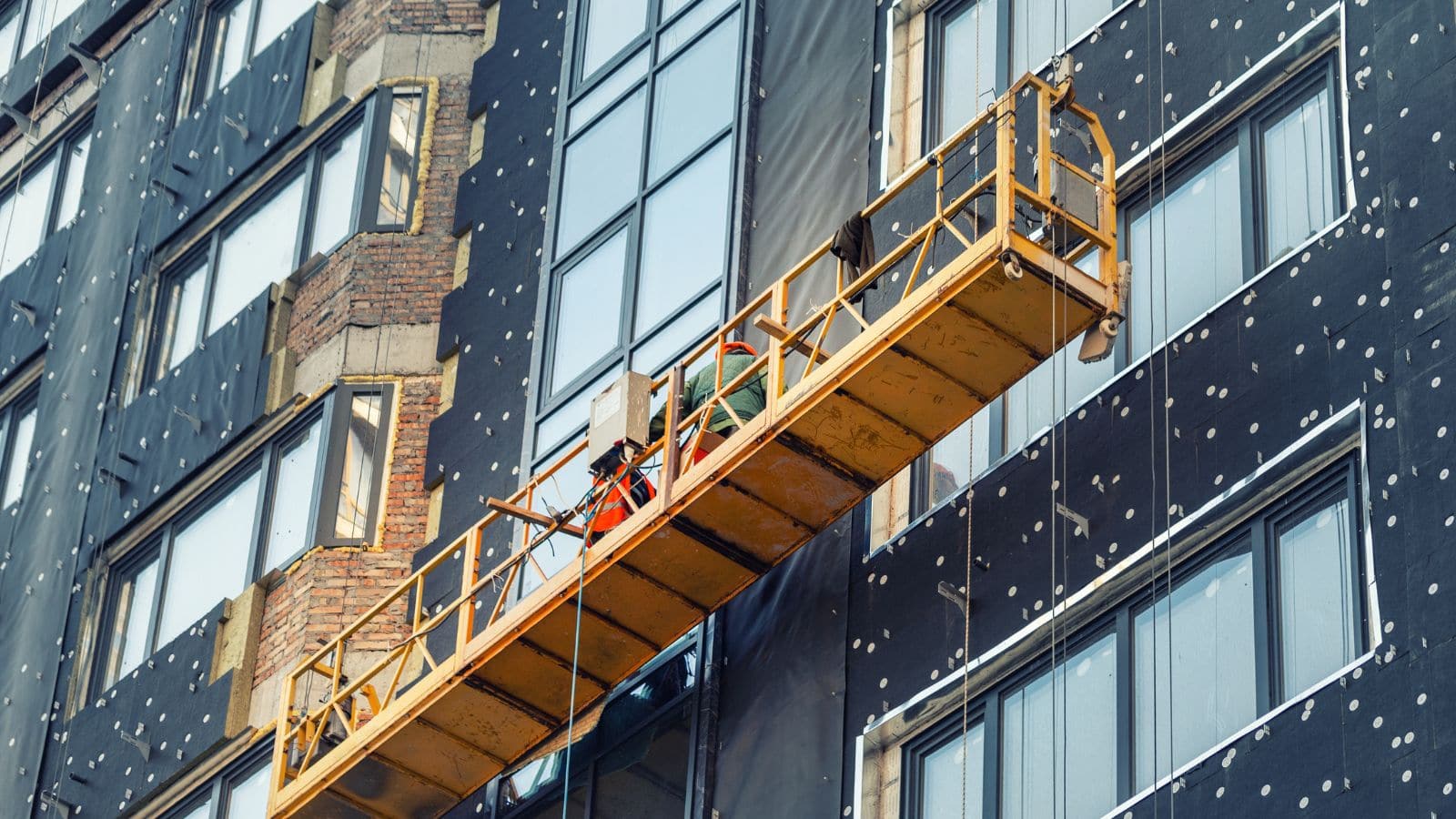
A suspension system typically includes these parts:
- Work platform: the surface where workers stand, often made of aluminum or steel decking
- Suspension ropes or cables: carry the load from the platform to the hoist and anchorage point
- Hoist: raises and lowers the platform, either manually (drum hoists) or with a motorized hoist
- Stirrups and hangers: connect the platform to the suspension ropes
- Rigging: the full set of hardware, including shackles and connectors, that ties the system together
How Platforms Move and Remain Stable
Motorized hoists move the platform up and down at a controlled speed, while manual hoists require the operator to crank the drum by hand. Either way, the ropes must stay taut and free of slack to prevent sudden drops.
Stability depends on level rigging at both ends of the platform. Uneven loading or a single-side hoist failure can tilt the deck, which is why balanced loading and routine rope checks matter as much as the hoist itself.
Choosing the Right Suspended Access Method
Project safety begins with the selection of scaffold platforms, and there are three main factors: your project’s height, the shape of the building, and how frequently you need to access the area. While traditional swing stages are the industry standard for flat, wide facades, restricted spaces or complex architectural designs require different approaches.
Here is a quick breakdown of the most common suspended systems and where they work best:
Engineering, Anchorage, and Load Control
Every suspended scaffold depends on the strength of what it hangs from and the math behind its rated capacity. Anchorage, outrigger placement, and load calculations should be planned extensively before operation.
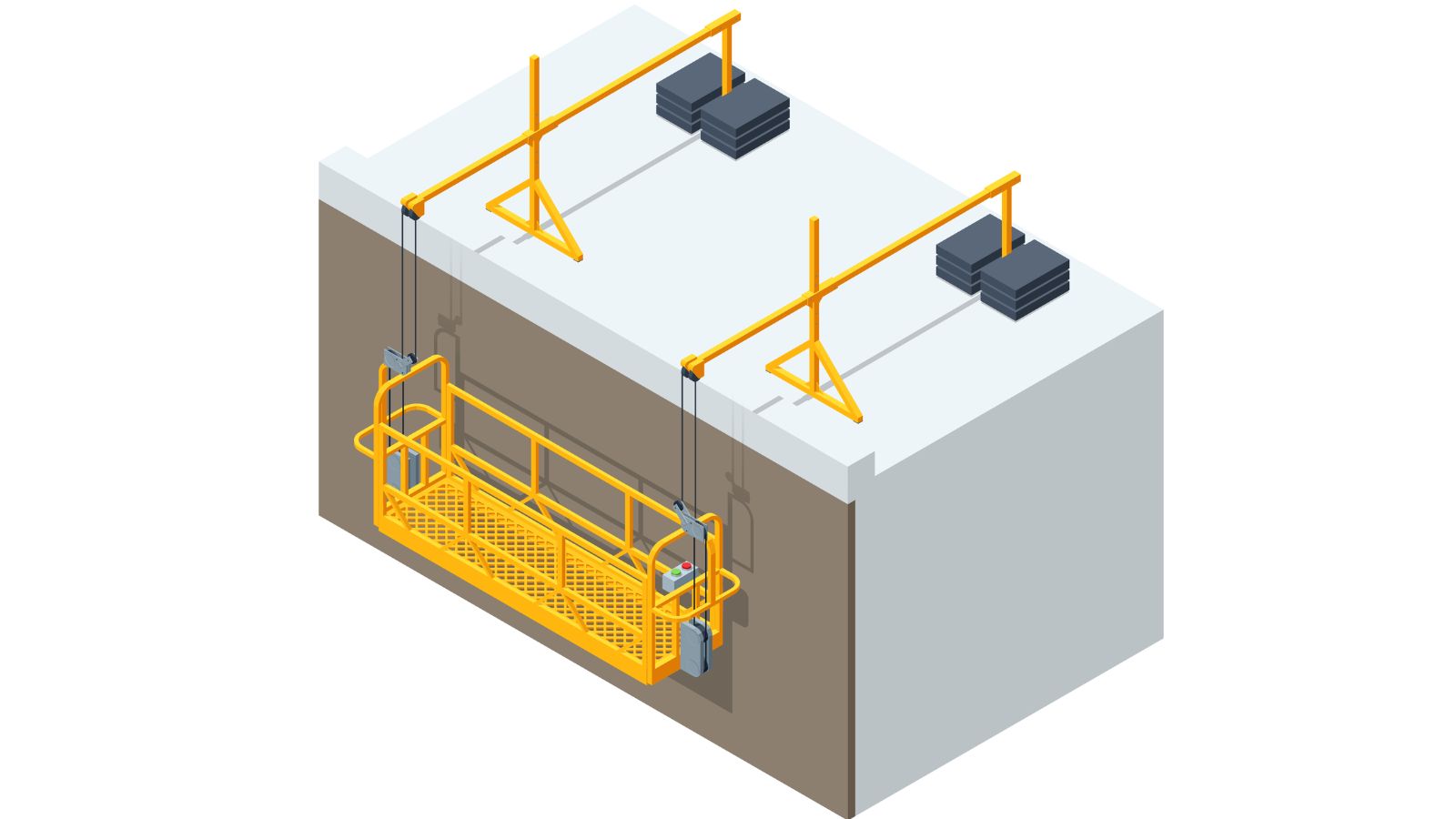
Verifying Overhead Supports and Anchorage
Overhead supports and structural members must be checked before any suspension system is rigged. This includes confirming that the roof, parapet, or beam can carry the combined weight of the platform, hoists, workers, and materials.
Independent anchorage, separate from the suspension rigging, is required for fall arrest lifelines. A qualified person should verify anchorage strength before use, and a professional engineer may need to review the scaffold design for unusual building conditions or heavier loads.
Using Outrigger Beams, Tiebacks, and Counterweights
Outriggers, sometimes called outrigger beams, extend the suspension point beyond the building edge and transfer load back to the roof structure. Tiebacks secure the outrigger against movement, and parapet clamps or shackles connect components at rated capacities.
Counterweights balance the system on the opposite end of the outrigger. They must be secured against movement and never used as a step or work surface, since a shifted counterweight can destabilize the entire rig.
Calculating Maximum Intended Load and Platform Capacity
The maximum intended load includes the weight of workers, tools, materials, and the platform itself. Suspended scaffold components are generally designed to support several times this combined weight, with the exact safety factor set by applicable regulations and manufacturer specifications.
| Load Factor Component | What It Covers in Daily Operations | Safety Precaution |
|---|---|---|
| Worker Weight | Personnel on the platform, including heavy winter gear or PPE. | Never exceed maximum personnel limits stated on the rig. |
| Material Weight | Tools, buckets, supplies, and replacement parts stored on deck. | Distribute weight evenly; do not stack materials on one end. |
| Platform Weight | The physical deck, guardrails, hoists, and rigging hardware. | Ensure the overhead structure supports this plus the live load. |
| Rated Safety Margin | Built-in buffer required by safety codes (often 4x the intended load). | Never use this margin as an excuse to overload the platform. |
Fall Prevention and Worker Protection
Fall protection on a suspended scaffold works on two separate levels: physical barriers on the platform and an independent personal fall arrest system for each worker. Both layers are needed because the suspension system and the fall arrest system are meant to fail independently of each other.
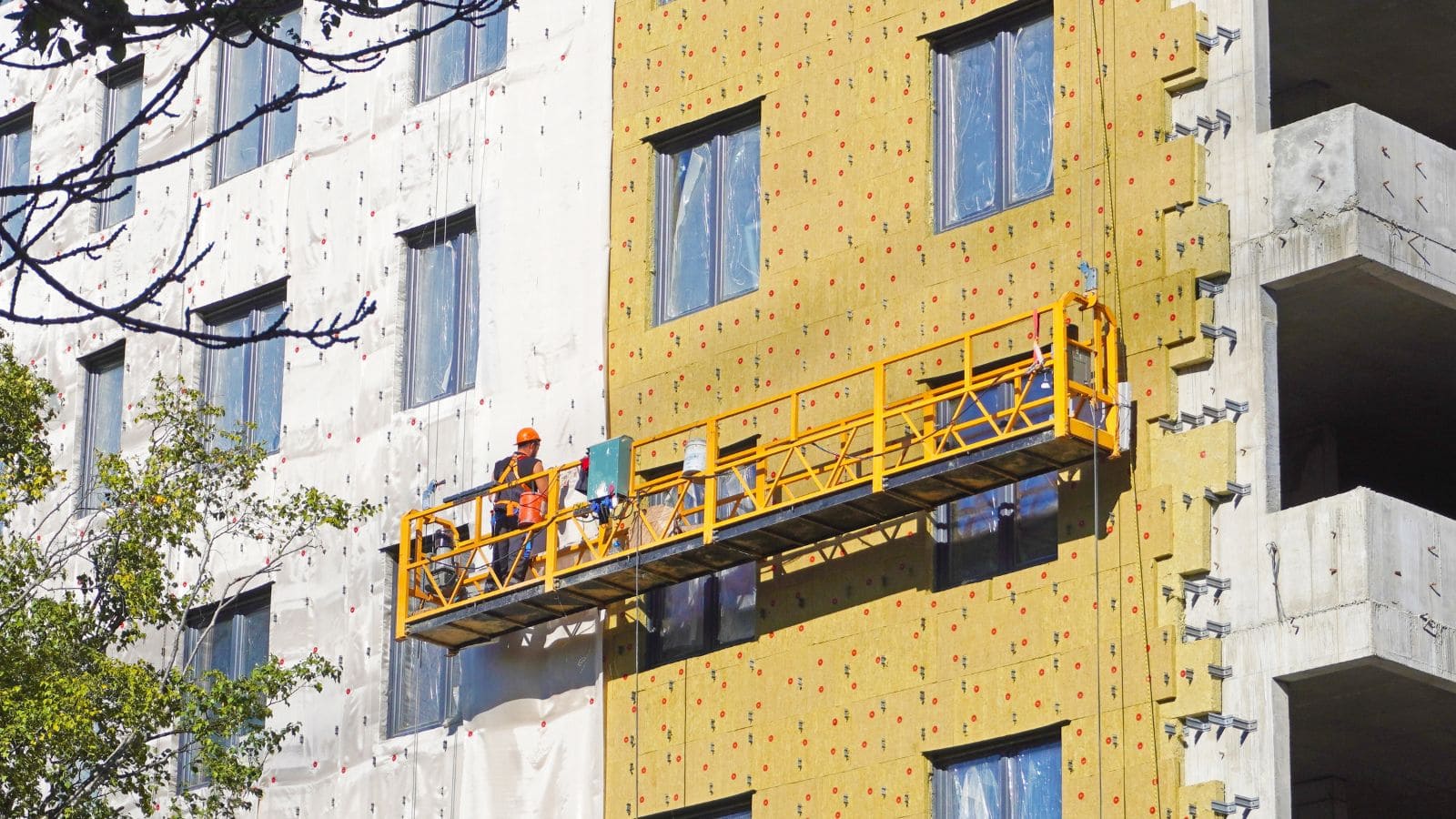
Guardrails, Toeboards, and Falling-Object Controls
Guardrails around the platform edge prevent workers from stepping or falling off the deck. Toeboards along the base stop tools and debris from sliding off and striking workers or pedestrians below.
Falling object protection may also include screens or netting where work happens above active walkways. These physical barriers reduce risk but do not replace personal fall arrest equipment.
Personal Fall Arrest Systems and Independent Lifelines
Each worker on a suspended scaffold should wear a full-body harness connected to a shock-absorbing lanyard. That lanyard attaches to an independent lifeline anchored separately from the scaffold’s suspension ropes.
This separation is critical: if the scaffold structure fails, fall protection MUST remain attached to the building, not the falling platform. Attaching a lanyard to the scaffold’s own rigging is a fatal error and explicitly violates safety standards.
Emergency Rescue and Suspension Trauma
Stopping a fall is only the first step. Once a personal fall arrest system catches a worker, they are at risk of suspension trauma (blood pooling in the legs), which can become fatal in a matter of minutes.
- The 15-Minute Rule: Site supervisors must have a prompt rescue plan in place to retrieve a suspended worker within 15 minutes.
- Relief Straps: Workers should be equipped with suspension trauma relief straps to stand in and relieve pressure while awaiting rescue.
- Self-Rescue Readiness: Never rely entirely on emergency services; the site must have rigging or personnel lifts ready for immediate self-rescue operations.
PPE, Training, and Safe Work Practices
Hard hats, gloves, and eye protection round out standard PPE for suspended scaffold work. A competent person—someone trained to identify hazards and authorized to correct them—should oversee setup and daily use.
Training should cover harness fit, lanyard inspection, and safe movement on the platform. Workers should never climb suspension ropes or hoist cables to reach or leave the platform.
Inspection, Operation, and Environmental Risks
Daily checks and awareness of site conditions are also required, since ropes, hoists, and platforms wear over time, and weather or electrical hazards can change safety conditions from one shift to the next.
Pre-Use Inspection: The Daily Checklist
Complete this brief inspection before every shift to ensure the system’s integrity:
- Suspension Ropes & Cables: Check for fraying, broken wires, kinks, or signs of corrosion.
- Hoists & Motors: Perform a functional test to confirm smooth operation and verify the emergency braking system engages properly.
- The Platform: Inspect for cracked welds, loose decking, or damaged guardrails.
- Rigging Hardware: Examine shackles, clips, and stirrups for wear. Replace any damaged components immediately—never attempt field repairs.
Safe Loading, Access, and Material Handling
Materials and tools on the platform should stay within the rated load capacity, distributed evenly to avoid tipping. Overloading one end of a two-point system can cause the platform to tilt sharply.
Access to and from the platform should happen through a designated point, never by climbing rigging or leaning across gaps. Loose tools should be tethered or stored in containers to prevent them from falling.
Weather, Electrical, and Site-Condition Controls
High wind can cause a suspended platform to sway or swing against the building face, so work should pause when conditions exceed the manufacturer’s rated wind limits. Rain or ice on ropes and platform surfaces increases slip risk and can affect hoist grip.
Suspended scaffolds also need clearance from energized power lines, generally at least 10 feet depending on voltage. Site supervisors should confirm this distance before rigging begins near overhead electrical service.