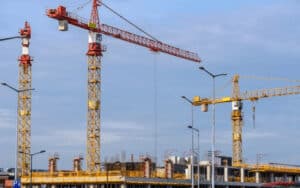
During the repair and maintenance of tower cranes, crews searching for tower crane spare parts often need parts that match the mechanism, load class, or electrical setup on a specific job site.
The goal of this blog is to help maintenance teams and procurement staff match crane components to the correct model, verify fit before ordering, and prioritize inspection where wear affects safety and uptime.
How Tower Crane Systems Shape Parts Identification
Tower crane parts identification starts with the crane’s system architecture. Tower crane electrical parts and mechanical assemblies are engineered around specific load ratings and mounting layouts, so a part pulled from the wrong reference can create fit or performance problems even when it appears compatible.
Match Parts to Crane Model, Mechanism, and Configuration
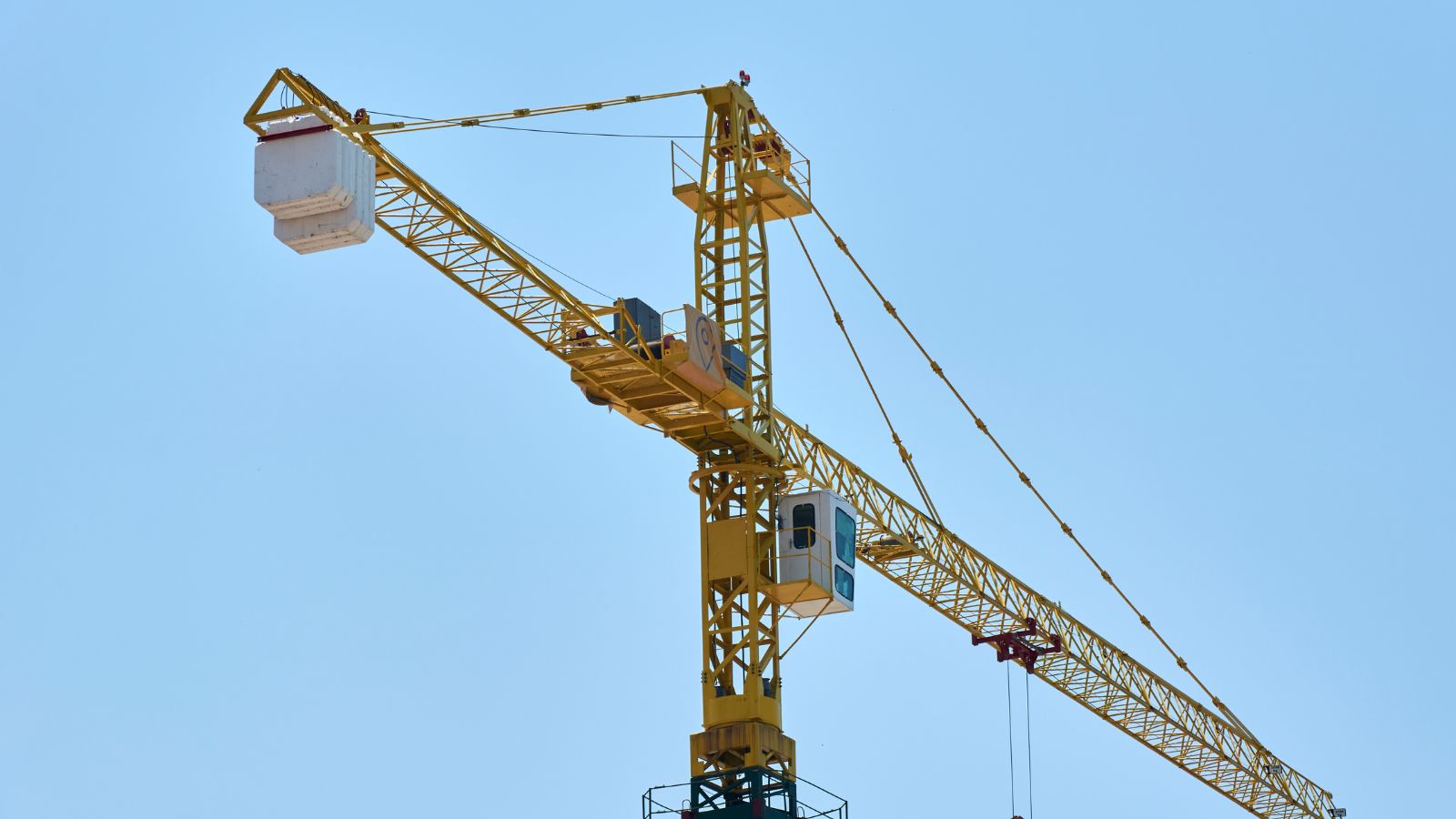
Every tower crane has a model number, mechanism type, and jib configuration that determines which parts fit. A luffing jib crane uses different trolley and hoist components than a flat-top or hammerhead model.
Confirm the exact configuration before ordering. This includes:
- Crane model and serial number
- Mechanism type (hoisting, slewing, or trolleying)
- Jib length and rated capacity
- Mast section height and tie-in spacing
Use Part Numbers, Drawings, and Technical Specifications
Part numbers are vital, and manufacturer drawings and technical specification sheets show exact dimensions, materials, and tolerances for each component.
Cross-checking these documents against the crane’s parts catalog helps avoid ordering a part that is close, but not exact. Keep copies of manuals and wiring diagrams on file for each crane in the fleet.
Confirm OEM, Approved Replacement, and Site Compatibility
An OEM part guarantees factory-matched tolerances, but approved aftermarket replacements can also perform reliably when tested and documented correctly.
Before installation, verify the part against the crane’s rated capacity data and confirm it meets local regulatory requirements for the job site.
Structural Components That Support Crane Stability
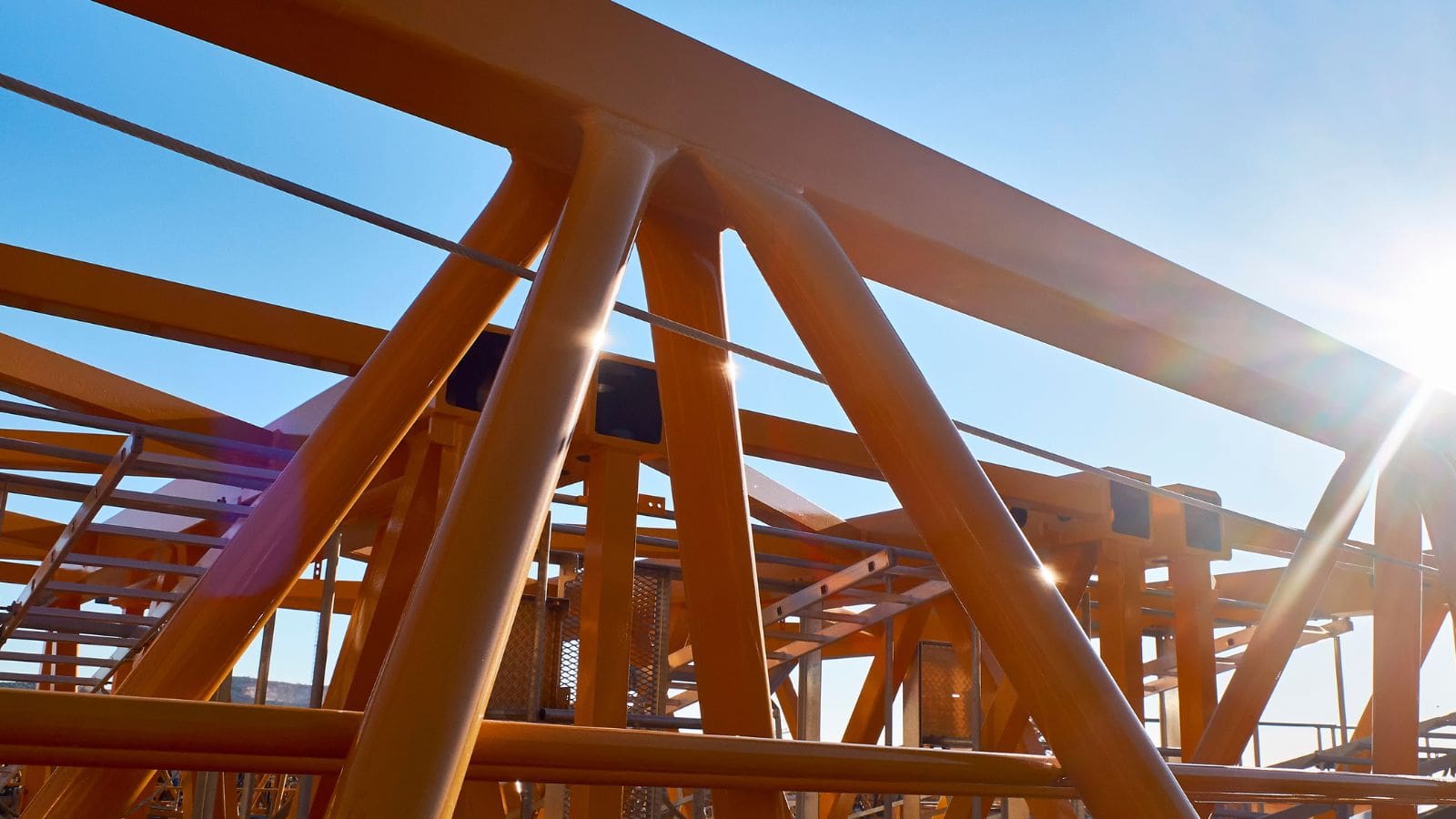
Structural steel parts carry the crane’s static and dynamic loads, so wear or corrosion here affects the entire machine. Mast sections, anchorage frames, and jib steel structure parts need periodic inspection for cracks, deformation, and loose fasteners, since even small structural issues can compound under repeated lifting cycles.
| Component Category | Key Spare Parts | Primary Function & Inspection Focus |
|---|---|---|
| Mast & Connections | Mast sections, mast joints, connection bolts, high-tensile hardware | Acts as the vertical backbone.
Inspection: Check torque at intervals; look for misalignment or loose hardware. |
| Anchorage Systems | Anchorage frames, wall-tie assemblies | Secures the crane to the building structure.
Inspection: Check for corrosion, loosening, and proper spacing alignment. |
| Jibs & Platforms | Jib sections, counter-jib frames, platform structures, pins | Carries static and dynamic lifting loads.
Inspection: Check welded joints and pin connections for cracking or deformation. |
Mast Sections, Mast Joints, and Connection Hardware
The mast section is the vertical backbone of the crane. It carries compression loads from the jib and counter-jib and must stay properly aligned as the crane climbs.
Mast joints and connection bolts need torque checks at set intervals. Loose hardware at these joints can lead to misalignment that stresses the whole structure.
Anchorage Frames and Wall-Tie Assemblies
Anchorage frames secure the mast to the building structure as the crane reaches greater heights. Wall-tie assemblies must be installed at the spacing specified in the manufacturer’s manual.
Inspect anchorage points for corrosion, loosening, and correct alignment, especially after relocation or extended exposure to wind loads.
Steel Structure Parts for Jibs, Frames, and Platforms
Jib sections, counter-jib frames, and platform structures all fall under steel structure parts. Welded joints and pin connections on these components should be checked for cracking during routine inspection.
Replacing a damaged steel structure part typically requires the original drawing reference to match load rating and dimensional tolerance.
Hoisting, Trolley, and Slewing Replacement Components
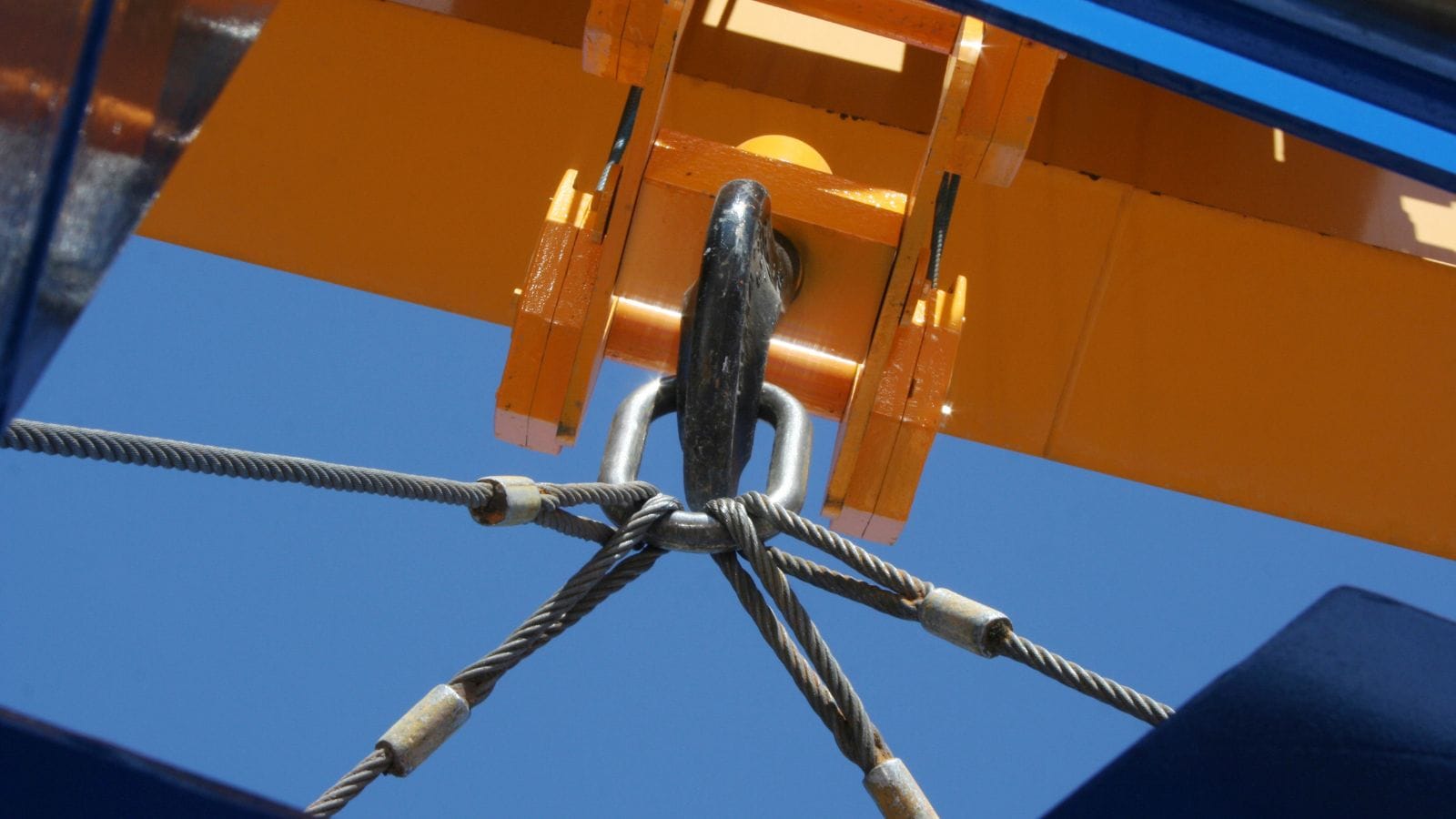
The hoisting mechanism, slewing mechanism, and trolley system work together to move loads vertically, rotate the jib, and position materials horizontally. Wear in any one of these systems shows up as slower cycle times, unusual noise, or reduced lifting precision, so tracking part condition across all three systems is essential for smooth operations.
| Component Category | Key Spare Parts | Primary Function & Inspection Focus |
|---|---|---|
| Hoisting Mechanism | Motors, drums, gearboxes, pulleys | Raises and lowers the load.
Inspection: Check motor efficiency and monitor drum grooves to prevent wire rope damage. |
| Load Control | Wire ropes, hooks, brake discs, brake assemblies | Safety-critical lifting components.
Inspection: Check wire rope for fraying/kinks; replace worn brake discs to maintain stopping precision. |
| Slewing Mechanism | Slewing bearings, slewing motors, drive parts | Rotates the jib around the tower.
Inspection: Listen for grinding noises; monitor lubrication and check for bearing wear. |
| Climbing System | Hydraulic pumps, cylinder seals, high-pressure hoses | Powers the self-climbing/jacking operation.
Inspection: Check for fluid leaks or pressure drops before every climb. |
Hoisting Mechanisms, Drums, Motors, and Pulleys
The tower crane hoisting mechanism uses a motor, drum, and gearbox to raise and lower the load line. Pulleys guide the wire rope and reduce friction as the load moves.
Motor efficiency and drum surface condition should be checked regularly, since worn drum grooves can accelerate wire rope wear.
Wire Ropes, Hooks, and Brake Assemblies
Tower crane wire rope is a safety-critical item. Inspect it for fraying, kinks, corrosion, and broken wires along its full length.
The brake disc controls stopping and holding force during lifting. A worn tower crane brake disc reduces stopping precision and should be replaced before it affects load control.
Slewing Mechanisms, Slewing Bearings, and Drive Parts
The slewing mechanism rotates the jib around the tower. The slewing bearing supports this rotation while carrying significant radial and axial load.
Listen for grinding or uneven rotation, which often signals bearing wear or a lubrication issue that needs attention before it worsens.
Hydraulic Pumps and Self-Climbing System Components
Hydraulic pumps power the self-climbing system that raises the crane as the building grows taller. Cylinder seals, hoses, and pump pressure should be checked before each climbing operation.
A pressure drop during a climbing cycle usually points to a leak or pump wear that needs correction before continuing.
Electrical Controls, Operator Equipment, and Safety Devices
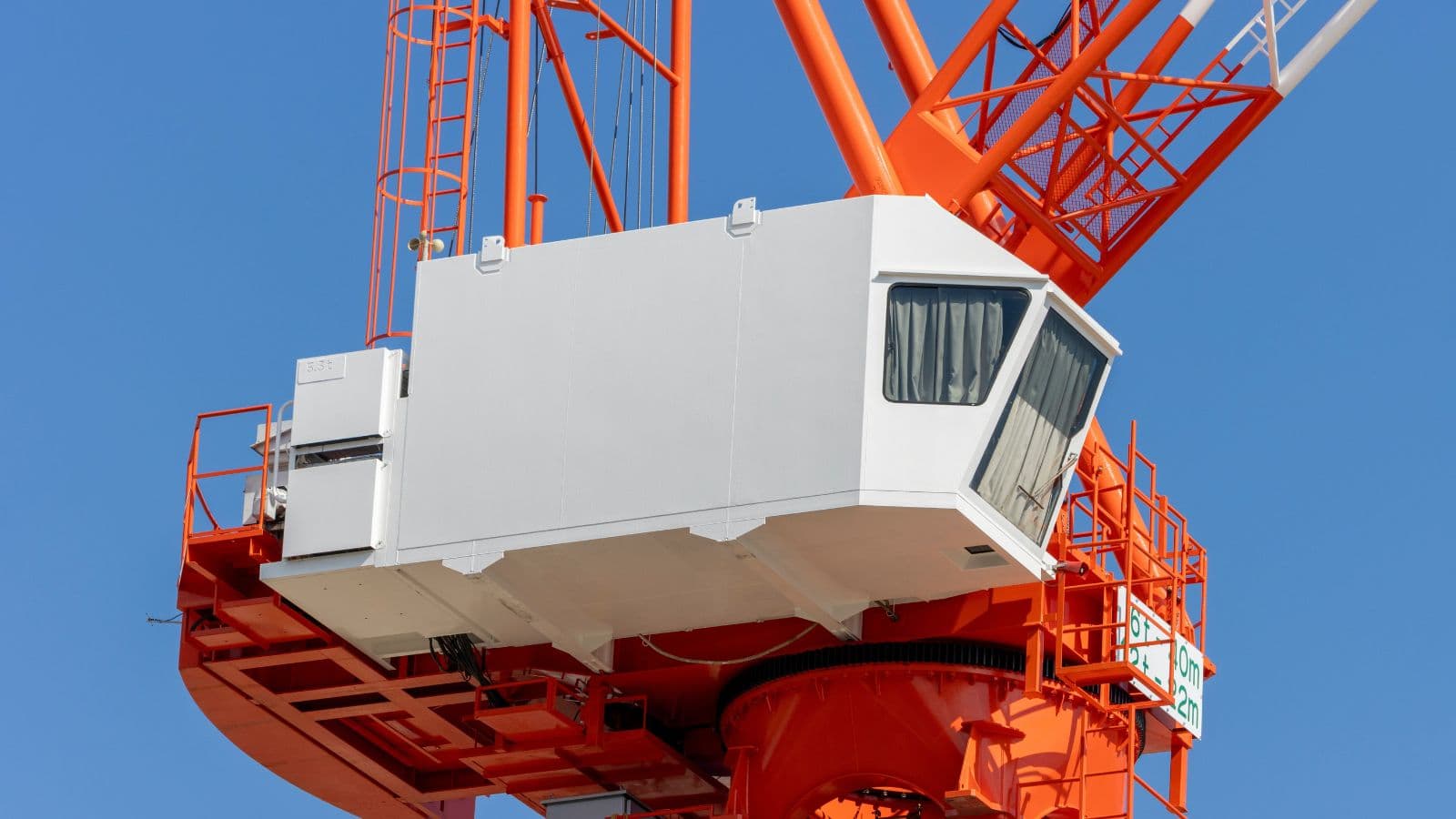
Tower crane electrical parts govern how the operator controls the machine and how the crane protects itself from overload or collision. A fault in the joystick controller, limit switch, or SLI system can stop operation entirely, so these components deserve the same inspection discipline as structural and mechanical parts.
| Component Category | Key Spare Parts | Primary Function & Inspection Focus |
|---|---|---|
| Operator Equipment | Control panels, joysticks, cabin displays, seating | Interface for precision lifting.
Inspection: Replace worn joysticks to prevent jerky movements; check cabin visibility. |
| Movement Regulation | Limit switches, encoders, resistance boxes | Regulates motor current and travel limits.
Inspection: Test limit switches regularly; ensure resistance boxes don’t cause motor strain. |
| Safety Systems | SLI (Safe Load Indicators), anti-collision sensors, load cells | Prevents structural overload and collisions.
Inspection: Mandates strict calibration checks, especially after part replacement. |
| Power & Comms | Electrical cables, lighting fixtures, beacon lights, radios | Connects power and enables crew coordination.
Inspection: Check cable insulation for weather damage; ensure clear radio signals. |
Control Panels, Joysticks, and Operator Cabin Equipment
The tower crane cab houses the control panel, joystick controller, and display screens the operator relies on for every lift. A worn joystick can cause imprecise control inputs.
Cabin lighting, seating, and visibility features also affect operator performance, particularly during long shifts or low-light conditions.
Limit Switches, Encoders, and Resistance Boxes
The tower crane limit switch prevents the hook, trolley, or jib from traveling beyond safe operating ranges. Encoders track position and speed, feeding data back to the control system.
Resistance boxes regulate motor current during startup and speed changes. Faulty units here can cause jerky movement or motor strain.
SLI, Anti-Collision, and Load-Monitoring Systems
The SLI (safe load indicator) monitors load weight and radius, alerting the operator before capacity limits are exceeded. Anti-collision systems use sensors to prevent contact between adjacent cranes or structures.
Both systems require calibration checks. Confirm settings against the crane’s rated capacity chart after any sensor replacement.
Electrical Cables, Lighting, and Communication Components
Power cables and control wiring connect the cab to motors, sensors, and the anti-collision system. Damaged insulation increases fault risk, especially in outdoor conditions.
Lighting and communication components, including radios and beacon lights, support safe coordination between operators and ground crews.
Inspection, Replacement, and Spare-Parts Planning
A tower crane spare parts program works best when it connects inspection schedules to actual part condition, not just calendar intervals. Wire ropes, brake discs, and limit switches wear at different rates depending on load cycles and site conditions, so tracking usage data helps predict replacement timing before failure occurs.
Identify Wear Before It Causes Unplanned Downtime
Regular visual and functional checks catch early signs of wear, such as fraying wire rope strands or slow brake response.
Recording these observations over time reveals patterns that point to which crane parts wear fastest under specific job conditions.
Set Inspection Priorities for Load-Bearing and Safety-Critical Parts
Not every part carries the same risk if it fails. Wire ropes, brake discs, slewing bearings, and limit switches sit at the top of the inspection list because their failure directly affects lifting safety.
Structural connections and hydraulic seals follow closely behind, since they affect stability and climbing operations.
Maintain Traceability, Storage Conditions, and Minimum Stock
Proper storage protects crane spare parts from corrosion and material degradation before installation. Keep wire ropes coiled correctly and store electrical components away from moisture.
Set minimum stock levels for high-turnover items like brake discs and limit switches to avoid delays when a part fails unexpectedly.
Verify Installation and Functional Testing After Replacement
After installing a new part, run a functional test before returning the crane to full operation. This confirms the part performs as expected under load.
Document the replacement, including part number and test results, for the crane’s maintenance record.
Beyond Spare Parts: High Quality Lifting Solutions for Fewer Hurdles with IHURMO
While knowing how to source and identify tower crane spare parts is crucial for fleet maintenance, the most effective way to eliminate unexpected downtime is to invest in high-quality, complete lifting systems from a manufacturer that stands behind its equipment.
At Beijing Ihurmo Industry Co., Ltd., our core focus is manufacturing complete tower cranes, construction hoists, and suspended platforms. By controlling the entire manufacturing process at our state-of-the-art factory, we ensure every structural, mechanical, and electrical component works together flawlessly.
The Factory-Direct Advantage: Buy the System, Secure the Support
When you purchase a complete crane system from IHURMO, you aren’t just buying heavy machinery; you are securing a long-term operational partnership. We back our equipment with an industry-leading after-sales support system designed to keep your projects moving:
- Complimentary Quick-Wear Parts: To help you maintain peak performance from day one, we include a package of free quick-wear spare parts with your complete equipment purchase.
- Factory-Backed Expertise: Since we build the machines from the ground up, our technical team provides unmatched troubleshooting, installation guidance, and CAD support for your specific crane configuration.
- Dedicated After-Sales Service: We offer a comprehensive one-year guarantee period, supported by a 24/7 hotline and rapid-response online service for our equipment owners.
Don’t let aging equipment and constant part replacements eat into your project’s profitability. Upgrade to a reliable, fully-supported lifting solution built by experts.
Ready to discuss your next project? Contact Ihurmo today for equipment quotes & factory-direct support!