Tower cranes make vertical construction possible by lifting heavy materials to heights and distances that other cranes cannot efficiently cover. Understanding how they work starts with three basics: how they lift, how they stay balanced, and how their main components work together on site.
What is a Tower Crane
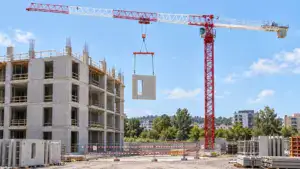
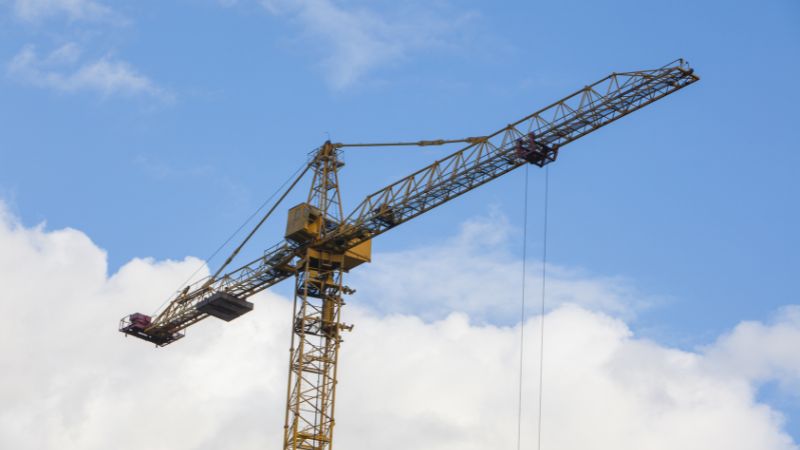
A tower crane is a tall, fixed crane anchored to a concrete foundation on major construction sites. It is built to lift heavy materials — steel beams, concrete panels, equipment — and position them precisely at heights and horizontal distances that ground-based or mobile cranes cannot efficiently reach.
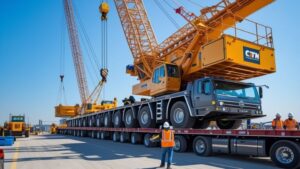
Unlike a mobile crane that drives in, sets up on outriggers, and leaves, a tower crane is a permanent fixture for the duration of the project. It stands on a mast built from bolted steel sections, with a horizontal jib on top to extend its reach across the site. Everything about its design — the counterweights, the rotating slewing unit, the trolley system — works together to keep it stable and productive from the first floor to the last.
How Does a Tower Crane Work
Lifting and Positioning Mechanics
The crane lifts materials using a hoist motor and steel cable that winds on a drum. The cable passes through pulleys to the hook, which raises or lowers the load.
The trolley travels along the jib, moving the load closer to or farther from the tower. Outward trolley movement increases reach, while inward movement brings the load closer to the mast.
To place a load, the crane operator typically hoists up, moves the trolley along the jib, and rotates the crane to the desired location.
Balance and Stability Principles
The tower crane’s base is anchored to a large concrete pad, which provides stability and absorbs the forces created during lifting operations.
Balance is achieved by offsetting the load on the jib with a counterweight on the counter jib. The crane’s center of mass must remain over the tower and base for safe operation.
Lifting capacity decreases as the trolley moves the load farther from the tower, because the turning force (moment) increases. Operators must always respect load charts to avoid exceeding safe limits.
| Load position | Turning force | Allowed load |
|---|---|---|
| Closer to tower | Lower | Higher |
| Farther out | Higher | Lower |
Main Components of a Tower Crane
Tower Sections and Mast
The base of the tower is secured to a concrete pad and connected to mast sections, which are stacked to reach the required height. Each section is bolted or pinned for strength and stability.
At the top of the mast sits the slewing unit, which enables the upper part of the crane to rotate.
- Base and anchors: provide stability
- Mast sections: add height and strength
- Slewing unit: rotates the upper crane
Horizontal Jib and Trolley
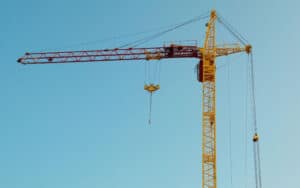
The horizontal jib extends from the top of the tower and supports the trolley and hook block. The trolley travels along the jib, allowing the crane to lift and position loads at various distances from the mast.
The wire rope and pulleys connect the hook block to the hoist motor. The position of the trolley along the jib directly affects the crane’s lifting capacity.
Counter Jib and Counterweights
The counter jib extends from the opposite side of the slewing unit and supports the counterweight, as well as electrical and hoisting equipment. Counterweights, often made of concrete, balance the weight of the load and the jib, ensuring the tower remains stable.
The size and arrangement of the counterweight are set based on the crane model and expected loads. This balance allows the tower crane to handle heavy materials safely and efficiently.
| Side | Main items | Main job |
|---|---|---|
| Jib side | jib, trolley, hook block, load | reach and lift |
| Counter side | counter jib, counterweight | balance and stability |
Operator Cab and Controls
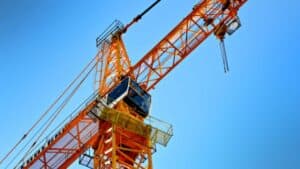
The operator cab is located near the slewing unit at the top of the tower, giving the crane operator a clear view of the construction site. From here, the operator uses joysticks and switches to control hoisting, trolley movement, and slewing.
Modern cabs display vital information such as load weight and boom position, helping the operator stay within the crane’s lifting capacity. Communication with ground crews is essential for safe lifting operations.
Types of Tower Cranes
Tower cranes are categorized by how they are supported, how they move, and their ability to grow with the building. The right crane type for your construction project depends on site size, lifting needs, and project duration.
Self-Supporting Static Tower Cranes
This fixed crane is anchored to a large concrete pad and stands independently without building tie-ins. It suits open sites with space for a wide base and long-term lifting operations.
- Best for: Open sites, tall towers, and heavy equipment lifts
- Consideration: Requires a substantial foundation and adequate swing space
- Stability: Provided by the base and counterweights
Supported Static Tower Cranes
Unlike a self-supporting crane, a supported static crane is progressively tied into the rising building or an adjacent structure. These tie-ins transfer lateral loads into the structure, allowing for a slimmer mast and greater heights — making them well-suited to tight urban sites, high-rise builds, or windy conditions. Tie-in points must be engineered alongside the structural frame, so early coordination with the design team is essential.
Travelling Tower Cranes
When one fixed position cannot reach all pick points, a travelling crane solves the problem by moving along a rail or track as lifting demands shift. The track must stay level, clear of debris, and protected from site traffic throughout the project. Unlike a mobile crane that drives on and off site, a travelling tower crane remains on its rail system for the full duration of the build.
-
Typical uses: Long buildings, expansive yards, sites where coverage needs to shift during construction
Climbing Tower Cranes
A climbing tower crane rises alongside the building by adding mast sections through a climbing frame, often using the crane’s own hydraulic system. It can climb externally from a base outside the building or internally through a shaft or core. Either approach requires coordination with the construction schedule, but the payoff is clear — no large assist cranes at height and full lifting capacity maintained at upper floors.
-
Key requirements: Space to add mast sections, engineered tie points or internal support locations
Operation and Safety Considerations
A tower crane must be operated with clear signals, steady movements, and within set limits. Safety depends on controlling the load, monitoring weather, and inspecting the crane daily.
Crane Operator Responsibilities
Every lift begins with a clear plan, proper signals, and a safe travel path. If the operator cannot see the load, a trained signal person uses hand signals or radio communication. Work should stop when wind, lightning, heavy rain, or poor visibility make control difficult.
Keep people clear of the swing area, never move loads over workers, and ensure the area under the tower and jib is clear during climbing, erecting, or dismantling.
- Keep lifts smooth — avoid sudden starts or stops
- Stay focused and wear PPE when leaving the cab
Load Management
Every lift must stay within the crane’s rated capacity for that radius. Confirm the load weight, verify rigging ratings, and review the lift plan beforehand. Balance the load level, use tag lines to control spin, and avoid side pulls. Plan the full travel path and landing zone, keeping clear of edges, power lines, and other cranes.
| Item | What you confirm |
|---|---|
| Weight | Matches plan and load charts |
| Rigging | No damage, correct rating |
| Landing spot | Clear, strong, level |
Routine Inspections and Maintenance
Before the first lift each day, inspect the mast and jib, check hoist ropes for wear, and confirm all safety devices are functioning. Look for leaks, loose bolts, and unusual sounds. On rail-mounted cranes, check bogies and the track as well. Schedule professional inspections regularly and keep records of lubrication, repairs, and load tests.
Do not operate if you find:
- Cracked metal, damaged pins, or frayed wire rope
- Failed limit switches or load indicators
- Unsafe rails, stops, or bogie problems
Looking for the Right Tower Crane for Your Project?
At Ihurmo, we supply and support tower cranes built for the demands of real construction — from open industrial sites to dense urban high-rises. Our team helps you select the right crane, plan the installation, and keep operations running safely from groundbreak to topping out. Explore our range and contact us today.
Frequently Asked Questions
How is a tower crane powered?
Tower cranes run on three-phase electrical power, typically supplied by the site’s main electrical infrastructure. This makes them cleaner and quieter than diesel-powered alternatives, with no on-board fuel storage required.
What is the lifespan of a tower crane?
A well-maintained tower crane can remain in service for 20–30 years. Mast sections and structural components are subject to fatigue limits, and major parts must be recertified or replaced after a set number of load cycles.