Scaffolding has played a crucial role in construction for thousands of years. The earliest evidence of scaffolding appears in the Lascaux caves of France, where prehistoric humans created artwork high on cave walls using wooden platforms supported by sockets in the rock. These early scaffold structures laid the foundation for the advanced systems we use today.
Early Use of Scaffolding
Lascaux Caves and Prehistoric Structures
In the Lascaux caves, paintings appear high on cave walls, far beyond normal human reach. Archaeologists found socket holes in the rock, which likely supported wooden poles or platforms. These primitive scaffolds allowed artists to work on elevated surfaces within the cave.
Though the exact design is unknown, the presence of these sockets suggests that even prehistoric people understood the value of temporary scaffolding for working at height.
Scaffolding in Ancient Egypt
Ancient Egypt offers the first well-documented use of wooden scaffolding. The Greek historian Herodotus described how Egyptian builders used wooden scaffold structures, tied together with rope, to build the pyramid. These platforms enabled workers to move and place enormous stone blocks, some weighing up to 80 tons.
Ancient egyptians constructed their scaffolds from timber poles, tied together with rope, and built them higher as the pyramid rose. The scaffold provided safe access for laborers and allowed for the efficient transport of materials. Timber was scarce, so materials were often reused from one construction project to another.
Classical Greek and Roman Scaffolding
By the 5th century BC, ancient Greece was using wooden scaffolding in major construction projects. The Berlin Foundry Cup, a red-figure artifact, visually confirms the use of scaffold in Greek cities. Greeks built temples and theaters using wooden scaffolds that allowed multiple workers to operate at different heights.
Romans adopted and refined these techniques, building vast scaffold systems to support heavy stone and large crews. Their scaffolding enabled the creation of aqueducts, amphitheaters, and monumental arches across the Roman Empire.
Medieval and Renaissance Innovations
During the Middle Ages and Renaissance, scaffold evolved into complex systems that supported the construction of grand cathedrals, castles, and other masterpieces. Monks and builders developed advanced wooden scaffolding frameworks and hoisting methods that shaped construction for centuries.
Scaffolder Monks and Medieval Construction
Monks in medieval Europe became experts in scaffold construction, building and restoring abbeys, churches, and cathedrals. Their knowledge of scaffolding was critical for constructing the soaring heights and intricate features of Gothic architecture, such as flying buttresses and vaulted ceilings.
Medieval scaffold systems had to support both workers and heavy materials. These robust frameworks allowed safe access to all parts of a building and were essential for large construction projects.
Use of Timber and Wooden Techniques
Wooden scaffolding dominated this era. Builders used local timber beams and planks, tied together with rope, to create frameworks that could be assembled and dismantled as needed. Square lashing and sheer lashing techniques provided strong joints without metal fasteners.
The construction of St. Peter’s Basilica in Rome showcased multi-level wooden scaffolding that adapted to curved walls and domed ceilings. Wooden scaffolding remained the backbone of construction throughout the Renaissance.
Loading Cranes and Early Hoisting Methods
Medieval builders also developed loading cranes to lift heavy materials. The treadwheel crane, powered by workers walking inside a large wheel, was often integrated with scaffold structures. These cranes, combined with scaffold, allowed efficient movement of materials to great heights and improved safety for workers.
Industrial Revolution and the Birth of Modern Scaffolding
The Industrial Revolution transformed the scaffold from wooden to metal systems, greatly improving strength and safety.
Introduction of Metal and Tubular Steel Scaffolding
During the 18th and 19th centuries, steel and iron became widely available, enabling the creation of metal scaffolding. Steel tubes were lighter and stronger than wood, allowing for taller and safer scaffold structures. Tubular steel scaffolding quickly became standard on construction sites, offering greater durability and ease of assembly.
Steel scaffolds could be reused for multiple projects, making them cost-effective and reliable for builders.
The Role of Daniel Palmer-Jones and Scaffixer
In 1913, British engineer Daniel Palmer-Jones founded Scaffixer and introduced innovations that made connecting steel scaffold pieces easier and safer. His company developed reliable scaffold fittings and the coupler, which allowed builders to create complex, adaptable scaffold structures.
Development of Universal Coupler
Palmer-Jones patented the universal coupler in 1919, enabling scaffold tubes to be joined at any angle. This simple bolt mechanism made scaffold assembly much faster and more flexible, solving a major challenge in the industry. The universal coupler remains a cornerstone of modern scaffolding systems.
Modern Scaffolding Systems and Safety
Today, modern scaffolding systems focus on worker safety, efficiency, and adaptability. Prefabricated components, lightweight materials, and strict regulations define the contemporary scaffold industry.
System Scaffolding and Modular Innovations
System scaffolding uses standardized, prefabricated parts that lock together quickly and securely. This modular approach reduces assembly time and minimizes the risk of errors.
- Faster assembly and dismantling
- Fewer loose parts
- Greater load-bearing strength
- Standardized safety features
- Compatibility across manufacturers
Bamboo Scaffolding and Global Materials
Bamboo scaffolding is still widely used in Hong Kong, ancient China, and Southeast Asia. Bamboo offers impressive tensile strength, is lightweight, and can be tied together with rope or nylon straps. A bamboo scaffold can be erected quickly and supports construction projects up to 50 stories high. Its flexibility and low cost make it ideal for irregular building shapes.
In Western markets, steel and aluminum scaffolds dominate due to their strength and compliance with regulations. Steel scaffold systems are used to build skyscrapers and large infrastructure, while aluminum is preferred for lighter, portable scaffold applications.
From the Lascaux cave walls to the heights of Buckingham Palace, the scaffold has been a silent partner in the world’s greatest construction achievements. Whether tied together with rope, built from bamboo, or assembled with a universal coupler, scaffolding remains essential for any ambitious construction project. The history of scaffolding is a testament to human ingenuity, transforming how we build and shaping the skylines of civilizations past and present.
Safety Standards and Regulatory Developments
The Occupational Safety and Health Administration (OSHA) established comprehensive scaffold regulations in 1971, which continue to adapt to new construction needs. These rules require fall protection for workers above 10 feet, guardrails on all open sides, and platforms strong enough to support four times the intended load.
Modern scaffolding safety protocols mandate that anyone who erects, modifies, or inspects scaffold structures must complete specialized training. Certification programs cover hazards such as falls, falling objects, structural failures, and electrical risks.
Essential PPE for scaffold work includes:
- Hard hats with chin straps
- Safety harnesses and lanyards
- Non-slip footwear
- High-visibility clothing
- Protective gloves
A competent person must inspect scaffolding systems before each shift and after any event that might affect structural stability. Keeping records of these inspections is vital for both worker and employer safety.
Contemporary Types and Techniques
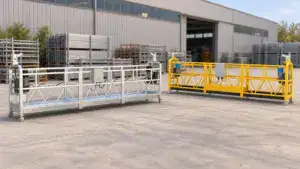
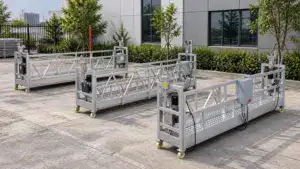
Suspended scaffolds hang from roofs or overhead structures using wire ropes and motorized hoists. These scaffolding systems are common for window washers on skyscrapers and require backup safety lines and regular equipment inspections.
Cantilever scaffolds project outward from buildings when ground-level support is not possible. These scaffolds use support beams, known as needles, that extend through window openings or anchor securely into the structure.
Frame scaffolds use pre-built end frames connected by cross braces. Builders stack these scaffold components to reach the required height for residential and light commercial construction projects. The straightforward design allows for quick assembly by small crews.
Specialized scaffold types meet specific construction needs:
| Type | Primary Use | Key Feature |
|---|---|---|
| Tube and coupler | Complex shapes | Complete flexibility |
| Trestle | Low heights | Portable platforms |
| Putlog | Brick laying | Single-sided support |
| Rolling towers | Indoor work | Height-adjustable wheels |
Digital tools now support scaffold planning by calculating load requirements, generating assembly instructions, and tracking inventory across job sites.
Partner with IHURMO
IHURMO is a trusted global supplier of high-quality lifting solutions—from suspended platforms and hoists to tower cranes and scissor lifts—serving customers in over 100 countries. Certified by ISO, CE, and EAC, our equipment ensures top-tier safety, durability, and performance for projects of any scale. Contact us today to discover how IHURMO can power your next project with precision and reliability.
Frequentlt Asked Questions
What factors should I consider when choosing a scaffolding system for my project?
Project height, load capacity, working conditions, and installation time are key factors. Environmental aspects—such as wind exposure, building shape, and access restrictions—also influence which system fits best.
Are suspended platforms suitable for both construction and maintenance work?
Yes. Suspended platforms are ideal for façade installation, structural inspections, painting, window replacement, and ongoing building maintenance due to their flexibility and quick setup.
How do suspended platforms compare to boom lifts for high-rise work?
Suspended platforms offer larger work areas (up to 20m wide) and lower costs for extended horizontal coverage, while boom lifts excel in tight spaces and precise positioning but limit worker capacity.