Mast climbing work platforms (MCWPs) offer far greater load capacity and workspace than traditional scaffolding. However, elevating heavy materials and crews safely makes strict site controls non-negotiable.
This guide breaks down essential site controls, engineered safety features, and global compliance standards to keep your next construction project safe and productive.
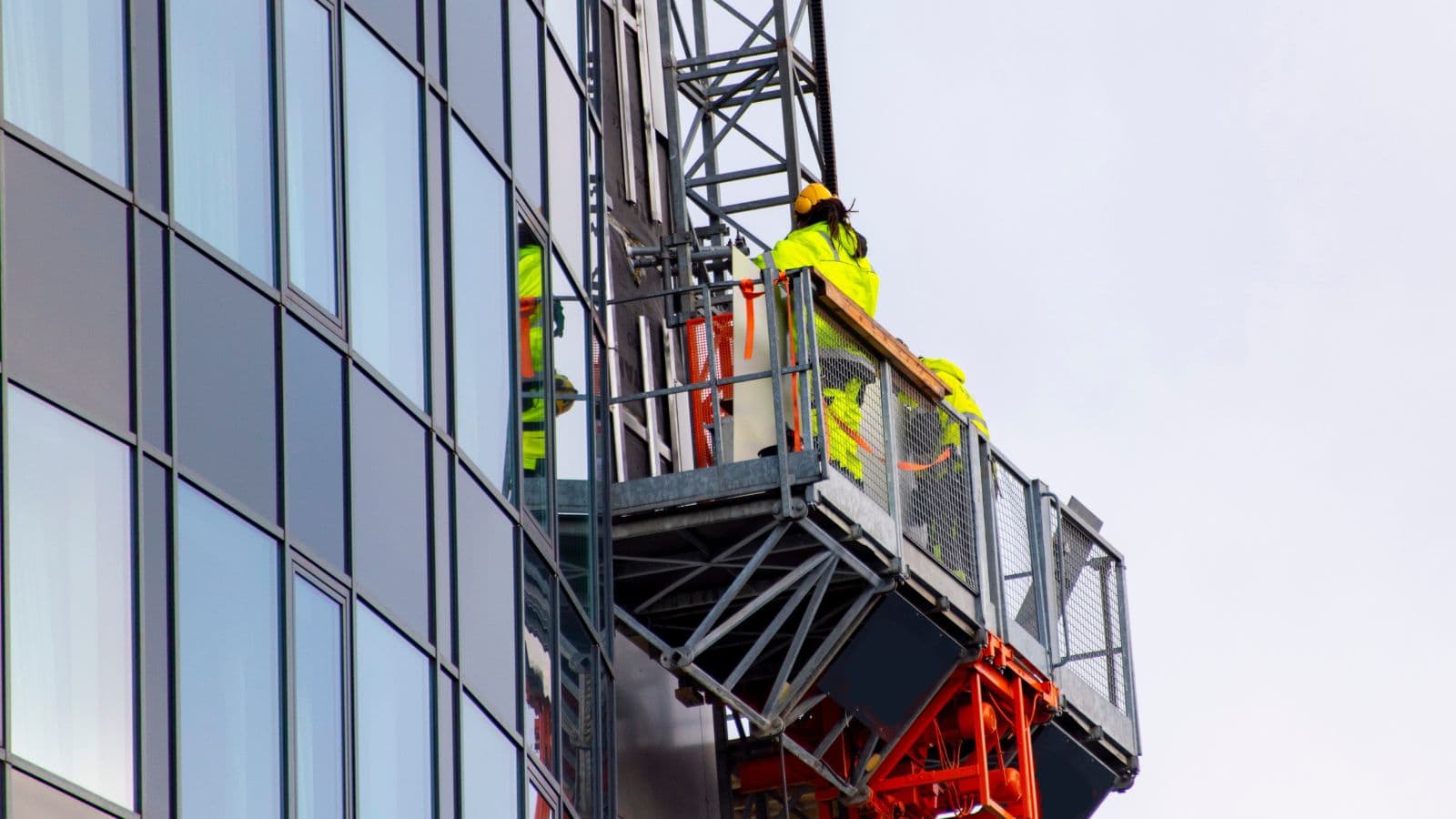
The Potential Risks of Mast Climbing Work Platforms
Because MCWPs carry massive payloads, including crews, heavy tools, and bulk masonry materials, to extreme heights, the risks are inherent.
Identifying these vulnerabilities is the first step in preventing them. On a typical construction site, MCWP risks originate in three critical zones:
- Mechanical Failure (The Drive System):The platform relies on a heavy-duty rack-and-pinion system to travel vertically along the mast. If a single mechanical component fails, the platform risks an uncontrolled descent.
- Structural & Foundation Instability:The entire dynamic load of the platform transfers directly to the ground and the building’s facade. Soft soil, improperly compacted base foundations, or skipping structural wall ties can cause the mast to buckle or collapse.
- Dynamic Overloading & Weight Distribution:Platform collapses usually happen because loads are mismanaged. Stacking concentrated heavy loads, such as multiple block pallets on one far edge, can create localized stress that threatens the structural integrity of the deck.
Common Site Mistakes that Increase MCWP Risk
Even well-maintained equipment can become unsafe when basic site controls are ignored. The following mistakes show up repeatedly across real-world projects and are responsible for a large share of serious incidents:
- Skipping or improvising wall ties to “save time” during fast-paced façade work
- Setting the base on unverified ground or slabs, including backfilled soil, soft areas near trenches, or uneven concrete
- Concentrating heavy pallets at one edge for convenience instead of distributing loads across the deck
- Changing platform length/extension without re-checking the load chart, tie spacing, and wind limits
- Allowing non-authorized personnel to modify the setup, remove guardrails, or adjust components during operation
- Operating in high winds or gusty conditions without a clear stop-work rule aligned with the manufacturer’s limits
A safer site starts with discipline: verify the setup, follow the engineered tie sequence, and treat every configuration change as a new risk review.
Mast Climbers Load Control & Collapse Prevention
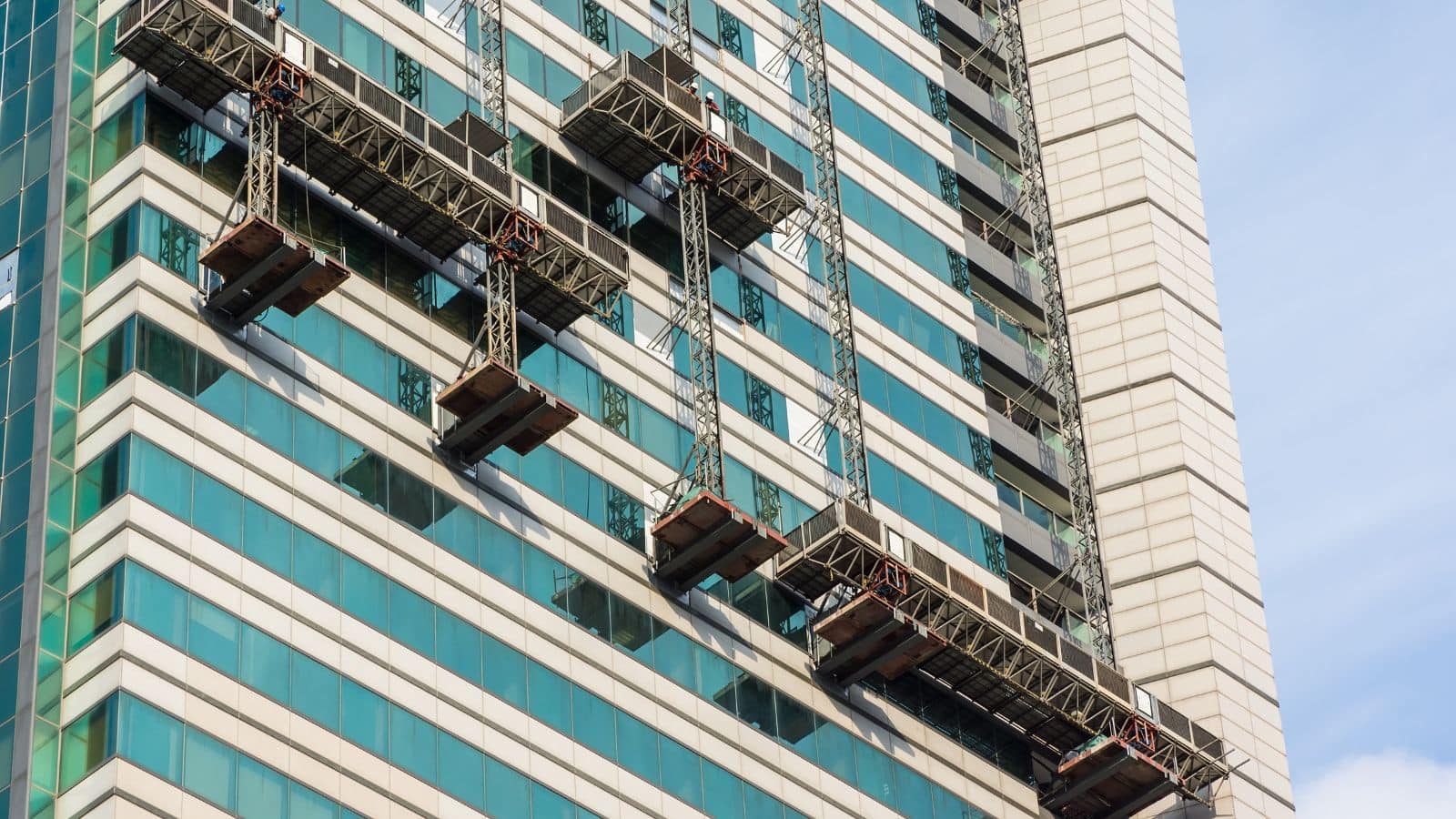
Mast climbers are the construction industry standard equipment because they allow crews to lift and lower bulk materials at the working height, drastically reducing repetitive operations. However, this requires site supervisors to strictly enforce load limits and wall tie requirements.
Base Support and Structural Mast Ties
The base of a mast climber must rest on a surface engineered to carry the absolute maximum weight of the mast, platform, materials, and crew. Unverified concrete slabs or poorly compacted trenches are immediate hazards.
Furthermore, mast ties connect the vertical mast directly to the building structure at precise, manufacturer-specified intervals. Skipping even a single tie can compromise structural integrity.
Reading Load Charts and Distributing Materials
Every MCWP features a rated load chart specific to its current configuration and mast height. Crucially, loads must be distributed evenly across the platform.
Site Manager Checklist for Load Control:
- Verify the load chart matches the current mast height and platform width.
- Calculate material weights accurately before hoisting them onto the deck.
- Distribute heavy items (mortar, brick, block, personnel) evenly across the platform space.
- Re-verify the load chart immediately after any platform extension.
Managing Wind Limits and Environmental Factors
Wind speed limits are engineered into the equipment and fluctuate based on mast height and platform aerodynamic profile. Site supervisors must actively monitor weather conditions, and stop operation and secure the platform if measured wind speed or gusts exceed the limit for the current configuration.
Extending the mast or widening the platform alters wind resistance, requiring a fresh review of the manufacturer’s safety guidelines.
Mast Climbers Safe Erection and Dismantling
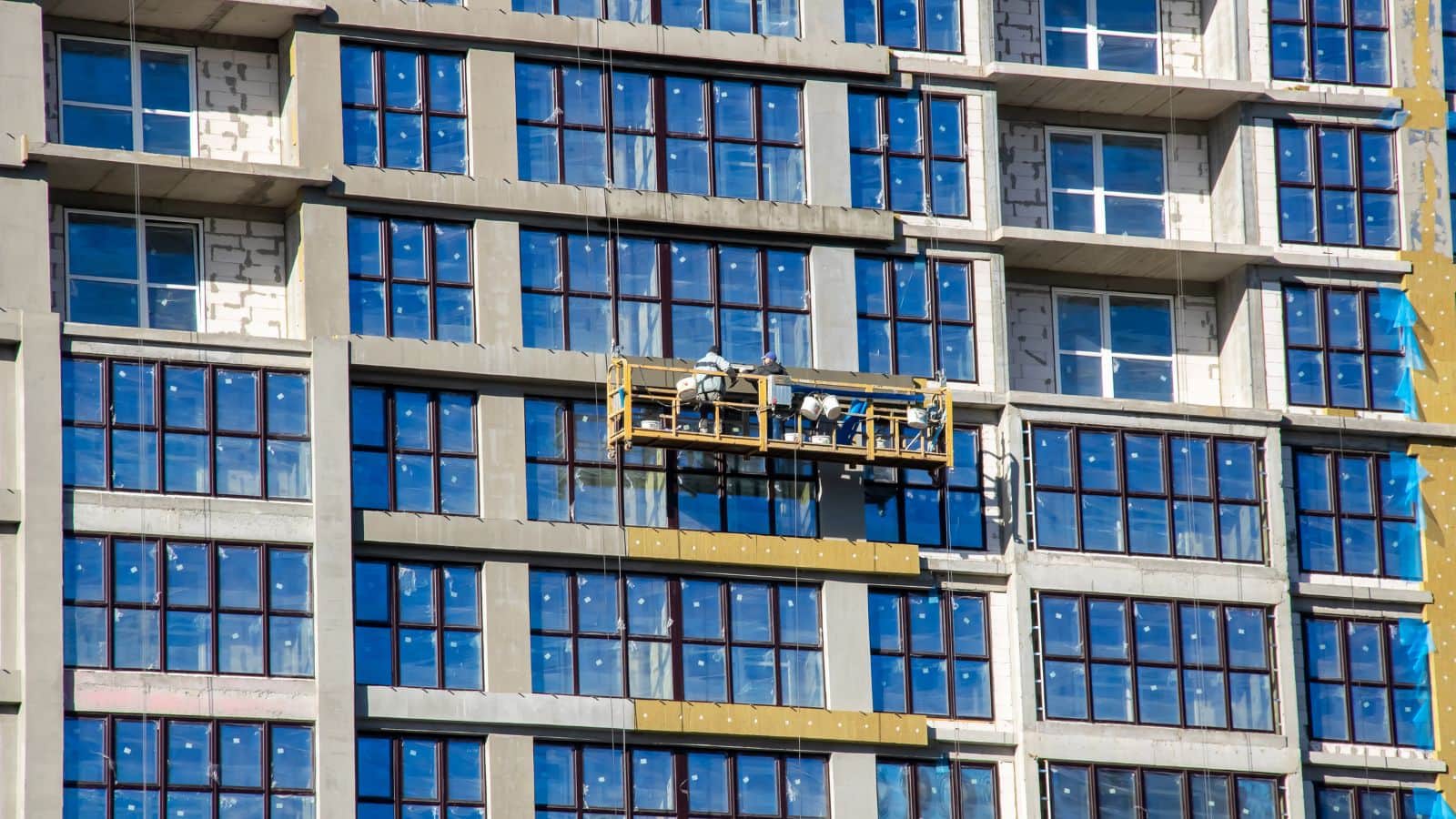
Erecting, altering, or dismantling a mast climber represents the highest risk phase of the equipment’s lifecycle. During this process, mast sections and ties are dynamically added or removed while workers operate near open edges.
Authorized Crews and Site-Specific Setup Plans
Every installation is site-specific. A comprehensive setup plan must be reviewed by the crew before work begins to confirm the three major factors:
- Base support strength
- Exact tie locations
- Precise sequence for adding mast sections
Only highly trained, authorized personnel should perform this work.
Strict Tie Installation and Removal Sequences
Wall ties must be installed sequentially as the mast is built upward, and removed in the exact reverse order during dismantling. Removing ties prematurely, or installing them out of sequence, leaves the freestanding mast vulnerable to buckling or collapse.
Mast Climbing Work Platforms Fall Prevention & Personnel Safety
Working at height involves fall risks, but modern MCWPs are engineered to mitigate these dangers effectively through integrated systems and strict access protocols.
Guardrail Integrity and Open-Side Hazards
Factory-integrated guardrails are the primary defense against falls. Before every shift, supervisors must confirm that all guardrails are fully intact and set to the proper height. If material loading requires temporarily opening a side of the platform, restricted access zones must be enforced.
Personal Fall Arrest Systems (PFAS)
Workers must utilize a Personal Fall Arrest System (PFAS) when operating near open edges, especially during erection or dismantling. Anchor points must be explicitly rated for fall arrest and approved by the manufacturer.
Safe Access and Material-Handling Practices
Crews must only board and exit through manufacturer-designated access gates—never by climbing the exterior mast structure. Always maintain clear, unobstructed walkways and secure loose tools to eliminate falling object hazards.
Global Standards and Maintenance of Mast Climbers
The rigorous demands of global construction sites, ensuring your site passes inspection regardless of geography.
OSHA, ANSI, and EN 1495 Compliance
In the United States, MCWPs are governed by OSHA’s scaffold standards (29 CFR 1926.450) and ANSI/SAIA guidelines.
Globally, standards like Europe’s EN 1495 dictate stringent design and testing requirements. High-quality manufacturers design their equipment to achieve CE certification to comply with these international benchmarks.
Pre-Use Daily Inspection Checklist
Use a documented checklist and assign a competent person. If any critical item fails, remove the unit from service until cleared.
- Base/area: settlement, water/soft ground, trench edges, clear access
- Mast/connections: missing pins/bolts, deformation/wear, locks secured, alignment
- Wall ties/anchors: correct spacing, none missing, fasteners tight, no improvised parts
- Drive/safety devices: brakes OK, E-stop test, abnormal noise/vibration, leaks/damage
- Platform: deck level/undamaged, gates working, guardrails/toeboards intact
- Electrical/cables: no damage, proper routing/strain relief, connectors secure
- Load chart/docs: chart matches current setup/height, setup plan on site, log completed
MCWPs require comprehensive maintenance by a qualified mechanic at manufacturer-specified intervals to ensure long-term reliability.
Assigning Site Responsibilities
Clear delegation of safety duties prevents critical gaps in site oversight:
| Project Role | Primary Safety Responsibility |
| Employer / Contractor | Provide proper model-specific training, supply PPE, and ensure overall regulatory compliance. |
| Competent Person | Conduct daily pre-shift inspections and exercise the authority to halt operations if hazards arise. |
| Qualified Erector | Execute the site-specific setup, manage strict tie sequencing, and safely dismantle the unit. |
| Manufacturer | Provide precise load charts, wind limits, globally certified engineering, and site-specific support. |
Ensure Mast Climbing Work Platform Safety with Ihurmo
Safety at height is essential for your operation, and choosing a qualified mast climbing work platform manufacturer is the first step.
With equipment supplied to customers in 100+ countries and backed by ISO 9001 quality management plus CE/EAC certifications, Ihurmo helps contractors and rental companies meet demanding project requirements with confidence.
Beyond the equipment itself, Ihurmo supports your team with:
- One-year guarantee
- Free quick-wear spare parts
- 24/7 hotline support and online after-sales service
- On-site training and local service where available
If you’re planning a façade, masonry, or high-rise project and want a safer, more productive access solution, contact Ihurmo today and send us your working height, façade length, payload requirement, and site drawings—our engineers will recommend a configuration and tie plan.
Frequently Asked Questions
What are the most common causes of serious MCWP incidents?
Most major incidents stem from controllable site failures:
- Insufficient base/foundation support,
- Missing or incorrectly sequenced wall ties
- Overloading or poor load distribution (especially concentrated pallet loads near an edge)
In summary, the equipment failures are almost never random, and are generally caused by a breakdown in site controls.
Can an MCWP operate with fewer (or none)?
For most configurations, wall ties are non-negotiable. They provide the lateral stability that prevents mast buckling and collapse. Operating with fewer ties, removing ties early, or changing tie spacing without approval significantly increases risk.
An MCWP can be operated without ties only if it is explicitly engineered, configured, and approved by the manufacturer as freestanding for the intended height and loading.
Can we keep working in windy conditions, and how do we decide?
Only if conditions remain within the manufacturer’s wind limit for the exact configuration (mast height, platform length/width, extensions). Wind effects increase as the mast becomes taller or the platform is expanded, so after any configuration change, you must re-check the wind limit and tie requirements. If wind exceeds the limit, operations must stop.