Lifting capacities are one of the most essential parameters of construction hoists, and it is affected by multiple interdependent variables specific to your projects. Building height, varying material weights, and daily speed requirements all dictate the exact capacity you need.
Contractors who treat this as a quick specification check often face expensive delays on the jobsite. To help you avoid these pitfalls, the sections below break down exactly how to evaluate these factors and choose the right hoist.
Table of Content
[Clicke the title below to navigate to the chapter you wish to see]
- What Is Capacity for Construction Hoist
- External Factors that Affect Equipment Capacity
- Different Hoist Types With Varied Weight Limits
- Hoist Safety Features Behind Capacity Decisions
- A Step-by-step Hoist Selection Checklist
- Why Choose Ihurmo
How Capacity Is Defined On Construction Sites
Capacity on a construction site is more nuanced than the single number printed on a hoist data sheet. The rated load, the actual working load, and the safety margin each play a distinct role in daily operation and compliance.
Rated Load Capacity Vs Real Working Load
Project teams must understand the critical difference between the theoretical maximum weight a hoist is engineered to carry and the unpredictable, real-world loads placed inside it daily.
|
Parameter
|
Rated Load Capacity
|
Real Working Load
|
|---|---|---|
|
Definition
|
The maximum gross load the hoist is designed to safely carry under specified conditions.
|
The actual weight of materials and workers loaded into the cage on any given trip.
|
|
Determined By
|
Manufacturer engineering, mast height, drive system, and structural limits.
|
Daily jobsite needs, available materials (rebar, pallets), and worker loading habits.
|
|
Consistency
|
Static / Theoretical limit
|
Highly variable / Fluctuates throughout the day
|
Why Real Capacity is Lower Than Rated Capacity
Rated capacity is not an absolute constant. In the real world, the hoist’s overall capacity limit must also absorb the added weight of trailing cables and dynamic forces—the intense structural spikes that occur whenever a heavy cage accelerates or brakes. Continuously operating at the theoretical maximum ignores these forces and severely accelerates equipment wear.
How Safety Margin Affects Daily Operation
The safety margin embedded in a hoist’s rated capacity is not a buffer for careless loading. It exists to accommodate the dynamic forces described above, long-term mechanical wear, and minor load estimation errors.
In practical terms, experienced site managers aim to keep routine loads at no more than 80 to 90 percent of rated capacity. This keeps the safety margin intact, extends equipment service life, and reduces the frequency of overload protection trips that disrupt workflow.
Key Inputs That Determine The Right Equipment Capacity
Matching a hoist to a project requires working through several site-specific variables simultaneously. Building height, material characteristics, required throughput, and physical site constraints each affect what capacity and configuration will actually perform.
Building Height And Required Lifting Height
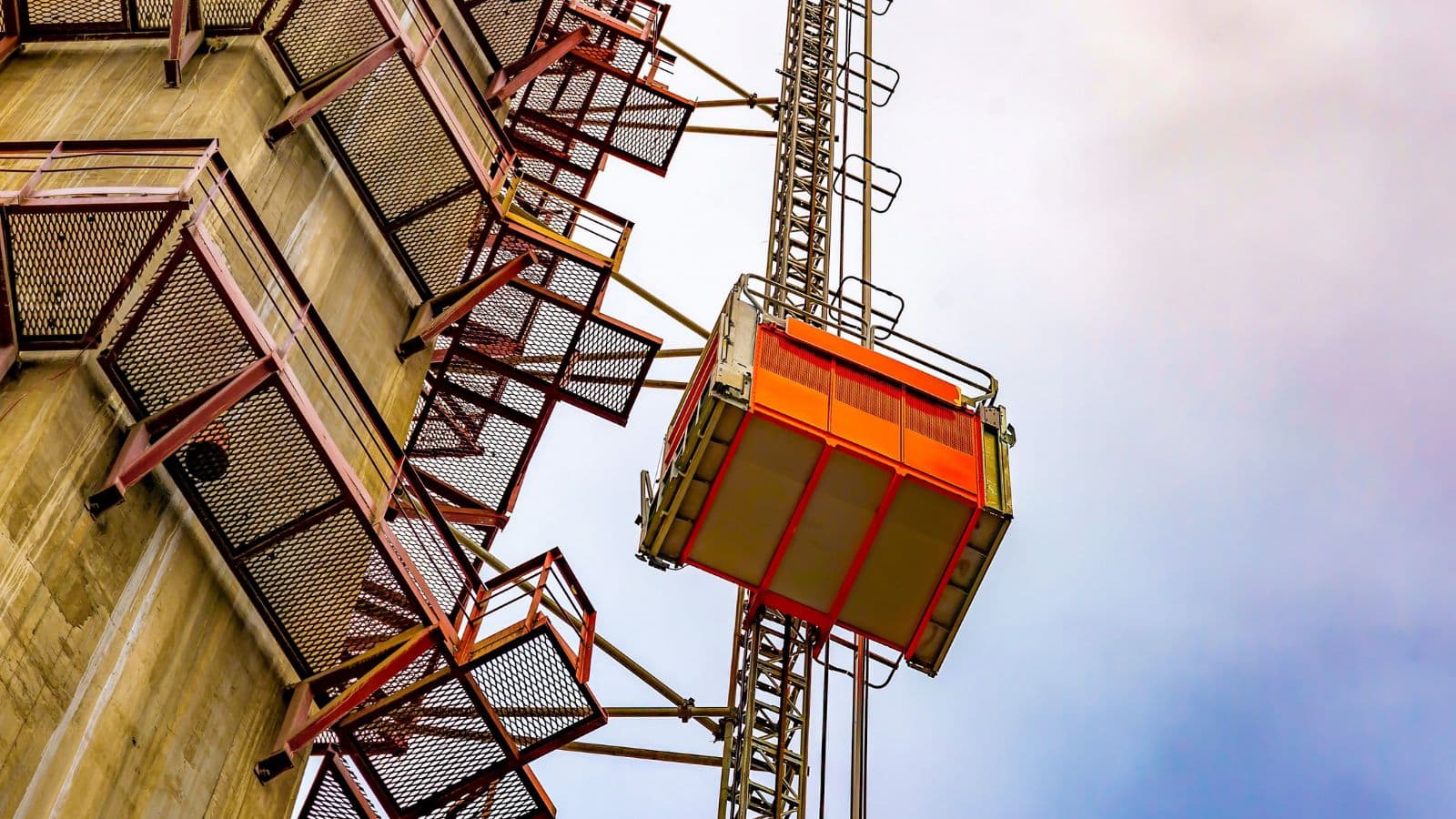
As building height increases, the mast system must resist greater lateral forces, and the hoisting rope or rack-and-pinion drive must handle longer travel under load.
For projects above 150 meters, it is worth confirming with the equipment supplier whether the rated capacity remains constant across the full lifting height or whether a derating applies at higher elevations.
Future height extension should also be addressed early. Mast sections can be added incrementally as construction progresses, but not all hoist bases are designed for the same maximum height. Contractors should specify this from the start to avoid misunderstanding and mid-project equipment swaps.
Material Type, Weight Variability, and Material Transport
The nature of material transport on a project directly influences what capacity range is appropriate, for example:
- A project moving bagged cement and block will have fairly predictable load weights per trip
- A project moving structural steel components, mechanical equipment, or prefabricated facade panels will encounter high variability and occasional near-maximum loads.
Where load weights vary significantly, specifying a hoist with headroom above the average load weight is a practical hedge.
Lifting Speed And Daily Throughput Needs
Lifting speed is a multiplier on capacity. Cycle time, which includes loading, travel up, unloading, and travel down, determines how many trips are possible per shift.
For high-rise projects with tight floor cycles, calculating required daily lifts and working backward to a required cycle time is a more useful approach than selecting speed based on a general preference. A modest increase in travel speed on a 200-meter lift meaningfully reduces cycle time across hundreds of trips per week.
Site Conditions That Change Hoist Performance
Site conditions affect hoist performance beyond rated capacity.
- Ground conditions impact anchorage and foundation needs.
- Power supply quality influences motor performance under full load.
- Limited space at base and landings slows loading and throughput. Wind loading affects mast tie-in spacing and operational limits.
Comparing Hoist Configurations For Different Jobs
Configuration choice follows directly from how a project uses its hoist. The right configuration for a given job is determined by load type, required throughput, and whether the site can support more than one cage.
Passenger Hoist Vs Material Hoist
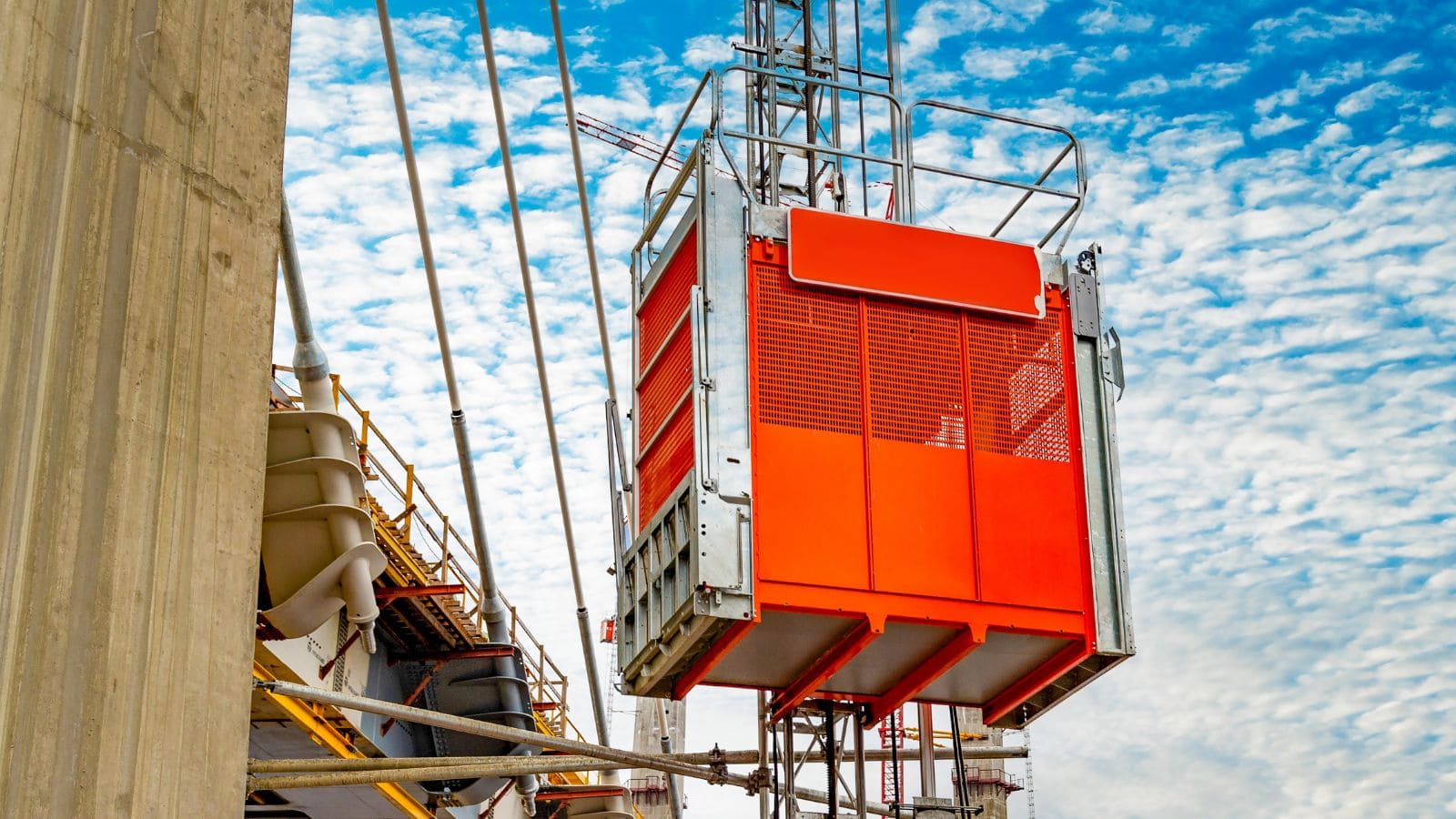
A passenger hoist is designed and certified to transport workers, while a material hoist is rated for goods only. Workers are not permitted to ride a material-only hoist. Material hoists typically offer higher practical load capacity for their cost and can be configured with an open cage or platform to accommodate bulky loads.
When A Double Cage Setup Improves Productivity
A double cage construction elevators configuration places two cages on the same mast, typically with one ascending as the other descends.
This setups are most productive when vertical transport is a main schedule constraint. On projects where a single cage is running at or near capacity for most of the shift, a double cage configuration reduces cycle time pressure and provides redundancy if one cage requires servicing.
The tradeoff is a higher equipment and installation cost. For projects with limited demand or shorter durations, the added cost of a double cage may not produce sufficient schedule return.
Where A Transport Platform Fits In
A transport platform occupies a different category from a standard enclosed cage hoist. These open platforms are designed primarily for moving large, heavy, or irregular materials that would not fit inside a conventional cage, such as structural modules, mechanical units, or large formwork panels.
Transport platforms are common on infrastructure projects where the load profile is dominated by heavy or oversized items rather than standard construction materials. They typically offer higher load ratings than enclosed cages of similar size and are configured for direct access by forklifts or pallet equipment at the base landing.
Safety Features Behind Capacity Decisions
Capacity selection is inseparable from safety compliance, and the safety systems built into a hoist are designed around that rated limit, not around a higher number.
Overload Protection And Core Safety Features
Overload protection is a non-negotiable feature on any construction hoist. These systems prevent the hoist from operating when the load in the cage exceeds the weight limit. In practice, overload protection activates automatically and locks out hoist movement until the excess weight is removed.
Other safety features that directly relate to capacity management include:
- Limit switches: Prevent over-travel at the top and bottom of the mast.
- Speed governors: Engage if the cage descends faster than the rated speed.
- Emergency stop systems: Allow operators and passengers to halt movement immediately.
- Door and gate interlocks: Prevent movement when cage or landing doors are open.
These systems work as a unit. A hoist with strong overload protection but worn limit switches or a malfunctioning interlock is not a safe system, regardless of its weight limit.
Load Distribution, Stability, And Operator Limits
Even when a load is within the total weight limit, poor load distribution can create stability problems. An uncentered load applies uneven force to the cage structure and to the mast guide system, accelerating wear on rollers and guide rails. For material loads, centering weight on the cage platform and securing it to prevent shifting during travel are basic operational requirements.
Operator knowledge of the hoist’s rated limits is a compliance requirement, not an optional briefing item. Operators must be informed of and comply with rated capacity limits. Sites with high crew turnover or multiple subcontractors sharing a hoist benefit from posted load charts and a clear loading protocol at each cage entry point.
A Practical Hoist Selection for Common Project Types
The steps below are designed for site engineers and procurement teams working through an initial hoist specification.
1. Define the maximum load per trip.
Identify the heaviest single load that will be moved: a pallet of block, a mechanical unit, or a specific material delivery.
2. Calculate required daily trips.
Estimate material volume per floor cycle and divide by average load weight to determine trip volume. Divide by available shift hours to get required trips per hour.
3. Determine required lifting height.
Use the final building height plus any additional height for mast tie-ins above the roof level. Confirm with the supplier whether capacity is rated uniformly across that height.
4. Select a configuration.
Match hoists to the primary use case. For large projects, size separate passenger and material hoists independently.
5. Verify site conditions.
Confirm available power supply, base area, ground bearing capacity, and building attachment points for mast tie-ins.
6. Check compliance requirements.
Confirm that the selected equipment meets local standards. Sites with specific third-party owner or insurer requirements should verify those separately.
For high-rise residential or commercial projects, a weight limit of 2,000 to 3,200 kg with a double cage is commonly appropriate for the material hoist where floor cycles are aggressive.
For infrastructure projects with heavy mechanical or structural loads, a single-cage transport platform rated at 3,000 to 5,000 kg often fits better than a standard enclosed cage.
Need Help Sizing Your Construction Hoist?
As a premier one-stop construction equipment manufacturer operating since 2001, Ihurmo is ready to analyze your project’s specific height, cycle time, and material requirements to recommend a hoist that maximizes throughput while keeping your budget intact.
Why partner with Ihurmo for your next project?
- Proven Global Expertise: Trusted by contractors across the US, Middle East, Europe, and South America for over two decades.
- Certified Safety & Quality: Our hoists are manufactured using highly efficient robotic welding by our 800+ skilled workers, proudly holding CE, EAC, and ISO 9001 certifications.
- Value-Added Support: We offer short production cycles, complete OEM & ODM capabilities, and free CAD design customized specifically for your jobsite layout.
Let our engineering team deliver a cost-effective, durable, and fully compliant vertical transport solution so you can focus on building.
[Contact Us Today for a Free CAD Design and Project Consultation]
Frequently Asked Questions
How do I calculate the maximum safe load for a jobsite?
Start with the manufacturer’s rated capacity for your specific operating height. For daily operations, aim to keep loads at 80% to 90% of this limit to reduce equipment wear. Always include the weight of pallets and rigging in your math, and use the hoist’s built-in load sensor to verify unusually heavy lifts before moving.
How do cage dimensions affect allowable loading?
Capacity isn’t just about total weight; it’s about weight distribution. Even if a load is under the maximum weight limit, placing dense, heavy materials off-center can severely damage the platform and guide rails. Because of this, manufacturers specify both a maximum gross weight and a maximum weight per square foot.
What safety checks are required before operating at full capacity?
Per OSHA and ANSI standards, a qualified person must regularly inspect the hoist. Before operation, you must verify that critical safety systems—including brakes, limit switches, door interlocks, and overload sensors—are fully functional. Additionally, the maximum load ratings must be clearly posted inside the cage and at every floor landing.