Tower cranes are essential equipment on major construction sites around the world. Knowing which type of tower crane fits a given project is one of the most consequential equipment decisions a construction team makes.
This guide explains the primary tower crane types and helps you match the right configuration to your site conditions.
Main Types of Tower Cranes
The broad categories of tower cranes are defined by their jib design and how they slew (rotate). Horizontal jibs and luffing jibs handle airspace restrictions very differently, while self-erecting models fill a practical niche for shorter, highly mobile projects.
Hammerhead Tower Cranes
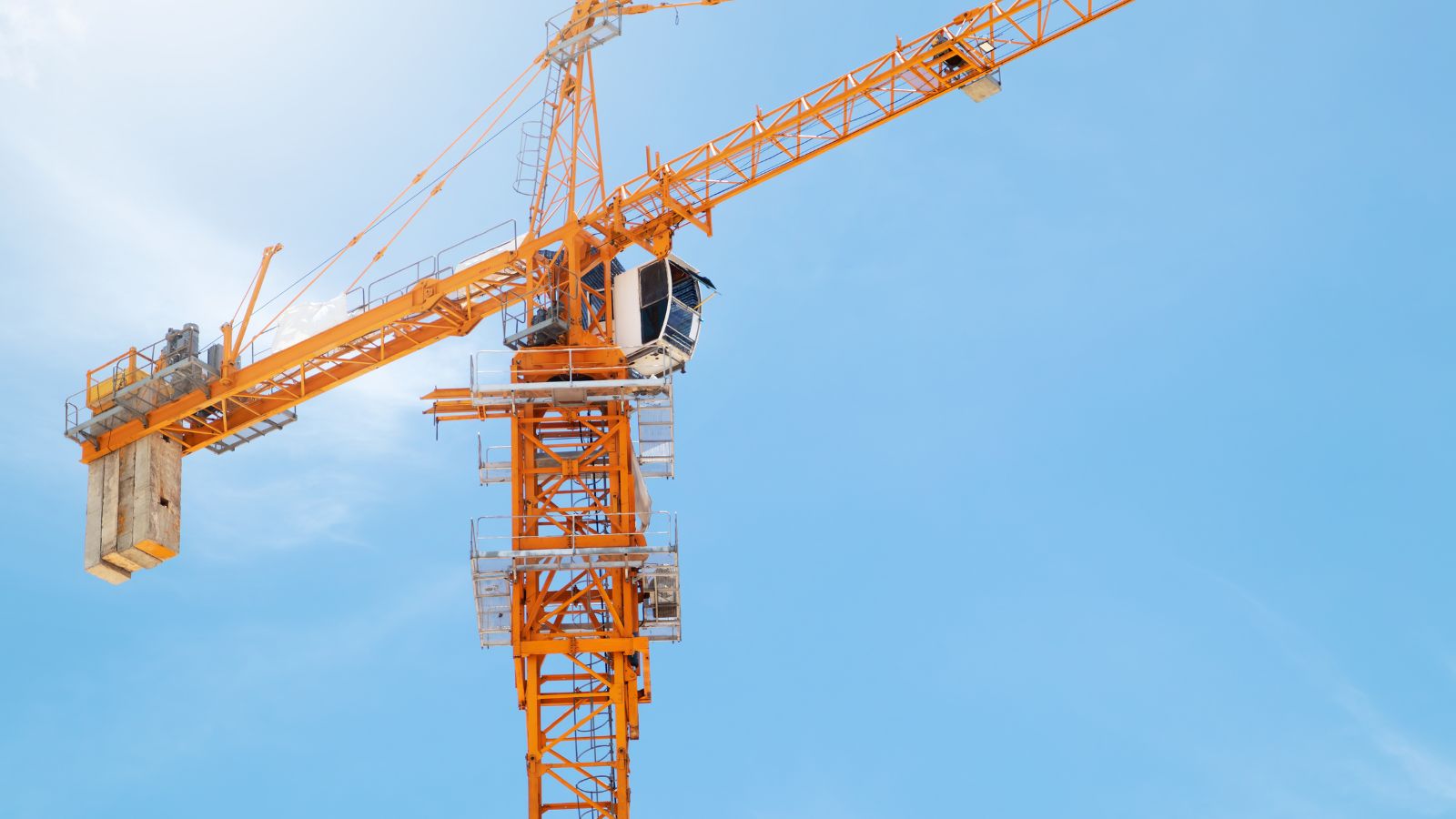
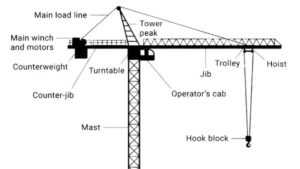
The hammerhead tower crane features the most recognizable silhouette in construction. It utilizes a fixed horizontal jib that extends outward from the mast, balanced by a counter-jib. A trolley travels horizontally along the length of the jib to position the load.
Because the jib remains horizontal at all times, the entire top assembly rotates around the mast to cover the working area. This top-slewing design provides consistent lift performance across the full radius without the need to raise or lower the boom. The tradeoff is that the horizontal jib sweeps a large area, requiring significant clear airspace.
- Best For: Open sites, industrial projects, and large infrastructure developments.
- Key Advantage: Excellent general-purpose lifting capacity, wide coverage, and highly predictable load charts.
- Limitation: Requires extensive horizontal swing clearance, making it difficult to use near adjacent buildings.
Flat Top (Topless) Tower Cranes
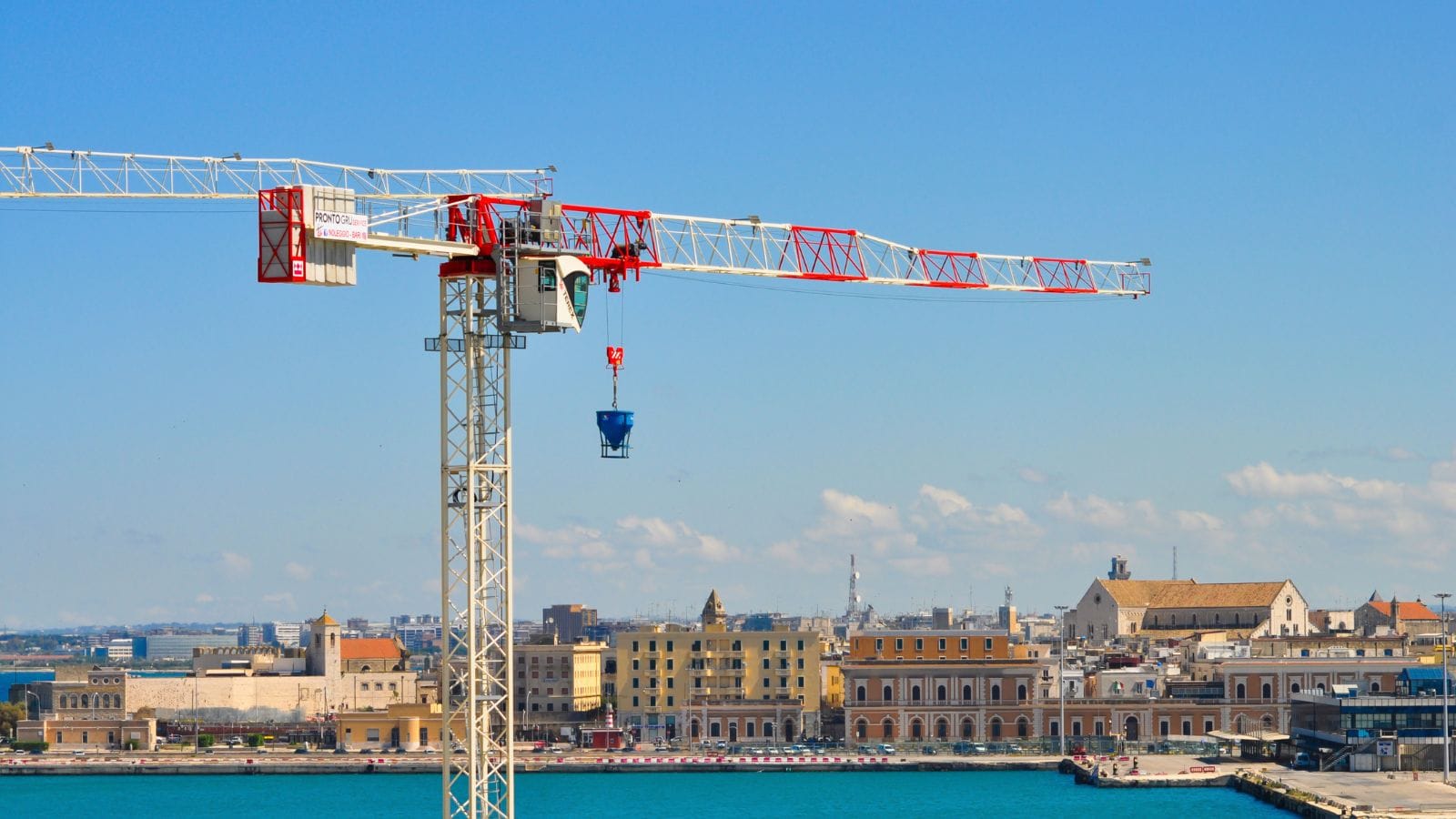
The flat top tower crane, also known as a topless crane, eliminates the traditional A-frame structure (cathead) above the jib. Instead of using tie-bars anchored to a high peak, the jib is supported by a specialized, low-profile connection that keeps the top section entirely flat.
This design was developed primarily to solve clearance problems on multi-crane sites. When multiple flat top cranes operate on the same project, their jibs can swing over one another with much less vertical separation required compared to traditional hammerhead models.
- Best For: Multi-crane projects and complex commercial developments.
- Key Advantage: Reduces the required height differential between overlapping cranes, minimizing interference. Assembly is also often faster due to the simplified top structure.
- Limitation: While it solves vertical clearance issues between cranes, it still requires horizontal swing space for the jib.
Luffing Jib Tower Cranes
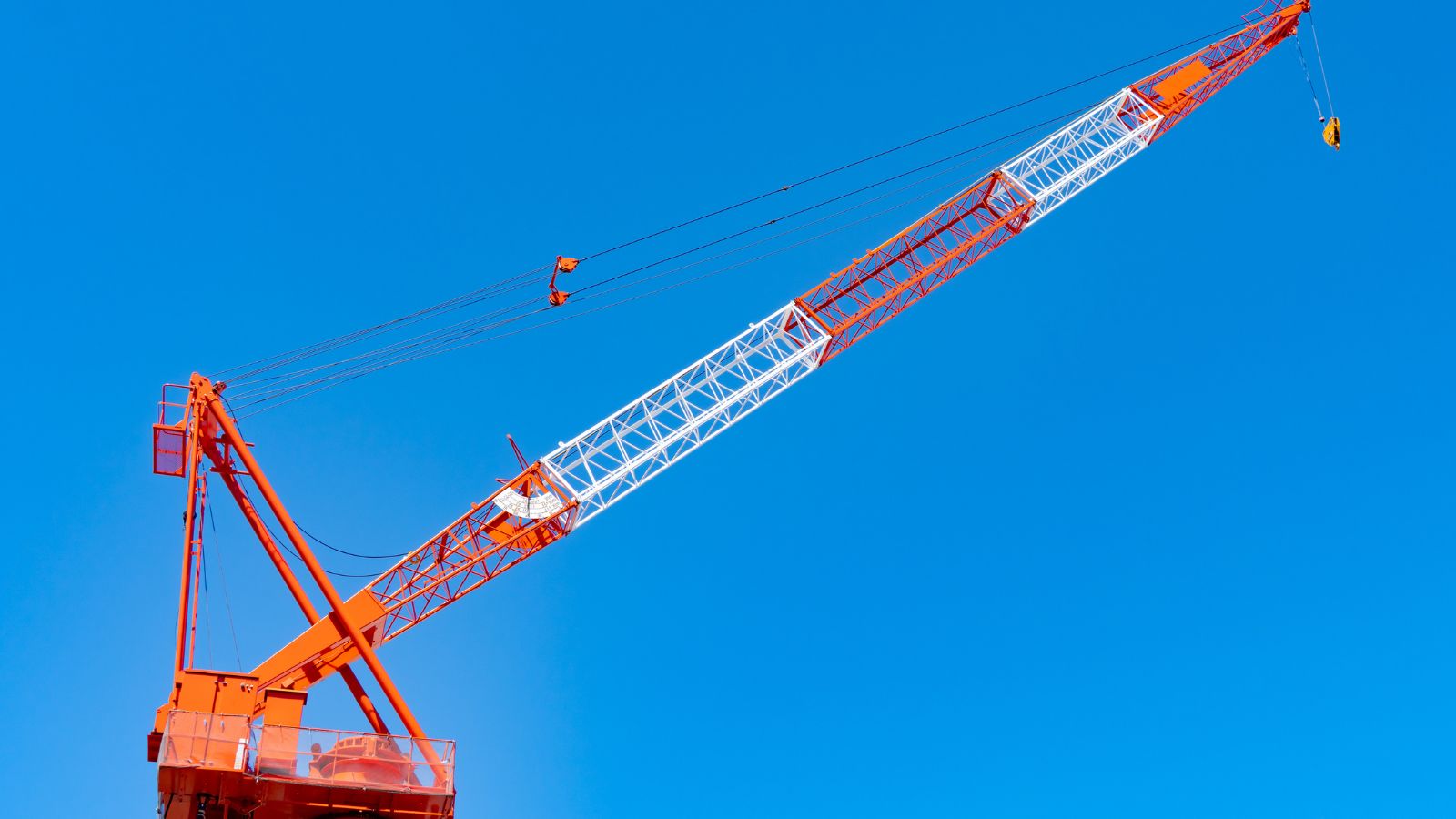
Unlike models with a horizontal jib and a traveling trolley, a luffing crane changes its working radius by raising and lowering the angle of the jib itself.
This mechanism allows the crane to pull its jib upward and inward, drastically reducing its swing radius. On a congested site surrounded by existing buildings or active streets, a luffing jib tower crane can be angled steeply to avoid swinging over restricted airspace or neighboring property lines.
- Best For: Dense urban construction, high-rise city projects, and sites with strict boundary limitations.
- Key Advantage: Unmatched ability to operate in confined spaces and avoid airspace conflicts.
- Limitation: Lifting efficiency and capacity drop significantly as the jib is lowered to reach extended radiuses. They are also generally more complex to erect than horizontal jib cranes.
Self-Erecting Tower Cranes
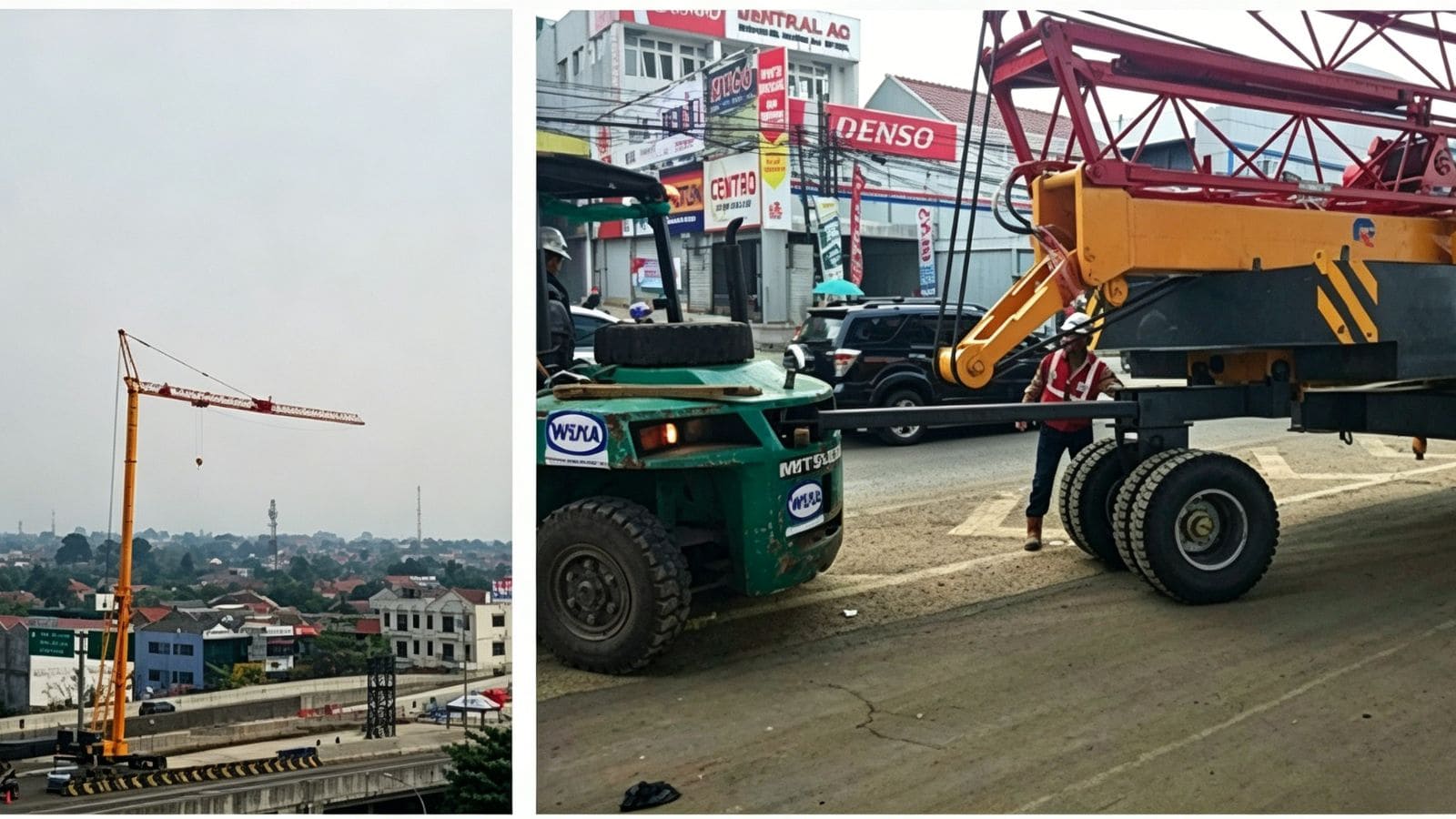
Self-erecting tower cranes occupy a unique category. Rather than requiring a separate mobile crane for a multi-day assembly, a self-erecting crane arrives on a trailer and uses its own hydraulic systems to unfold the mast and jib, often becoming operational in just a few hours.
- Best For: Short-duration jobs, residential subdivisions, and low-rise commercial framing.
- Key Advantage: Extremely fast setup, lower mobilization costs, and easy relocation across the site.
- Limitation: They have much lower lifting capacities and maximum heights compared to conventional tower cranes.
Structural Support & Climbing Options
Tower crane “type” is usually discussed in terms of jib configuration (hammerhead, flat top, luffing jib, self-erecting). But how the crane is supported and how it grows with the building can be just as important for real-world performance, especially on high-rise construction.
Free-Standing vs Building-Tied (Anchored)
A tower crane can operate as a free-standing structure up to its rated free-standing height, supported only by its foundation and mast system. Once the required height exceeds that limit, the crane is typically tied to the building at intervals using anchoring frames or tie bars. These ties transfer lateral forces into the structure and allow the crane to work safely at greater heights.
From a planning perspective, building ties affect more than engineering. They influence facade sequencing, access zones, and the timing of structural works because tie points must be installed as the building rises.
External Climbing vs Internal Climbing
When a project requires the crane to rise with the structure, climbing systems are used. In general terms:
- External climbing places the crane outside the structure and increases height by adding mast sections and tie-ins as the building grows.
- Internal climbing places the crane within the building footprint (through prepared openings) so the crane can climb upward with the structure while remaining more protected within the building profile.
Both approaches require early coordination because the climbing path, tie locations, and dismantling approach must be considered before construction reaches the upper floors.
Why This Matters When Choosing a Tower Crane Type
Support and climbing decisions affect:
- Maximum workable height and stability at great heights
- Wind behavior and downtime risk
- Site footprint requirements and clearance constraints
- The dismantling plan at the end of the project
Even if two cranes are the same jib type, the supported or climbing arrangement can change how the crane performs, how long it takes to install, and how the site must be managed during operation.
How to Choose the Right Type for Your Site
Matching a crane to a site involves evaluating working radius, site geometry, and the type of material being handled. The best configuration is the one that covers the necessary lifting zones without creating logistical or safety bottlenecks.
- For open sites with heavy material flow: A standard hammerhead crane is usually the most cost-effective and capable option, provided there are no airspace restrictions.
- For tight urban plots: If the jib cannot legally or safely swing over an adjacent building, a luffing jib crane is often the only viable solution.
- For multi-crane coordination: If the project requires two or more cranes with overlapping coverage zones, flat top cranes provide the safest and most manageable geometry.
- For phased, relocation-heavy jobs: If the crane needs to move to a new location every few weeks, the rapid deployment of a self-erecting crane will save significant time and mobilization costs.
Regardless of the crane type, careful attention must be paid to foundational limits, necessary clearances, and the total weight of the lift, including the block and hook weight and rigging gear. In climbing configurations, careful planning is also required for the eventual dismantling process, often involving steel collars and building-tied supports.
Explore Ihurmo Tower Crane Solutions
At Ihurmo, we design and manufacture a comprehensive range of tower cranes to meet the demands of modern construction. Whether your project requires the heavy-lifting stability of a hammerhead crane, the low-profile coordination of a flat top crane, or the tight-space agility of a luffing jib, our team can help you identify the perfect configuration.
Contact our engineering team to discuss your site layout, lift requirements, and optimal crane selection today!