
The power supply for a suspended platform has to match the whole machine: voltage, phase, frequency and connection. Put those details in the order specification, together with the supply capacity available and the cable route. Naming the destination country, or writing “380 V” on the inquiry, leaves too many questions open.
Get written confirmation covering the selected hoists, brakes, control panel and supplied accessories. What you need is a system that works at the actual site connection. A motor nameplate that seems to match the local mains is a starting point, nothing more.
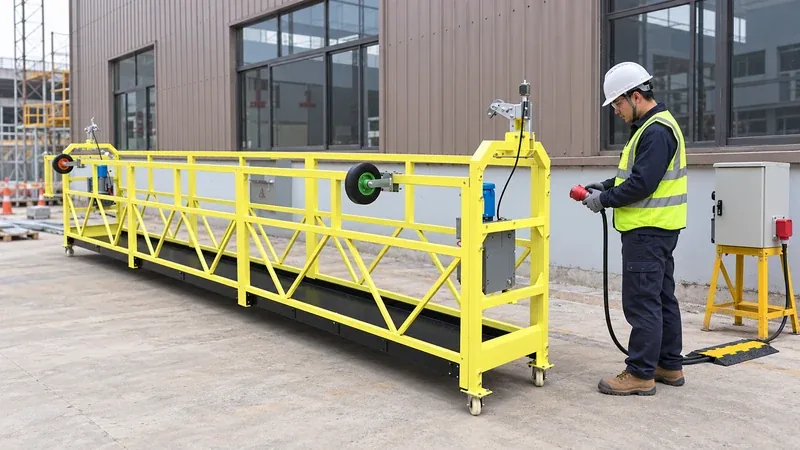
Specify Voltage, Phase and Frequency as Separate Fields
Record nominal voltage in volts, the number of phases and the frequency in hertz. Say where the voltage is measured: phase to phase, or phase to neutral. Have the site electrician confirm what is really available; a country voltage table from the internet is no substitute.
Note whether a neutral conductor is available and describe the protective-earth arrangement so it can be reviewed. The equipment supplier should state the conductors and terminal functions the platform needs. Counting the pins on an unidentified plug is guesswork.
The ZLP500 steel suspended platform page lists hoist voltages of 220, 380, 415 and 440 V. Read that list as the configurations you can order, each to be confirmed for your unit, and not as a promise that one delivered platform will accept every listed voltage or frequency.
Confirm the Frequency Rating of the Complete System
The right voltage at the wrong frequency is still the wrong supply. Motors, brakes and control components all need ratings that suit what the site provides. Ask whether the complete configuration you are ordering is rated for 50 Hz, 60 Hz or both.
We confirm the frequency rating of the selected hoists, brakes and control panel in the order documents. Check compatibility against the operating instructions and wiring diagram supplied with your platform. A rating copied from another hoist or platform model proves nothing about this one.
If someone proposes a transformer, be clear about what it changes. A conventional transformer changes voltage, not supply frequency. Any frequency-conversion proposal needs the manufacturer to review the full electrical and mechanical system, including operating performance and protection.
Use a Power Supply Schedule in the Purchase Inquiry
Send one schedule with the site information filled in and ask the supplier to complete the equipment column beside it. Mark unknowns as unknown. You end up with a clear record of which values were measured, which are design assumptions and which still need confirming.
| Field | Site input | Supplier confirmation |
| Voltage | Nominal supply and measurement basis | Rated input and acceptable operating range |
| Phase and conductors | Available phases, neutral and protective earth | Required connection arrangement |
| Frequency | Supply frequency in Hz | Rating of the complete selected system |
| Source | Mains, generator or other supply | Running and starting requirements |
| Cable route | Distribution point, route length and vertical travel | Equipment cable specification and management method |
| Connection | Site socket and protective arrangements | Plug, terminals and wiring documentation |
Review Starting Demand and Simultaneous Loads
Ask for running current, starting demand and the expected operating sequence of the hoists. Motor kilowatts are not enough to size the distribution circuit or the generator. Add the controls, accessories and anything else on the same source. For reference, the ZLP500 and ZLP630 product pages each list two 1.5 kW hoists.
On a generator supply, give its output ratings and list the other loads that may start while the platform is running. Get the generator provider, the equipment supplier and the electrical designer to review compatibility together. Adding up motor nameplate kilowatts is not a sizing method.
Find out whether quoted performance assumes both hoists running together, and how the system behaves during a supply disturbance. Get the manufacturer’s operating and emergency procedures in hand, so that nobody on site has to improvise when the breaker trips for the third time.
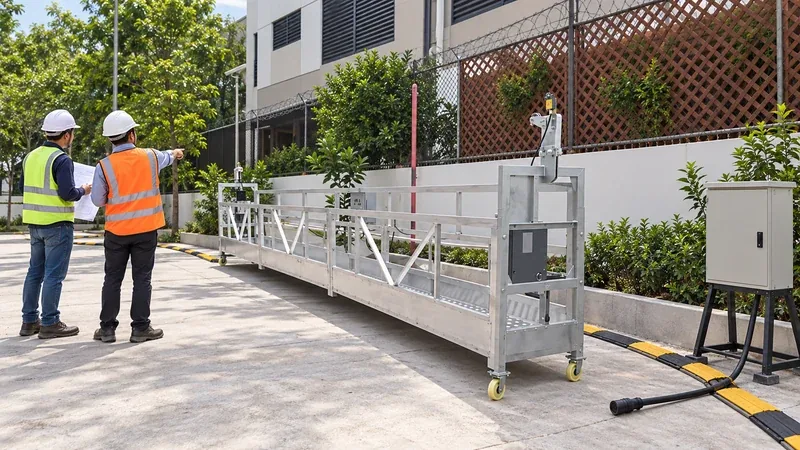
Check Voltage at the Equipment End of the Cable
Good voltage at the distribution board does not mean good voltage at the platform. Cable length, conductor size, load and the condition of every connection add voltage drop, and starting draws more than steady running.
Describe the complete route from the source, including temporary distribution cables and the hanging cable. Working height is only part of the cable length. Add horizontal runs, detours around obstacles and the allowances the manufacturer specifies.
The qualified electrical team should select the cable and verify supply conditions during commissioning tests. Ask for the equipment’s acceptable voltage range and protection requirements. Do not borrow a cable size or maximum length from a different platform model.
Define Protection, Connectors and Cable Management
Decide who provides the site distribution board, isolation, earthing and protective devices. Each has to suit the equipment, the installation and the local rules. The control panel that ships with the platform is one part of the electrical system; the site distribution around it is a separate scope.
Specify the connector standard, current rating, pin arrangement and environmental rating. The ZLP630 product page, for example, describes sockets conforming to international standards; confirm which standard applies to your order. Ask for a wiring diagram showing the connection points. An adapter that makes the plug fit can still get phase, neutral, earth or frequency wrong.
Confirm how the power cable is supported and managed as the platform travels. Cable weight, strain relief, snagging and rubbing against the structure all need a look. Ask which cable supports, connectors and management accessories are included in the offer.
Resolve Electrical Details Before Shipment
Attach the agreed electrical schedule to the order and reference the final model and configuration. Request the nameplate information, wiring diagrams, cable specifications and operating documents, and clarify which test records come with the equipment.
Check the electrical schedule against the equipment list and the packing list. If a transformer or other approved interface is needed, name who supplies it and when it arrives. Do not leave the site to hunt for a suitable replacement after the container is opened.
Prefer aluminum? The IHURMO ZLP630 aluminum alloy suspended platform lists the same 220–440 V hoist voltage options as the ZLP500. Once load, layout and site supply are settled, we confirm the complete electrical configuration of the model you choose. The ZLP630 vs ZLP800 vs ZLP1000 comparison and our overview of types of suspended platforms can help narrow the choice.
Suspended Platform Power Supply FAQs
Is the destination country enough to specify electricity?
No. Construction sites often run on temporary distribution or generators set up differently from the local grid. Confirm the actual connection point and its supply characteristics.
Can a 50 Hz platform run on 60 Hz power?
Only if the manufacturer confirms the complete selected system is rated for that supply. A matching voltage label says nothing about frequency.
Can a plug adapter solve a supply mismatch?
No. Changing the plug does not correct voltage, phase, frequency or a supply that is too small. The connection has to be verified electrically.
Confirm the Electrical Configuration with IHURMO
Request suspended platform electrical confirmation with the proposed model, voltage, phase, frequency, source capacity, working height and cable route. Include connector details and the destination market, so the equipment configuration and the local electrical responsibilities are both settled before the order is placed.