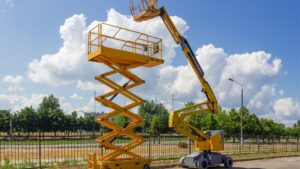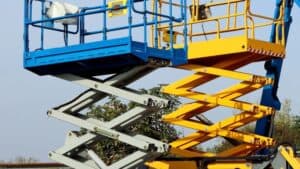
A scissor lift accelerates project timelines and ensures greater jobsite safety. However, for project managers, safety directors, and fleet owners, maximizing these benefits requires enforcing strict scissor lift safety rules.
This guide outlines the critical risk management strategies, preventative maintenance protocols, and OSHA/ANSI compliance expectations governing how contractors use scissor lifts.
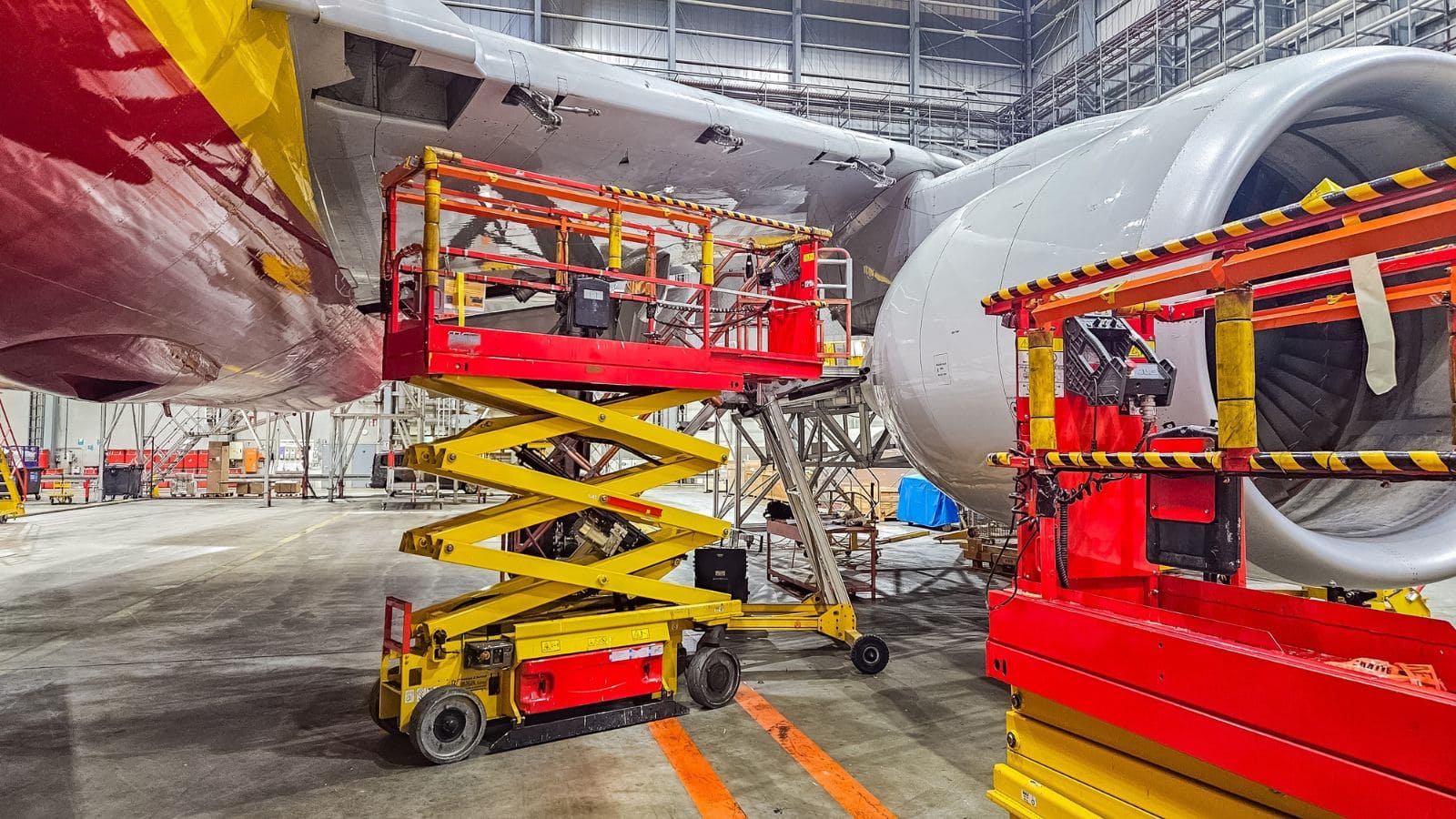
Key Scissor Lift Safety Risks and General Prevention Methods
Understanding recurring scissor lift accidents allows safety managers to implement proactive policies rather than reactive measures. Falls, tip-overs, crushing incidents, and electrical hazards account for the highest liability claims and project delays associated with elevating work platforms.
To effectively manage site safety and protect corporate assets, project leaders must address these core risks systematically. The table below outlines the primary hazards, their typical root causes on jobsites, and the mandatory management actions required to mitigate liability.
| Risk Category | Common Root Causes (Systemic Failures) | Management Action & Liability Mitigation |
| Falls & Falling Debris | Damaged guardrails ; lack of supervision allowing personnel to climb mid-rails; poor housekeeping on the work platform. | Ban climbing on rails to keep workers from falling; Perform daily fall protection and guardrail audits; Keep platform floors clear of tools and debris. |
| Tip-Overs & Equipment Collapse | Deploying lifts on unverified/soft ground; operating on excessive slopes; deferred fleet maintenance resulting in hydraulic leaks or structural failure. | Verify ground load capacity and slope limits before setup; Follow strict daily maintenance routines so the machine never becomes a safety hazard. |
| Crushing & Entrapment | Operating in industrial facilities with low overhead clearances; inadequate traffic management; moving equipment through blind corners without spotters. | Assign dedicated ground spotters when moving the lift; Set up barricades to keep pedestrians and vehicles out of the work zone. |
| Electrical Contact | Raising the platform into an energized power line or low-hanging fixtures without maintaining OSHA’s Minimum Approach Distances (MAD). | Treat all overhead lines as live to prevent electrocution and fatality; Map all electrical sources and strictly enforce OSHA approach distances. |
Step 1: Scissor Lift Safety Training and Inspections
Risk mitigation begins in the planning phase. It requires a documented training program, a well-maintained fleet, and site engineering assessments before a machine is even dispatched.
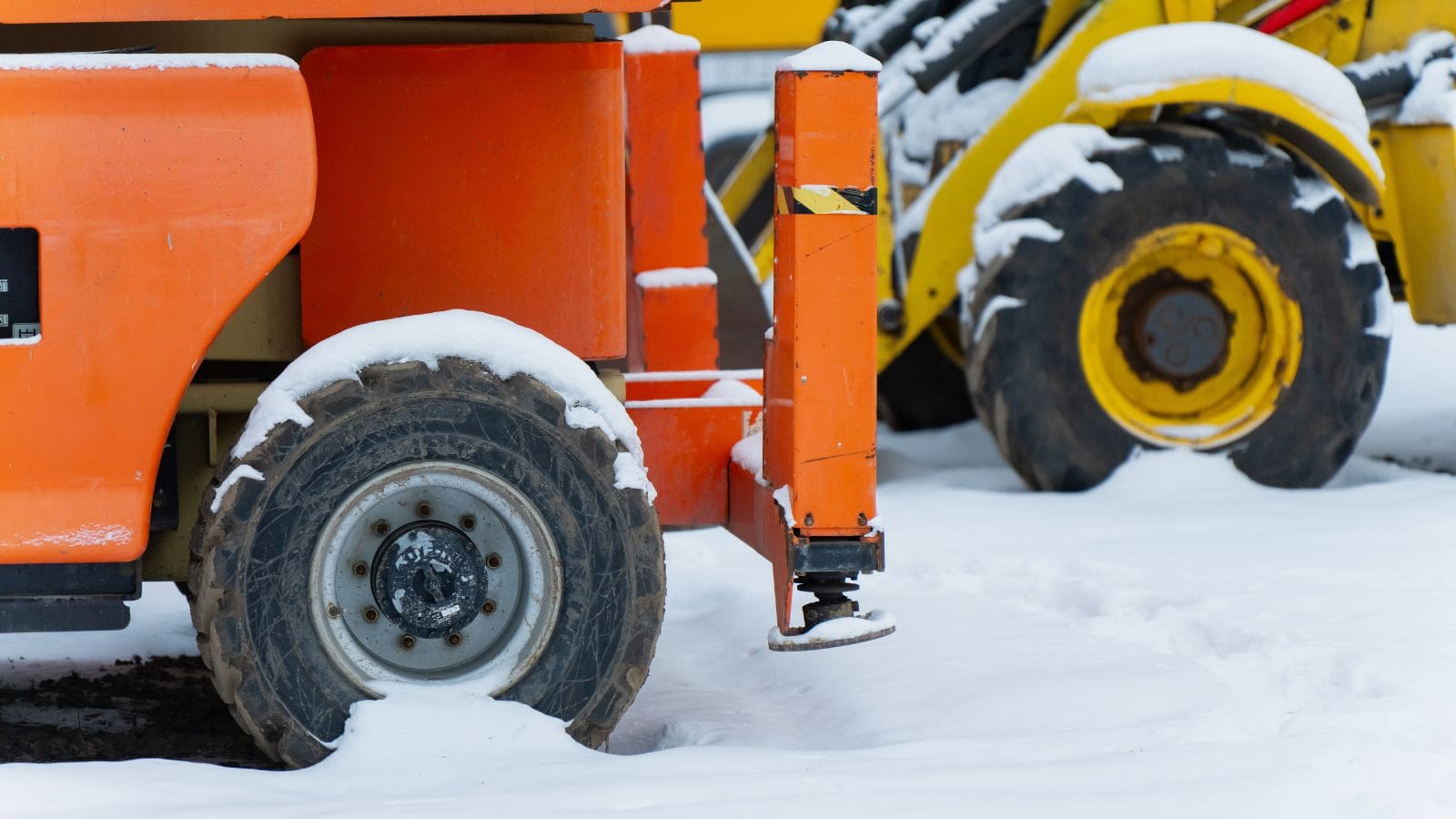
Certification and Training Program Management
Employers are legally required to ensure every scissor lift operator is properly trained. Training and certification programs must be documented and model-specific. Operating a scissor lift requires specialized knowledge of controls and limitations, so supervisors cannot rely on assumed prior experience; they must verify credentials and authorize usage to legally operate scissor lifts.
Continuous safety reinforcement, such as mandatory scissor lift training briefings and refresher courses following near-misses, is essential. Comprehensive scissor lift safety training is the most effective tool for mitigating employer liability.
Preventative Maintenance and Pre-Operation Audits
A scissor lift must undergo a rigorous daily inspection protocol to protect both the worker and the asset. Operators must inspect the following before starting their shift:
- Hydraulic systems for integrity and fluid levels
- Structural conditions of guardrails, entry gates, and toe boards
- Tire health and wheel assembly integrity
- Functionality of emergency stop and descent mechanisms
- Condition of warning decals, horns, and telematics/lights
If an inspection reveals faults, the equipment must follow strict Lockout/Tagout (LOTO) procedures. Furthermore, fleet managers must maintain up-to-date records of required annual inspections by qualified mechanics.
Site Engineering and Environmental Assessments
Prior to positioning, site managers must verify ground load-bearing capacities and evaluate the broader work environment. Indoors, this means reviewing structural floor ratings; outdoors, it requires assessing recent excavations and soil compaction.
Proper traffic control plans, including barricades and routing, must be established to keep unauthorized vehicles and pedestrians safely away from the scissor lift.
Step 2: Fall Protection with Policies and Equipment
Compliance mistakes often happen when site rules confuse scissor lifts with other aerial platforms. Guardrails serve as the primary fall protection on most scissor lifts, whereas personal fall arrest systems are mandated for boom-type aerial lifts.
Strict Guardrail and Gate Protocols
Safety directors must enforce zero-tolerance policies for modified or open guardrails, as they are specifically engineered to prevent workers from falling. Entry gates must be self-closing and secured before elevation. Workers attempting to use ladders inside the platform must be immediately removed from the equipment.
Clarifying Harness and Tie-Off Requirements
While OSHA typically accepts compliant guardrails as adequate protection, corporate site policies or specific task hazard analyses (JHA) may still require specific personal protective equipment. When utilizing fall arrest systems, including a safety harness and lanyard, managers must ensure they are attached only to manufacturer-designated anchor points, never to the guardrails themselves.
Step 3: Maintain Scissor Lift Stability and Load Compliance
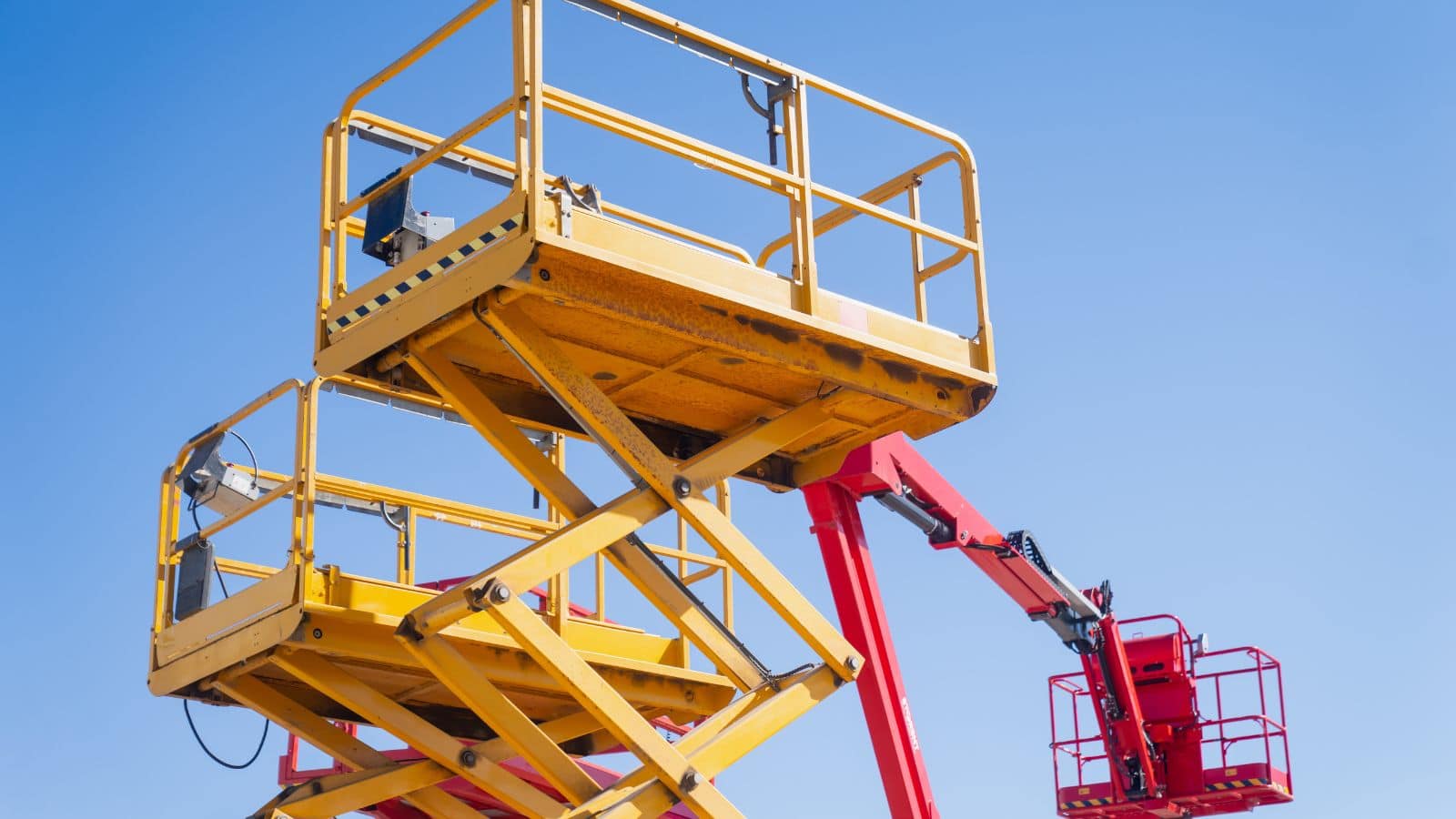
Overturning risks are mitigated through strict adherence to machine capabilities and environmental limits. Equipment procurement must align with the actual demands of the jobsite.
Validating Ground Conditions and Positioning
Equipment should only be deployed on surfaces engineered to support its maximum concentrated floor load. Site managers must strictly govern how operators position the lift, prohibiting operations on slopes exceeding the manufacturer’s operational limits, regardless of project urgency.
Strict Load Rating Enforcement
Procurement teams must provide lifts with adequate load capacity for the specific trade using them. Overloading stresses the scissor stack and hydraulic systems, accelerating depreciation and risking catastrophic failure.
Step 4: Mastering OSHA, ANSI, and Manufacturer Compliance
For enterprise-level contractors and rental fleets, understanding the hierarchy of regulations is the foundation of a robust safety training and maintenance program.
OSHA Classifications for Employers
OSHA categorizes scissor lifts as mobile scaffolds (covered heavily under 29 CFR 1926.451 and 1926.454), unlike traditional boom lifts. This distinction is vital for safety directors when drafting company-wide fall protection policies and defending against compliance audits.
Integrating ANSI Standards and OEM Directives
ANSI A92 standards dictate design, maintenance, and training responsibilities. Crucially, manufacturer (OEM) operating manuals often dictate stricter limits on wind, slope, and load than general OSHA rules; in these cases, the manufacturer’s limits become the legal standard of care.
Documentation: The Key to Corporate Accountability
The strongest defense against liability is immaculate documentation. Fleet owners and site managers must digitize and archive operator certifications, daily pre-shift inspections, and repair histories. This data trail ensures operational readiness and provides undeniable proof of compliance.
True accountability means integrating these scissor lift safety requirements and scissor lift safety tips into the core culture of your company, protecting your workforce, your equipment ROI, and your bottom line.
Upgrade Your Fleet with Equipment You Can Trust
Maintaining jobsite safety and corporate compliance starts with investing in reliable, high-quality equipment. If you are looking to expand your rental fleet or secure dependable aerial work platforms for your next major project, IHURMO is your trusted manufacturing partner.
We build scissor lifts designed to meet the most rigorous international safety standards, ensuring your teams operate efficiently and your assets deliver a long-term ROI.
Contact IHURMO today to request a quote, explore our equipment specs, or discuss how our solutions can integrate seamlessly into your safety-first operations.
Frequently Asked Questions
Can indoor slab scissor lifts be used outdoors if the asphalt is perfectly flat?
Not necessarily. While the ground may be flat and firm, many electric slab scissor lifts are specifically engineered for zero wind speed environments. Taking an indoor-only machine outdoors exposes it to wind loads that the narrow wheelbase cannot counteract, creating a severe tip-over hazard. Always check the manufacturer’s data plate—if it lists a 0 mph wind rating, it cannot leave the building.
What are the critical safety steps for transporting a scissor lift on a trailer?
Loading and unloading are high-risk moments for fleet managers. Never drive a scissor lift up a steep trailer ramp if the tires are wet or muddy, as they easily lose traction and slide off. Use a winch whenever possible. Once on the trailer, the lift must be fully lowered, the emergency stop engaged, and the machine secured using heavy-duty chains at the specific tie-down points designated by the manufacturer—never strap over the guardrails or hydraulic cylinders.
Do freezing temperatures require different operating procedures for these machines?
Yes. Extreme cold thickens hydraulic fluids, which can lead to sluggish control responses and delayed braking. Furthermore, battery-powered lifts will experience a significantly reduced charge cycle in freezing weather. Safety managers should mandate that operators run the machine through several “dry cycles” (raising and lowering the platform slightly while empty) to warm the hydraulic oil before elevating personnel in cold environments.