Two mast climber quotations can only be compared if they price the same working configuration and the same split of supply responsibilities. A cheap equipment line may leave out mast sections, ties, cables or the services the project needs. Lay every offer against one arrangement drawing and one itemized scope before you look at the bottom line.
What you are buying is a documented package that can be delivered, assembled and supported on this particular project. Check technical fit and commercial completeness as two separate questions, and close the gaps in both before the order is placed.
Set One Configuration Basis for Every Mast Climber Quotation
Issue the facade elevation, the required working height, proposed mast positions and the construction sequence. Describe the work and attach a load schedule with masses and where they will sit. Say whether the price covers one installation or several planned relocations.
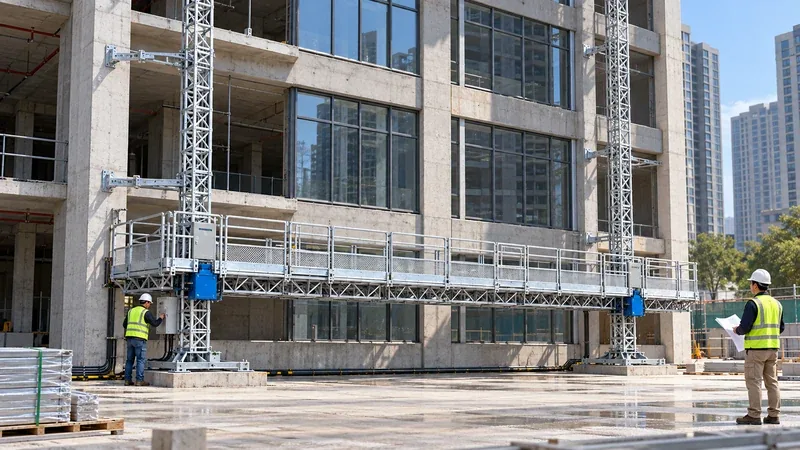
Ask each supplier to return a drawing reference with the offer. On it, record platform length, mast spacing where it applies, end sections, facade-side extensions and operating restrictions. A brochure figure for maximum platform length tells you how long a deck can be built. It says nothing about the capacity of the layout being quoted. If the project could go either way on mast count, read the single-mast vs twin-mast comparison before issuing the inquiry.
Whether your layout points to the IHURMO single-mast climbing work platform or the IHURMO SCP200/12D twin-mast climbing work platform, our offer will list every module, drive, mast section and interface in the package, line by line.
Itemize the Platform, Masts and Building Interfaces
A single line reading “complete set” is not a quotation you can check. Ask for quantities and component identifiers. Platform modules, connecting hardware, decking, guardrails, toe boards and gates should match the returned drawing, and special corners or extensions should appear as their own lines.
Mast sections need a quantity, a section specification and compatible connection details. Ask whether the stated height is mast height or achievable platform travel; suppliers do not always mean the same thing. List any restrictions tied to the proposed base and tie arrangement.
Tie assemblies and building anchors are separate scope items. Often the supplier provides the mast-side components and the project handles structural design, anchor selection and installation. Write that boundary into the inquiry, and request the reactions and interface drawings the responsible engineer will need.
| Package element | Compare in each offer | Resolve before order |
| Working deck | Modules, guards, gates and extensions | Drawing and loading-diagram references |
| Masts and drives | Section quantities and drive assemblies | Compatibility and height definitions |
| Base and ties | Frames, supports and tie components | Structural design and anchor responsibilities |
| Electrical system | Controls, cables and connectors | Supply requirements and cable lengths |
| Services | Training, installation and commissioning scope | Provider, location, duration and exclusions |
Compare Drive Protection and Control Functions
“Safety system” on a quotation means little until it is broken down. Ask how the drives are arranged, what provides overspeed protection, where the travel limits are, which overload functions are fitted and how the machine responds to a fault. On twin-mast arrangements, ask how leveling and coordinated movement are handled.
HSE’s mast-climber drive-unit safety alert describes a failure risk in certain systems that rely on multiple drive units for overspeed protection. Use it as a checklist for questions about fault detection and inspection of the design being offered. The number of drive units on the drawing is not, by itself, an answer.
Find out which checks and maintenance routines apply to the equipment supplied. Get the manuals and a written description of emergency lowering. The technical documents should describe the actual configuration you are buying, because a general brochure cannot fill in a missing control function.
Define Power Supply and Cable Scope
Give the voltage, phase, frequency and the location of the site distribution point. Ask the supplier to state the equipment’s electrical requirements and the cable route they have assumed. Confirm whether cables, connectors and cable management equipment are included, and in what quantities.
The equipment connection and the site’s temporary electrical distribution are two different jobs. A supply cable on the offer does not mean distribution boards, protection or generator capacity are covered. Decide who designs and verifies each of those interfaces.
Price Installation, Relocation and Dismantling Separately
Who supplies erection labor, lifting equipment, access and supervision? Remote guidance by phone and a technician standing on site are priced very differently, so make the offer say which one it is. Where travel, accommodation or an interpreter affect the service price, state those assumptions too. For a picture of what erection involves, see our mast climber installation guide.
Commissioning, inspections and local acceptance each need a named owner. The documents that ship with the machine may not cover every requirement in the destination market. Request the specific documentation the project needs, and check local obligations with the responsible specialists.
If the platform will move to another elevation, ask for a relocation scope. Extra mast components, different ties, handling equipment or a new cable route may be needed. Rental and fleet buyers should also price dismantling and return handling.
Compare Delivery Terms and Support on the Same Basis
Record the currency, quotation validity, payment milestones and named delivery location. Where Incoterms are used, state the rule and the edition. Keep three dates apart: ready at the factory, shipped and arrived on site. Then settle who pays for packing, freight, insurance, duties and unloading.
Ask for packing dimensions and weights so logistics can plan the trucks and the unloading. Find out how components are marked and protected in transit. The packing list should line up item for item with the equipment list, so a shortage shows up at unloading and not halfway through erection.
Read the warranty for what it covers and how a claim is made. Look for exclusions, who carries out diagnosis and who pays freight or labor on a repair. Keep recommended spare parts apart from included parts, and ask about lead times on any component whose failure would stop work.
Normalize the Offers Before Comparing Price
Say Offer A leaves out electrical cables and installation supervision, and Offer B includes both. Get confirmed prices for the missing scope before you compare totals. A guessed allowance makes an incomplete offer look firmer than it is.
Keep unresolved technical exceptions on the same sheet as the price comparison. If an offer proposes a different platform layout, adding a commercial allowance will not make it equivalent. To see what else is available against the same project basis, browse the IHURMO mast climbing work platform range.
Mast Climber Quotation FAQs
Is a price per meter enough for comparison?
No. Mast height and platform length measure different parts of the package, and bases, drives, ties, controls and services can move the total without changing either figure.
Should every optional spare part be included?
Ask for an itemized recommendation and weigh it against local support, project duration and replacement lead times. Keep optional stock apart from the equipment needed for the quoted installation.
Request an Itemized IHURMO Platform Package
Request an itemized mast climber quotation with the facade drawing, working height, loading schedule, power details, destination and target delivery date. Include planned relocations and the service scope you need, and we will return equipment, interfaces and commercial terms on one comparable basis.