
Compare lead-acid and lithium scissor lifts as complete machines doing the same day’s work. Battery chemistry changes how you charge, maintain and eventually replace the pack. Runtime and ownership cost, though, depend just as much on the charger, the controls, the operating temperature and the service support you can get locally.
Start with two machines that meet the same access requirement. Then ask each supplier to show, in writing, how the battery system copes with your planned work pattern. A bigger amp-hour number or a “maintenance-free” sticker is not a reason to pick one lift over another.
Hold the Scissor Lift Configuration Constant
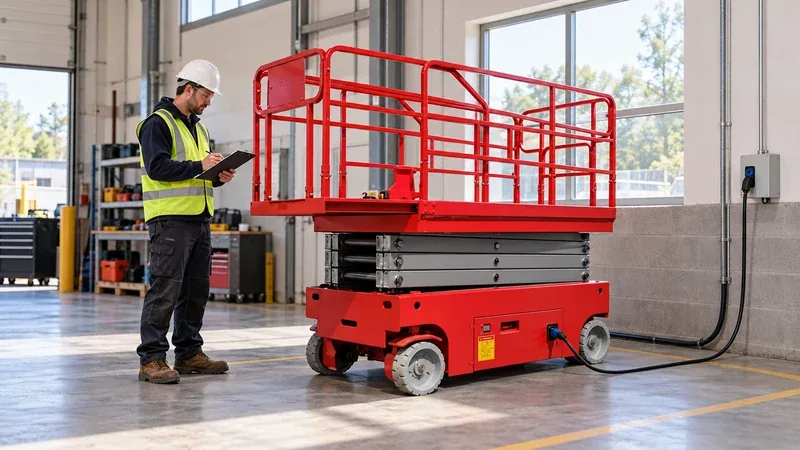
Line up platform height, rated load, platform size, drive arrangement and indoor or outdoor rating before you look at batteries. A different hydraulic system, drive motor or machine weight changes energy use. Skip this step and the “battery advantage” you think you see may just be the difference between two lifts.
Write down how far the lift travels in a shift, how often the platform goes up and what it carries when it does. Add slopes within the machine’s permitted use, floor conditions and ambient temperature. A lift parked at height for an hour uses its battery very differently from one that drives and raises all day.
Two IHURMO machines show how the product pages describe power today. The IHURMO mobile self-propelled scissor lift (16 m maximum height, 300 kg rated load) runs on fast-charging lithium battery packs in a swing-out compartment. The IHURMO electric self-propelled scissor lift (6 m maximum height, 500 kg rated load) is battery-driven with a swing-out battery box; its page does not name the battery chemistry, so the quotation should state the pack type and charger. If you are still deciding which kind of lift the job needs, start with our overview of types of scissor lifts.
Identify the Exact Lead-Acid or Lithium Battery System
“Lead-acid” covers flooded batteries and sealed designs such as AGM. Flooded batteries need electrolyte topped up according to their instructions. AGM batteries skip that watering routine. Treat them as two options in the comparison, not one.
“Lithium” needs the same precision: the chemistry and the pack specification. Record the manufacturer, nominal voltage, energy rating, battery management system and compatible charger. Ask which machine functions depend on communication with the pack, and what the operator sees when a protection limit trips.
On an IHURMO quotation, the battery chemistry, pack model and approved charger should be written into the offer. Compare maintenance instructions for that exact configuration. Figures quoted for a different machine tell you little about how this one will run or what servicing it will need.
| Item | Lead-acid configuration | Lithium configuration |
| Battery identification | Flooded or sealed type, model and pack arrangement | Chemistry, pack model and management system |
| Energy specification | Voltage, Ah and discharge-rate basis | Voltage, Ah, kWh and usable-energy limits |
| Charging | Approved profile and completion time | Approved charger, current and temperature restrictions |
| Maintenance | Watering where applicable, terminals and inspection | Inspection, diagnostics and specified service checks |
| Replacement | Compatible set and local availability | Approved pack, software and support requirements |
Compare Usable Energy and Runtime Under One Test
Amp-hours measure charge capacity at a stated voltage and test condition. On their own they cannot compare packs with different voltages. For a rough nominal-energy figure, multiply voltage by amp-hours and divide by 1,000 to get kilowatt-hours.
Take a hypothetical 24 V, 200 Ah pack: about 4.8 kWh of nominal energy. A hypothetical 48 V, 100 Ah pack gives the same answer. Neither number tells you usable energy, lift cycles or how long the shift will last.
Discharge limits, current draw, temperature and the age of the pack all change what you actually get out of it. Ask IHURMO for the datasheet of the battery proposed, including the discharge rate behind any Ah figure, and compare ratings measured under the same conditions. The largest printed number is often measured under the kindest ones.
Better still, ask for a runtime demonstration or a test report that states travel distance, lift cycles, load, temperature and starting charge. Agree what “empty” means, including whether the lift can still drive itself back to the charger.
Match Charging Time to the Available Site Window
Say when charging can happen: overnight, between shifts or during breaks. Then ask how long the supplied charger takes to put back the energy you need from a defined starting point. A bare percentage claim is hard to compare until you know the pack size and the charger rating behind it.
Check charger input voltage, frequency, plug type and circuit requirements, then walk the actual charging spot and count how many machines will share that supply. A pack that can accept more current still charges slowly on a small charger.
Ask whether the system allows opportunity charging during breaks, and under what conditions. Follow the approved charging routine for that battery. Put charger compatibility in the purchase contract, so it is settled before the lift arrives, not argued about on site.
Check Temperature, Storage and Maintenance Responsibilities
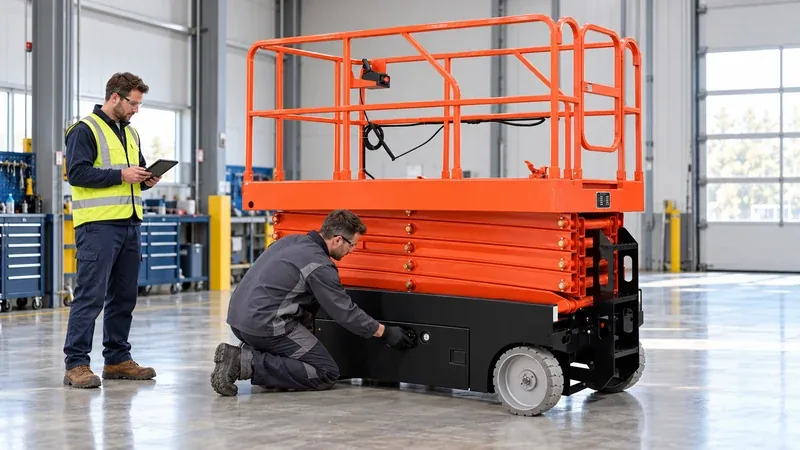
Get separate temperature ranges for operating, charging and storage. A machine can sometimes work in conditions where its battery will not take a charge without extra equipment. Ask whether a heater or other temperature control is included and how it affects charging time.
Give battery checks to the people who will really do them. For flooded batteries, that means safe access, the manufacturer’s watering procedure and a suitable charging area. For lithium, decide how staff will spot faults, pull diagnostic information and get support for the pack. Our article on common scissor lift problems covers routine battery and hydraulic checks.
Write down storage instructions for idle periods and the checks to run before a lift goes back into service. Cables, connectors, chargers and the machine itself still need inspecting, whatever the battery label says.
Calculate Ownership Cost with Traceable Assumptions
Add up purchase price, charger, scheduled battery work, replacement packs, electricity, transport and expected downtime over the same ownership period. Include training or diagnostic tools if they are needed. Base replacement costs on written quotations, not a rule-of-thumb price per battery.
Run a low-use case and a high-use case separately. A rental fleet sending lifts out every week values fast, flexible charging differently from a plant that uses one lift a few times a month. No single payback period or cycle-life multiplier fits both.
Read the warranty next to your projected use. How does it treat capacity loss, cycle count, calendar age, storage and charging habits? The headline warranty period tells you nothing about the remedy or what a replacement will cost.
Scissor Lift Battery FAQs
Can a lead-acid lift be converted to lithium later?
Only through a conversion approved for that exact machine. Pack mass, mounting, charger, protection and control compatibility all need review; matching the nominal voltage is not enough.
Does lithium always provide a longer shift?
No. Compare usable pack energy over the tested work cycle. Chemistry cannot predict runtime for machines with different battery capacities or drive systems.
Request Battery Options for the Intended Work Cycle
Discuss scissor lift battery configurations with IHURMO: tell us the required height, load, travel pattern, shift schedule, temperature range and charging supply. We will come back with the battery options, charger details and warranty terms for the machines on your shortlist.