You’ve probably heard the term EWP mentioned around construction sites or industrial projects but might not know exactly what it stands for.
Follow Ihurmo to find out more about Elevated Work Platforms (EWP) and their safety guidelines.
What Is EWP?
EWP stands for Elevated Work Platform, a category of machinery that provides temporary access to high or out-of-reach areas. You can safely use these machines to perform tasks at height.
Mechanical Systems and Safety Features
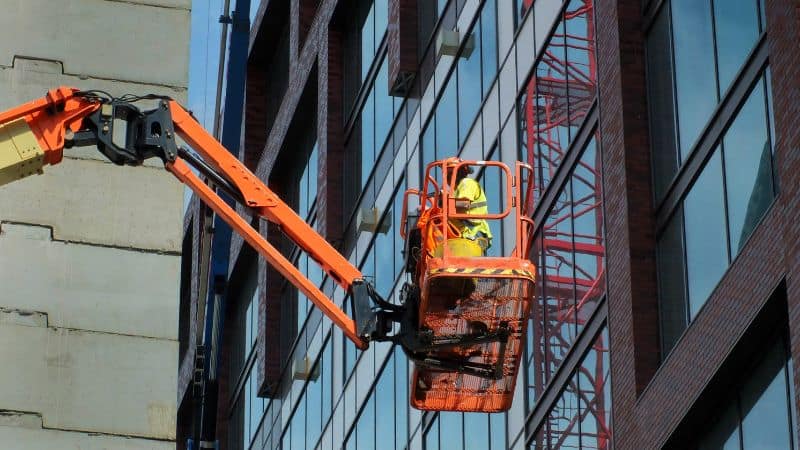
EWPs have advanced mechanical systems and built-in safety features to ensure both reliability and efficiency.
Their core components include hydraulic or electric lift systems that move on both vertical and horizontal levels seamlessly, and outriggers designed to prevent tipping during operation.
The platforms are designed around the core concept of safety, and equipped with non-slip surfaces, guardrails, and anchor points for safety harnesses to reduce the risk of accidents.
Additionally, control panels on both the platform and at ground level provide users with precise navigation and emergency override capabilities.
Enhancements and Durability
To further improve safety and performance, modern EWPs integrate cutting-edge technologies such as automatic load sensors, which monitor and adjust platform weight limits, and tilt alarms that warn nearby workers during operation on uneven terrain.
These innovative designs, combined with durable materials like reinforced steel and aluminum, ensure the structural strength and longevity of these platforms.
Types of Elevated Work Platforms
There are three primary types of elevated work platforms, and each variation offers distinct advantages for different tasks and environments.
Scissor Lifts
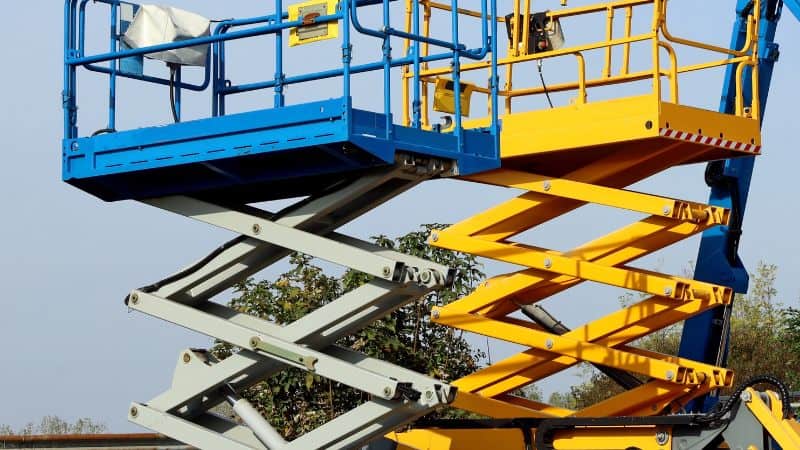
Scissor lifts elevate vertically using a criss-crossing mechanism, providing a stable and rigid platform. These lifts come in various sizes, including compact units for narrow aisles and double-height models for extensive vertical reach.
You use scissor lifts for tasks requiring a large, stable work area without the need for horizontal outreach. They support substantial weight capacities, typically under one ton, and include standard safety features like guardrails and non-slip surfaces.
Boom Lifts
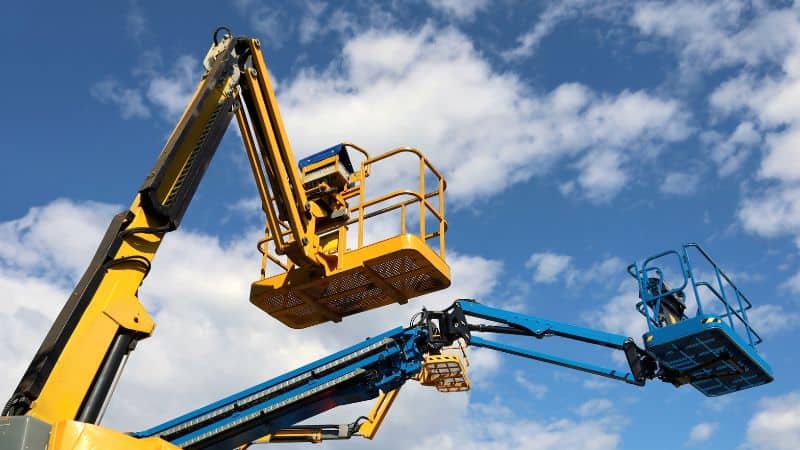
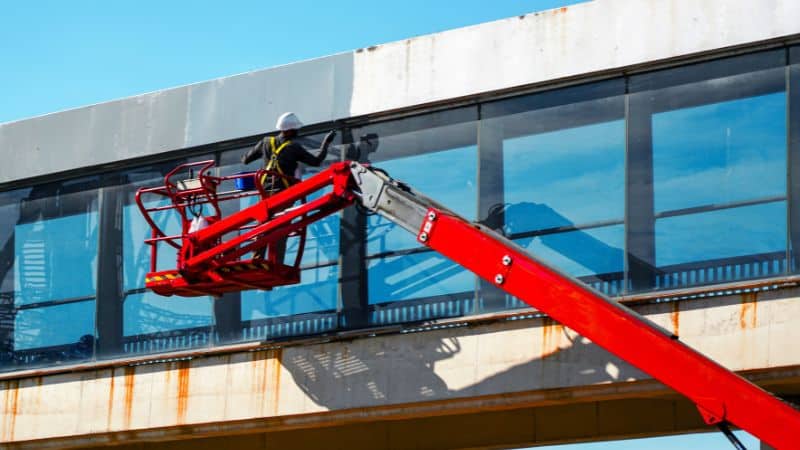
Boom lifts feature an extendable arm that provides both horizontal and vertical reach, allowing workers to reach difficult or awkward positions. Telescopic booms offer straight-line extension for more horizontal outreach, while articulating booms bend at one or more joints to circumvent obstacles precisely.
Boom lifts often appear in building exterior construction projects, construction sites, and industrial facilities where overhead access is necessary. They include platform-mounted controls for precise maneuvering and are available in both electric and engine-powered versions. Spider boom lifts offer a compact, highly maneuverable alternative for uneven terrain or tight spaces.
Vertical Mast Lifts
Vertical mast lifts provide compact, vertical-only elevation, and are ideal for tight indoor spaces and low-ceiling areas. They feature a small footprint that allows passage through standard doorways and narrow corridors. These lifts are commonly used for light maintenance tasks where horizontal movement isn’t required.
The design of these lifts focus on maneuverability in confined spaces, but they are still fully equipped with all essential safety features. They typically have lower weight capacities compared to other EWP types, making them suitable for personnel and light tools rather than heavy materials.
Applications and Industries
Construction and Maintenance
EWPs are extensively used for construction and maintenance. These machines are crucial for jobs such as exterior painting on high-rise buildings, window installations on skyscrapers, and HVAC system maintenance on commercial properties.
In construction sites, traditional scaffolding is often replaced with scissor lifts, while boom lifts are employed to reach over obstacles, which relieve the workers of unnecessary physical burdens. By offering a secure platform for workers, tools, and materials, EWPs enhance both safety and productivity during construction and maintenance.
Warehousing and Logistics
EWPs are designed for inventory management, storage retrieval, and facility maintenance. Electric scissor lifts and compact vertical mast lifts operate smoothly within narrow aisles and high-bay warehouses. These machines help to stock pallets on top-tier racks, conduct routine inspections of sprinkler systems, and replace lights in distribution centers.
Their battery-powered operation ensures zero emissions, which makes them well-suited for indoor environments. EWPs significantly enhance operational efficiency by providing access to the elevated storage and maintaining safety.
Benefits of Using EWP
EWP has many advantages for both the work process and personnel safety, and understanding them helps you familiarize yourself with these machines.
Improved Efficiency and Access
- Faster Task Completion: The efficiency of operations is significantly enhanced by quick elevation and precise positioning. Also, carrying framesand stable platforms reduce the need for repositioning during tasks. Models with independent power sources ensure work schedules remain uninterrupted.
- Versatile Performance: By enabling precise adjustments to heightsand angles, this system makes it possible to get to previously unreachable locations, outperforming traditional methods like scaffolding or ladders.
Enhanced Safety for Workers
- Reduced Fall Risks: A combination of passive and active safety features—including guardrails, non-slip surfaces, harness points, fall arrest systems, and load management—provides enhanced protection. Thestable platform design minimizes the chance of incidents by eliminating the need for climbing, thereby reducing tiredness and fatigue.
- Regulatory Compliance: These machinesbetter meet universal safety standards, which is beneficial to both contractors and workers.
Choosing the Right EWP
Selecting the appropriate Elevated Work Platform (EWP) involves a thorough evaluation of job requirements and site conditions. To determine the most suitable EWP, several elements should be considered.
EWP Criteria for Your Choice
First, you need to select a platform with a working height at least 3 meters above the highest task. This requirement helps ensure adequate overhead clearance.
Second, assess whether the platform will need to handle tools or materials, and opt for models with an integrated jib for safe load handling.
Third, analyze ground conditions and spatial constraints at the worksite. Compact and portable EWPs with a tight turning radius are ideal for confined spaces or uneven outdoor terrain.
Finally, verify the machine’s rated load capacity to ensure it can support the total weight of workers, tools, and materials.
How to Choose EWP From Ihurmo
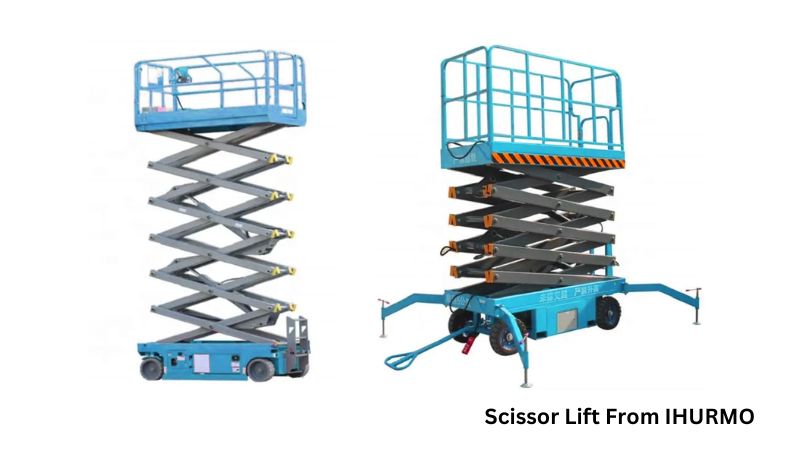
Here at Ihurmo, we have a wide collection of EWPs, aiming for distinct functions and application scenarios. Adopting the aforementioned criteria, we will help you make well-informed choices.
We will begin with work capacity. For simple construction, where the platform would only carry a single worker with light and essential gear, this 100 kg lightweight scissor lift would be the perfect choice.
If you want a scissor lift with higher capacity that supports crew operations and heavy-duty equipment, we have many models that suit your needs, including this 1-ton model with a spacious 3150mm x 1600mm platform.
Height and area occupancy are also important factors. If you choose our scissor lifts, there would be more leeway for your project because of their 60 ft/18 meters maximum vertical reaches.
When there is a need for an EWP in work sites with cramp floor areas, this single-mast 9 m scissor lift would be the optimal choice, as it only takes up a minimum area of 1300 mm x 850 mm when stowed.
Choosing EWP according to the specific situation is pivotal to the construction process, and we are more than willing to provide you with precise and quality solutions!
Frequently Asked Questions
How do EWPs improve safety?
EWPs enhance safety with features like guardrails, non-slip surfaces, and built-in fall arrest systems. Proper training, load management, and adherence to safety protocols further reduce accident risks and ensure compliance with regulations.
What should I consider when choosing an EWP?
Key factors include required work height and reach, material handling needs, terrain type, and load capacity. It’s also essential to involve trained operators, conduct risk assessments, and ensure the equipment matches both job demands and site conditions.
Why are operator training and certification important?
Proper training and valid certification ensure operators understand safety features, load limits, and site-specific risks. This reduces accidents, improves efficiency, and helps maintain compliance with occupational health and safety standards.