Ever wondered how construction crews reach towering heights safely and efficiently? You’ve probably seen them on job sites—those versatile machines lifting workers and tools high above the ground. They’re called aerial work platforms and are essential for modern construction.
These platforms aren’t just about elevation. They represent a major shift toward safety and flexibility in accessing difficult areas, and this article by us at Ihurmo will surely help you learn more about these machines.
What Is an Aerial Work Platform?
An aerial work platform (AWP) is a mechanical device that provides temporary access to elevated work areas. They come in various types, each designed for specific applications.
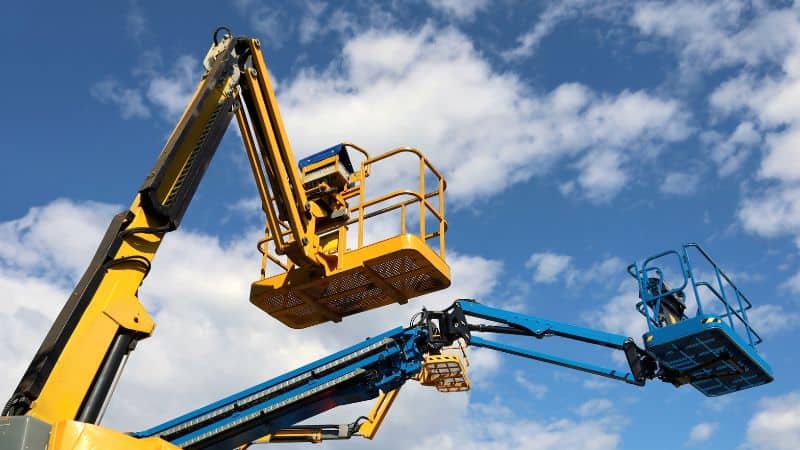
AWPs include several common types:
- Boom lifts offer extended horizontal and vertical reach.
- Scissor lifts provide stable, vertical-only elevation.
- Vertical mast lifts deliver compact, straightforward lifting.
- Personnel lifts serve for low-height, indoor maintenance tasks.
These platforms can be operated using controls located either on the platform itself or at the base. Modern AWPs feature safety systems like tilt sensors, overload protection, and emergency descent mechanisms. These devices comply with industry standards set by organizations such as OSHA and ANSI.
Key Components of an Aerial Work Platform
There are three primary types of aerial work platforms, each with distinct components and operational features.
Boom Lifts
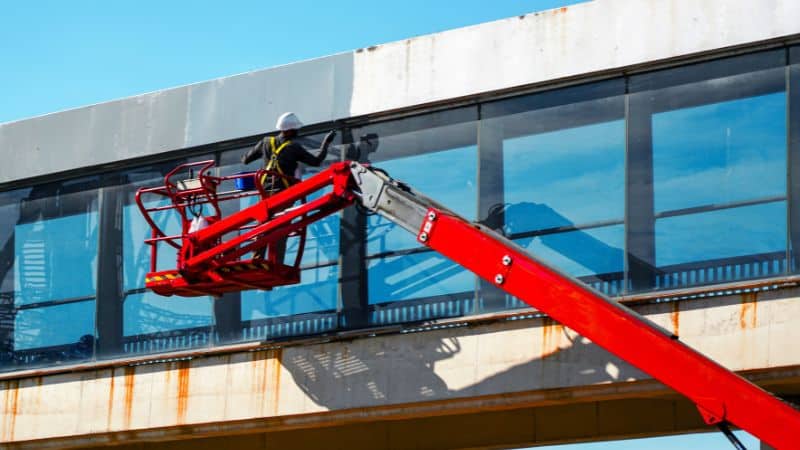
Boom lifts feature a hydraulic arm that extends both vertically and horizontally, providing access to difficult-to-reach areas. Its mechanical arm is usually installed with multiple joints for flexiable movement. But they also require more stringent active fall protection systems such as harnesses, because the platform extends beyond the base and moves its center of gravity, leading to the possibility of workers losing their balance during physical labor.
Boom lifts are commonly used for exterior building maintenance, painting tasks, and electrical installations. These machines offer significant mobility and reach, making them ideal for construction sites with complex access requirements.
Scissor Lifts
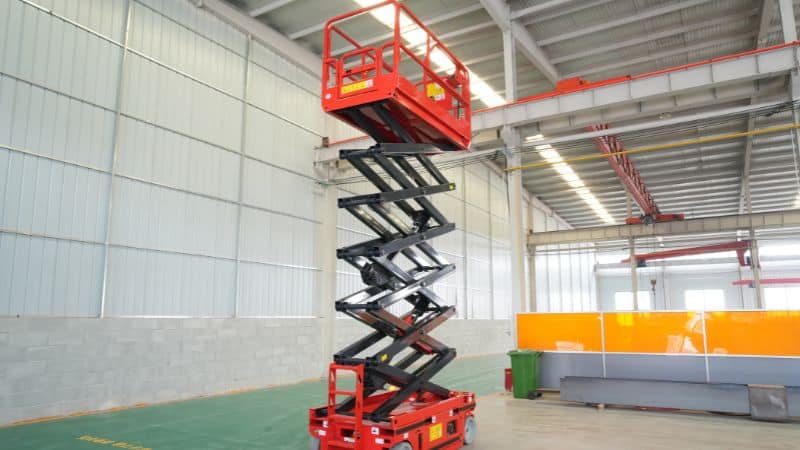
Scissor lifts utilize crisscrossing supports to elevate the platform vertically above the base. Operators would benefit from passive fall protection through integrated guardrails and steadier platforms compared to the ones on boom lifts.
Scissor lifts provide high vertical reach but lack horizontal extension capability. They are often deployed for indoor warehouse operations, light construction duties, and shelving installations. Their stable base and straightforward vertical movement make scissor lifts perfect for tasks that need consistent elevation.
Personnel Lifts
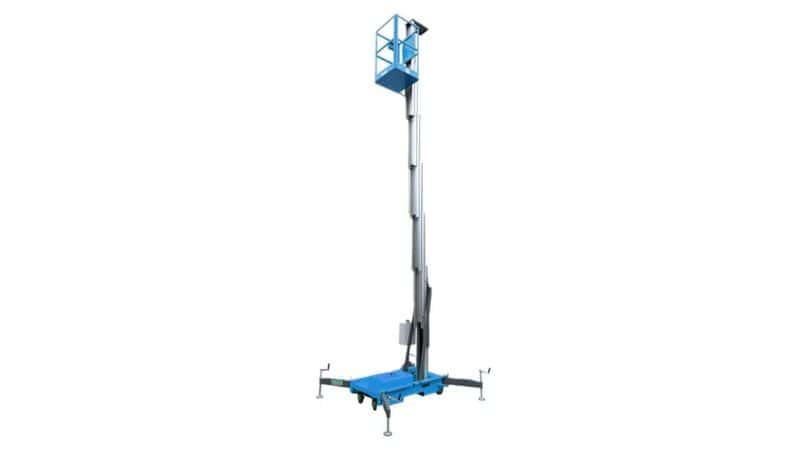
Personnel lifts, or single-mast lifts, are compact devices designed typically for single operators that perform facility maintenance or indoor assignments. These lifts easily fit through narrow corridors and hallways where larger equipment cannot reach.
Personnel lifts come in self-propelled or trailer-mounted configurations, offering flexibility for various job sites. They are suitable for minor tasks like changing lighting fixtures, performing simple repairs, or accessing confined elevated areas. Their smaller size and focused design make personnel lifts essential for precision work in limited spaces.
Common Uses in Construction
Aerial work platforms serve three primary functions on construction sites, each enhancing safety and efficiency for elevated tasks.
Reaching High Areas
One of the most important applications of aerial work platforms, as their name implies, is reaching high places. This effectively replaces traditional methods like ladders or scaffolding in many situations. They improve both speed and safety for tasks such as fixture installation, structural inspection, or finishing work.
Different AWPs are designed to tackle various scenarios. Boom lifts extend outward and upward, so they are best for reaching over complex obstacles. Scissor lifts elevate vertically, ideal for stable, straight-up access. Using an AWP reduces setup time and minimizes physical strain compared to conventional methods.
Material Handling
These platforms efficiently lift and position construction materials and tools to required heights. Scissor lifts offer large, stable platforms for moving bulkier items, like electrical components, drywall sheets, or piping systems. To put it into perspective, this 500 kg-1000 kg electric scissor lift can load multiple workers along with their gear and construction materials, then send them up to 10 meters high. Boom lifts provide precise placement capabilities for awkward or heavy loads. This functionality reduces labor intensity, accelerates project timelines, and helps to maintain better control over materials, decreasing the risk of drops or damage.
Maintenance and Repairs
Aerial work platforms grant workers flexible access for on-site building upkeep, repairs, and finishing activities. Its common applications include exterior painting, window cleaning, or structural repairs without erecting permanent scaffolding.
For this specific application, boom lifts can reach out to curved, tilted and uneven surfaces when vertical lifting alone is not enough, while scissor lifts and compact personnel lifts fit in tight interior spaces. AWP enables workers to conduct inspections and adjustments at heights over the active working site, so there would be minimal disruption to the ongoing construction.
Safety Considerations for Operators
Elevation hazards should not be overlooked, so workers need to prioritize safety when operating an aerial work platform.

Training Requirements
AWP operators should receive comprehensive training covering equipment-specific operations, controls, and safety devices. Training sessions typically last 3-6 hours or more, ensuring that they understand lift capacities and operational limits. This instruction conforms to OSHA standards and industry best practices, emphasizing hazard awareness and proper manual use.
Pre-Use Inspections
Daily pre-start inspections are a must; always remeber to verify the platform’s condition and functionality. Checklists include examining controls, safety devices, and the working environment for stability. These mandated checks address construction hazards, confirming the AWP is safe before every operation.
Worksite Hazards
It’s possible for operators to encounter hazards like falls, tip-overs, and electrical contact during AWP operation. Environmental factors increase risks, including proximity to overhead power lines and uneven ground conditions. Improper tie-off methods create swing fall potential, requiring constant situational awareness.
Choosing the Right Aerial Work Platform
Selecting the appropriate aerial work platform involves evaluating three main factors: job requirements, safety guidelines, and technical features. Procurement decision should be based on the specific tasks, site conditions, and necessary safety protocols to ensure optimal performance and worker protection.
Key Selection Criteria
Evaluate these factors when choosing an AWP:
- Height and reach requirements determine the necessary working height and horizontal outreach.
- Workspace constraints influence the selection of compact or extended-base models.
- Load capacity dictates the maximum weight the platform supports, including workers, tools, and materials.
- Power source options include electric, diesel, or hybrid systems, affecting indoor/outdoor use.
- Maneuverability needs guide the choice between tracked, wheeled, or rough-terrain models.
Platform Types and Applications
Match the AWP type to your project’s demands:
| Platform Type | Primary Movement | Ideal Applications |
|---|---|---|
| Boom Lift | Vertical and horizontal | Exterior maintenance, electrical work |
| Scissor Lift | Vertical only | Indoor tasks, light construction |
| Vertical Mast Lift | Vertical only | One operator, single-mast, precision work in tight spaces |
Prioritizing Safety and Compliance
The chosen AWP must meet all relevant safety standards and include necessary features. Ensure the platform has guardrails, harness attachment points, and an emergency descent system. Check for stability features like outriggers if the job requires extended reach beyond the base. Confirm compliance with OSHA and ANSI regulations based on the platform’s design and intended use.
Conclusion
You now understand that aerial work platforms are essential tools for modern construction. These machines will help you complete high-level tasks with greater confidence and productivity. They’re a smart investment for any construction team focused on safety and efficiency. Choosing the right AWP for your project is crucial. Consider your specific job requirements and always prioritize operator training and safety compliance!
Frequently Asked Questions
How do aerial work platforms improve safety on construction sites?
AWPs improve safety by reducing the need for ladders or scaffolding, which are less stable. They include built-in safety features like guardrails, emergency descent systems, and tilt alarms. Proper training and daily inspections further minimize risks such as falls, tip-overs, or electrical hazards.
What should I consider when choosing an aerial work platform?
Consider the required working height, reach, load capacity, workspace size, and power source (electric, diesel, etc.). Also evaluate maneuverability needs and ensure the AWP meets safety standards like OSHA and ANSI. Matching the platform type to your specific task ensures optimal safety and efficiency.
Do operators need special training to use an AWP?
Yes, operators require specific training that typically lasts 3–6 hours. Training covers equipment operation, controls, safety devices, and hazard awareness, complying with OSHA standards. Proper training ensures safe usage, reduces accident risks, and helps maximize productivity on the job site.
What are common uses for aerial work platforms in construction?
Common uses include accessing high areas for installation or inspection, handling materials efficiently without manual climbing, and performing maintenance or repairs with minimal disruption. AWPs are versatile for tasks like electrical work, lighting changes, exterior maintenance, and structural assessments.