Tower cranes are essential for modern construction projects, enabling the lifting and placement of heavy loads at great heights. Their impressive reach and lifting power come from advanced mechanical design and reliable power systems, making them vital for large-scale construction sites.
Fundamental Components That Power Tower Cranes
Tower cranes use several key systems to lift heavy loads safely. The mast provides vertical support, the slewing unit rotates the crane, and the jib and counterweight system keep everything balanced during operation.
Mast, Turntable, and Slewing Unit
The mast is the vertical backbone of the tower crane, made of modular steel sections anchored to a concrete base. This structure can reach hundreds of feet, secured by anchor bolts for stability.
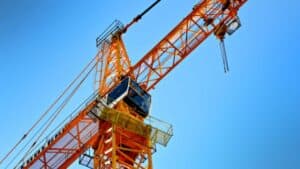
Atop the mast, the slewing unit uses electric motors and gears to rotate the crane 360 degrees. The turntable distributes this rotational force, allowing precise load placement anywhere within the crane’s working radius. The operator’s cab is mounted near the slewing unit, giving clear visibility, and is equipped with wind speed monitors and a Load Moment Indicator (LMI) for safety.
Jib, Counterjib, and Counterweight
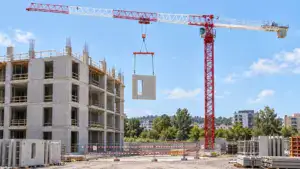
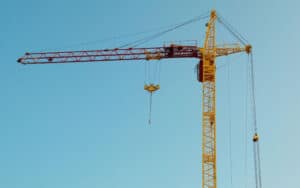
The horizontal jib extends from the tower and carries the lifting mechanism. Its length determines how far loads can be moved from the mast. The counterjib, on the opposite side, holds the counterweights—concrete or steel blocks that balance the crane during lifting.
This balanced design prevents tipping when lifting heavy loads. Operators adjust lifting limits based on how far the trolley extends along the jib, as load forces increase with distance from the mast, which can be monitored using energy storage data.
Lifting Mechanism and Hook Block
The lifting mechanism includes electric motors, wire rope drums, and a trolley system that moves along the jib. The hoist motor raises and lowers the hook block, while another motor moves the trolley horizontally. The hook block, attached to multiple cables, provides safe load handling and can rotate freely to prevent cable twisting.
All movements are powered by the crane’s electrical system, with controls in the operator cab for hoist speed, trolley position, and slewing. The LMI monitors these actions to prevent overloading.
How Power is Delivered and Controlled in Tower Cranes
Electric Motors and Power Systems
The tower crane’s power typically comes from an external source at ground level. Most often, a diesel generator or the construction site’s grid supplies electricity through cables running up the mast to the operator’s cab, but some sites are exploring battery solutions.
Multiple electric motors handle different tasks: the main winch motor lifts and lowers loads, another motor moves the trolley, and a third rotates the crane. Each motor draws power from the same system but operates independently, allowing simultaneous movements. These motors must be strong enough to lift heavy loads smoothly and safely.
Control Systems and Operator Input
The operator uses joysticks, switches, and pedals in the cab to control the crane. Digital displays show load weight, hook position, and wind speed. Moving a joystick sends signals to the control system, which activates the appropriate motor at the desired speed. Load charts help operators stay within safe lifting limits.
Safety Devices and Monitoring Tools
The LMI is a crucial safety device, constantly measuring the load weight and comparing it to the crane’s capacity. If the load is too heavy, the system triggers warnings. Limit switches prevent unsafe movements, and anemometers monitor wind speed for safe operation. The control system also checks power usage and shuts down components if issues arise, preventing damage or accidents.
Types of Tower Cranes and Their Working Principles
Hammerhead, Luffing Jib, and Mobile Tower Cranes
Hammerhead tower cranes are the most common. They feature a horizontal jib that rotates 360 degrees, offering a large working area for moving loads.
Luffing jib cranes have a jib that can tilt, reducing the swing radius—ideal for tight urban spaces where space is limited.
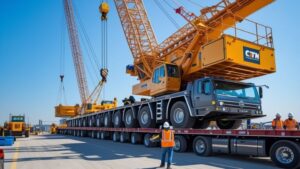
Mobile tower cranes combine tower crane lifting power with mobility, allowing quick relocation around a site or between projects. They are suited for lighter loads and smaller jobs where fast setup is needed.
Climbing Process and Erecting a Tower Crane
To erect a tower crane, a mobile crane assembles the initial mast, slewing unit, and jib. For greater heights, the crane uses a hydraulic climbing frame to lift its upper structure, creating space for new mast sections to be inserted and bolted in place. In high-rise projects, cranes may climb within the building structure, reusing mast sections as needed.
Build Higher with IHURMO
Ihurmo supplies top-tier tower cranes, construction hoists, and advanced lifting equipment engineered for the rigorous demands of modern construction, backed by strong manufacturing capability and consistent quality. If you want safer lifts, smoother workflows, and dependable support, contact us today.
Frequently Asked Questions
What are the different power sources for tower cranes?
Most tower cranes use electricity from the local grid. Diesel generators provide power where grid access is unavailable. Hybrid power systems combine both for flexibility. Some modern sites are exploring battery solutions as a sustainable alternative.
Can tower cranes function during a power outage?
No, tower cranes cannot operate during a complete power outage without backup power. Most rely on external electrical sources. However, cranes equipped with diesel generators or hybrid systems can continue operating. Emergency braking systems engage automatically to secure suspended loads if power is suddenly lost, preventing dangerous drops.
What weather conditions prevent tower crane operation?
High winds are the primary concern—most cranes shut down when wind speeds exceed 35–40 km/h (12–14 m/s). Anemometers monitor wind speed continuously, and the control system will halt operations if safe limits are breached. Heavy rain, lightning storms, and extreme temperatures can also restrict operation. Operators must visually inspect the crane before resuming work after adverse weather.