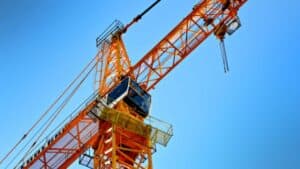
Luffing is a key movement in many modern cranes, allowing the boom or jib to pivot up and down. This function is especially valuable for construction sites with limited space, as it enables precise load placement without moving the entire crane.
Understanding Luffing in Cranes
Luffing describes the up-and-down pivoting of a crane’s jib or boom at its base. By changing the angle, the operator adjusts the crane’s working radius and lifting height, moving loads closer or farther away without repositioning the whole crane. This vertical movement is essential for projects where space is tight or obstacles are present.
Luffing Mechanism Components
A crane’s luffing system includes several key parts. The luffing drum, attached to a drive unit, winds or unwinds wire rope connected to the jib’s pivot. This setup allows the operator to raise or lower the jib smoothly, aided by a tackle system that multiplies lifting force.
- Luffing drum: controls rope for boom angle
- Wire rope: links drum to boom
- Tackle system: increases lifting power
- Drive unit: powers drum rotation
Some cranes use hydraulic systems or rack and pinion mechanisms instead of winches for luffing, depending on design and capacity needs.
Luffing Jib vs. Fixed Jib
A luffing jib can pivot up and down, while a fixed jib remains at a set angle and requires slewing (rotating) the entire crane to move loads horizontally. Luffing jibs are ideal for sites where horizontal space is limited, as they can be raised nearly vertically, reducing the radius needed for operation.
| Feature | Luffing Jib | Fixed Jib |
|---|---|---|
| Boom movement | Up and down (luffing) | Fixed angle |
| Working radius | Adjustable during lift | Fixed, requires slewing |
| Space requirements | Minimal horizontal clearance | Needs full swing radius |
| Urban use | Excellent for tight sites | Best for open areas |
Luffing fly jib attachments further extend reach and flexibility, combining vertical movement with additional length for complex construction projects.
Types of Cranes Utilizing Luffing
Luffing Jib Tower Cranes
Luffing jib tower cranes are ideal for urban and high-rise construction where air-rights, neighboring buildings, and limited laydown area demand a small slewing radius and precise control. The luffing jib raises and lowers to keep work inside tight boundaries, while still delivering efficient lifting and strong coverage at height.
Mobile and Crawler Cranes with Luffing
Mobile cranes and crawler cranes can also be equipped with luffing jib (luffing boom) configurations, helping reduce tail swing and improve clearance when lifting near obstacles, inside plants, or on congested job sites. This setup is commonly chosen for industrial installation, bridge works, and other projects requiring both high capacity and adaptable positioning.
Specialized Luffing Cranes
For specialized lifting, certain luffing systems are designed to handle tight obstacle layouts and demanding duty cycles. For example, level-luffing concepts can maintain steadier hook positioning as the jib changes angle, which is valuable in shipyards and industrial facilities where controlled load travel improves safety and productivity.
Luffing Operations, Safety, and Coordination
Luffing in Crane Operations
During crane operations, the operator uses the luffing mechanism to adjust the jib’s angle, changing the horizontal reach and lifting height. This is managed through a winch system or, in some models, hydraulic pistons. The ability to luff is especially valuable in high-rise construction or areas with restricted movement.
Coordinating Luffing with Slewing
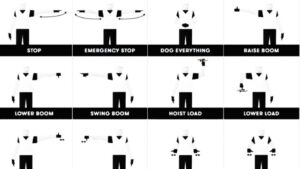
Luffing and slewing are often used together: luffing changes the reach, while slewing rotates the crane. Skilled operators coordinate these movements for precise, three-dimensional load placement, working around obstacles and adapting to changing site conditions.
Engineering and Safety Considerations
Maximum luffing force occurs when the jib is at its lowest angle with a full load. Engineers design luffing systems to handle these forces safely. Key safety checks include inspecting ropes, drums, tackle, and brakes, and ensuring structural integrity at pivot points. Regular maintenance of the luffing mechanism is essential to prevent failures and accidents.
Advantages of Luffing Cranes
Luffing cranes provide unmatched flexibility for urban and high-rise construction. They minimize required swing radius, reduce the risk of collisions with nearby structures or cranes, and allow precise vertical movement. This makes them ideal for dense construction sites where efficiency and safety are priorities.
Partner with IHURMO for Your Next Project
At IHURMO, we’re more than just a supplier—we’re your trusted partner in lifting success. From tower cranes and construction hoists to suspended platforms and scissor lifts, we provide the reliable equipment and genuine parts that keep your projects moving safely and efficiently. With large-scale production bases across China and a dedicated team ready to support you, we’re here to help you tackle any challenge—big or small. Contact us today and let’s get your next project off the ground!
Frequently Asked Questions
How does weather impact the luffing mechanism on a crane?
Weather mainly affects a crane’s luffing mechanism through wind, temperature, and ice/rain. High winds put extra load on the jib and can force operations to stop; when parked, the jib is often luffed steeply up to reduce wind exposure. Cold can thicken hydraulic fluid and stiffen components, so inspections should be more frequent. Rain and ice increase swing risk and reduce visibility, and ice buildup can change weight balance and interfere with smooth luffing.
In what scenarios is a luffing tower crane preferred?
Luffing tower cranes are preferred in urban environments, high-rise construction, or sites with limited horizontal clearance. Their ability to lift loads vertically and operate within a small radius makes them ideal for these settings.
Can mobile cranes be equipped with luffing jibs?
Yes, many mobile cranes can use luffing jib attachments, providing the benefits of luffing—such as reduced swing radius and increased precision—on temporary or varied job sites.