A suspended scaffold is a temporary work platform that hangs from an overhead structure using ropes, cables, or chains instead of being built from the ground up. These platforms can be raised or lowered to reach different heights, making them ideal for work on tall buildings where traditional scaffolding is impractical.
How Suspended Scaffolds Work
Suspended scaffolds are held in place by overhead support points. The platform hangs from roof structures or other stable overhead locations using wire ropes, cables, or chains.
Most systems use motorized or manual hoists to adjust the platform height. The platform stays level through balanced suspension points on each side. These scaffold systems are also modular, easy to transport between job sites, and easy to assemble and dismantle compared to ground-supported alternatives of comparable reach.
Key components include:
- Suspension ropes or cables
- Overhead support beams or anchors
- Work platform or deck
- Hoisting mechanisms (manual or powered)
- Guardrails and safety equipment
The most common type is the two-point suspended scaffold, which hangs from two ropes. There are also single-point systems that suspend from one rope, and multi-point scaffolds that use more than two suspension points for larger platforms.
Differences Between Suspended and Supported Scaffolds
Supported scaffolds are built from the ground up with vertical posts and horizontal braces. They rest on the ground or another stable surface.
Suspended scaffolds hang from above and can be lowered or raised as needed. This means you don’t need ground space or access below your work area.
Main differences:
| Feature | Suspended Scaffolds | Supported Scaffolds |
|---|---|---|
| Support method | Hangs from overhead | Built from ground up |
| Ground space needed | Minimal | Significant footprint |
| Best for | High-rise buildings | Low to mid-height work |
| Setup time | Faster for tall structures | Faster for lower heights |
Common Uses of Suspended Scaffolds
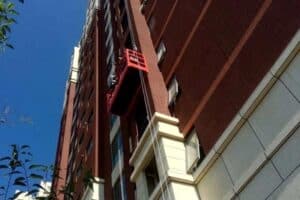
Window cleaning is one of the most frequent uses for suspended scaffolds. These platforms are common on skyscrapers and high-rise buildings where workers clean exterior glass surfaces.
Exterior painting projects also rely on suspended scaffolding. Painters can reach every part of a building’s facade without building supported scaffolding from ground level.
Building maintenance crews use these systems for repairs, caulking, and inspections of exterior walls. The platform can be positioned exactly where needed without disturbing ground-level activities.
Other uses include facade restoration, masonry repairs, and installing exterior building components. Any task needing access to different heights on a tall structure can benefit from suspended scaffolding.
Key Types of Suspended Scaffolds
Swing Stage (Two-Point Adjustable Suspension Scaffold)
The swing stage is the most widely used suspended scaffold, hanging from ropes or cables attached to stirrups at each end of the platform. It’s common in high-rise construction and building maintenance, allowing workers to raise or lower the platform while accessing multiple floors. These scaffolds typically support 630 to 800 pounds, with each suspension rope required to handle at least six times the maximum intended load.
Single-Point Adjustable Suspension Scaffold
A single-point adjustable scaffold suspends from one overhead point, making it ideal for narrow areas or building corners where a two-point system won’t fit. The most common example is a boatswain’s chair used for accessing tight spots on facades. The suspension rope must support at least six times the maximum load, with all components rated for at least four times the intended load.
Multi-Point Adjustable Suspension Scaffold
Multi-point scaffolds use more than two suspension points to support longer platforms needed for wide building facades. Each suspension point must meet the same strength requirements as two-point systems. Proper training is essential, as uneven hoisting can cause dangerous tipping.
Catenary Scaffold
Catenary scaffolding uses a platform supported by two horizontal, parallel ropes that form a slight curve under the platform’s weight. This setup allows horizontal movement along a building face, with the platform sliding to different positions. It requires secure anchorage points and specialized knowledge for safe installation.
Float (Ship) Scaffold
A float scaffold is suspended by ropes from overhead supports with no ties to the building below, allowing it to be raised, lowered, or swung away as needed. This provides access to hard-to-reach areas under bridges, overhangs, or ship hulls. Special attention to wind and platform stability is required for safe operation.
Interior Hung Scaffold
Interior hung scaffolds suspend from the ceiling or roof inside buildings to access high interior spaces like atriums or auditoriums. The platform hangs from beams or trusses using chains, ropes, or rigid supports, keeping the floor area clear. The building structure must support at least four times the scaffold’s maximum intended load.
Needle Beam Scaffold
Needle beam scaffolding uses horizontal beams that pass through windows or openings, with the platform hanging from the exterior ends. This system is used when roof access isn’t available or the roof can’t support conventional scaffolding. Each beam needs secure interior blocking, and careful engineering is required to ensure the floor structure can handle the loads.
Multi-Level Suspended Scaffold
Multi-level suspended scaffolding stacks two or more platforms vertically on the same suspension system, allowing workers to operate at different heights simultaneously. All suspension ropes, anchorages, and support devices must be rated for the combined loads of all platform levels.
Suspended Scaffold Components and Safety Essentials
Main Components and Suspension Systems
The scaffold platform is where workers stand. Platforms rest on stirrups (hangers) that connect to the suspension system. Bearers support the platform and distribute weight evenly.
The suspension system uses wire ropes or cables attached to overhead supports like roof hooks, parapet clamps, or outrigger beams. Wire rope must meet strength requirements and be free from damage. Suspension points connect to structural members that can handle the rated load.
Hoists, either manual or motorized, raise and lower the platform. Each hoist attaches to suspension ropes running from the overhead support down to the platform.
Outriggers extend from the building to create stable anchor points, often using counterweights. Rigging setups may include tiebacks for extra stability.
Stability, Load Capacity, and Rigging
Stability depends on proper rigging and balanced weight distribution. Suspension ropes must be vertical and evenly tensioned. Uneven loading can cause the platform to tilt or swing.
Key stability factors:
- Equal rope tension on all suspension points
- Centered loads on the platform
- Secure anchorage to structural members
- Proper counterweight placement on outriggers
Check all scaffold components for correct ratings and inspect rigging before each shift to ensure connections are tight and wire ropes show no damage.
Fall Protection and Personal Safety
Guardrails are the first line of defense against falls. The scaffold platform requires a complete guardrail system with a 42-inch toprail, a midrail positioned halfway down, and a toe board. Workers must also wear a personal fall arrest system at all times, including a full-body harness connected to an independent lifeline that’s separate from the scaffold’s suspension ropes.
Never rely on guardrails alone. Independent lifelines provide backup protection if the scaffold fails. Ensure your fall arrest system is properly fitted and inspected daily before use.
Partner with a Trusted Leader in Suspended Scaffold Solutions
At IHURMO, we specialize in supplying world-class suspended platforms, tower cranes, construction hoists, and more — engineered for safety, performance, and reliability on projects of any scale. Whether you’re equipping a high-rise or managing a large construction site, our expert team is ready to help you find the right solution. Contact us today to discover how IHURMO can elevate your next project.
Frequently Asked Questions
Can suspended scaffolds be used in bad weather?
No. Suspended scaffolds must not be used during high winds (typically over 25 mph), thunderstorms, ice, or heavy rain. Wind can cause dangerous swinging, while wet conditions make platforms slippery and affect equipment operation. Work should stop immediately if weather conditions deteriorate.
How many workers can stand on a suspended scaffold at once?
This depends on the platform’s rated load capacity, not just its size. A typical swing stage rated for 800 pounds might safely hold two workers with tools and materials, but you must calculate the combined weight of all personnel, equipment, and supplies. Overloading is a leading cause of scaffold failures.
Can you move a suspended scaffold horizontally along a building without lowering it?
Most standard swing stages cannot be moved horizontally while suspended—they must be lowered, repositioned at roof level, and raised again. Only specialized systems like catenary scaffolds or track-mounted platforms allow horizontal movement while elevated. Attempting to swing or pull a standard platform sideways creates extreme danger.
How close can a suspended scaffold operate near power lines?
OSHA requires at least 10 feet clearance from power lines carrying up to 50 kV, with greater distances for higher voltages. If closer work is unavoidable, the utility company must de-energize the lines or provide insulating barriers. Metal scaffolds, wire ropes, and even wet conditions can conduct electricity, making power line contact potentially fatal.