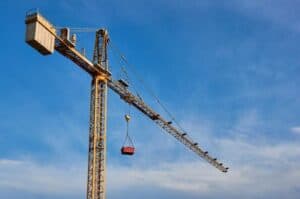
Tower cranes are essential for lifting heavy loads and reaching impressive heights on construction sites. Their stability is a result of precise engineering, careful assembly, and strict safety procedures. Here’s how these machines remain upright despite extreme forces.
Core Principles of Tower Crane Stability
Concrete Foundation and Ground Support
Before a tower crane is installed, workers pour a large concrete pad as its foundation. This pad typically measures 30 feet by 30 feet by 4 feet and weighs about 400,000 pounds. The concrete must cure for several weeks to achieve the necessary strength to support the crane’s weight and loads.
The pad spreads the crane’s weight over a wide area, preventing the ground from shifting under heavy loads. Engineers assess the soil’s bearing capacity to ensure the foundation withstands the pressure.
The pad must be level and precisely positioned. Even minor misalignment can create dangerous stress points on the mast. Surveying tools help achieve the required accuracy.
Anchor Bolts and Bolted Connections
Large anchor bolts are set deep into the concrete pad, connecting the crane’s base securely. These bolts are installed while the concrete is wet so they become part of the foundation. The bolted connection ensures a rigid attachment point for the crane.
Tower cranes depend entirely on these anchor bolts for stability. The bolts must withstand forces from wind, the crane’s own weight, and the loads being lifted. Regular inspections check for any loosening or wear.
Center of Gravity and Crane Balance
The crane’s center of gravity must stay within the base’s footprint to prevent tipping. Engineers design the crane so that, even at maximum lifting capacity, the center of gravity remains stable. The tower mast provides vertical support, while counterweights balance the lifted load on the opposite side of the boom.
Counterweights shift the center of gravity back toward the center, working like a seesaw. These typically weigh 20 tons or more. Operators follow strict load charts specifying safe weights at various boom lengths and angles to maintain balance and prevent the crane from tipping.
Counterweights and Crane Balance
Counterweights and Crane Balance
Counterweights are heavy concrete or metal blocks attached to the back of the crane’s horizontal jib. They provide the force needed to balance the load on the opposite end. Without counterweights, even small loads could cause the crane to topple.
Most counterweights are fixed in position and sized to balance the maximum load at the jib’s furthest reach. When no load is lifted, the crane may lean slightly backward due to the counterweights. As the load increases, the crane shifts to a more centered position, keeping the tower vertical.
The Tower Mast and Triangulated Structure
The tower mast is the crane’s vertical backbone, anchored on the concrete pad. Its triangulated steel structure ensures strength and stability, distributing loads evenly and preventing bending. Each mast section is connected with strong bolts to withstand stress.
This triangulated design provides multiple load paths so that if one area is stressed, others help support the weight. This makes the crane strong yet relatively lightweight.
Importance of the Horizontal Jib
The horizontal jib extends from the top of the tower and holds the lifting cable and counterweights. The jib’s length determines how far the crane can reach to lift materials.
Engineers calculate the required weight distribution for each jib length and maximum load. A longer jib requires more counterweight for balance. The trolley on the jib moves loads closer or farther from the tower, affecting how much weight the crane can safely lift at each point.
Crane Operation and Safety Systems
Crane Operation Procedures
- Equipment Checks: Before each shift, thorough inspections of crane controls, brakes, cables, and safety devices are mandatory.
- Weather Monitoring: Crane operators must assess weather conditions, particularly wind speed, prior to any lifting activities.
- Electronic Systems: Modern cranes utilize electronic monitoring systems that provide real-time data on load and position, alerting operators to any unsafe conditions.
- Load Charts: These charts must be adhered to, indicating the maximum safe weights for various boom positions.
Load Limits and Overloading Risks
Each crane has a maximum lifting capacity that decreases as the load moves farther from the tower. Lifting closer to the tower allows for heavier loads, while extending the boom reduces capacity.
Key considerations include:
- Load distance from tower center
- Boom length and angle
- Counterweight configuration
- Wind conditions
Overloading is extremely dangerous and can cause tipping or structural failure. Electronic monitoring warns operators before limits are exceeded, but all load weights should be verified before lifting.
Common Causes of Crane Collapses
Crane collapses are often caused by high winds, improper assembly, missing bolts, or foundation problems. Poor maintenance and human error, such as ignoring safety warnings or rushing assembly, also increase accident risks.
Comparing Tower Cranes and Mobile Cranes
Mobile Cranes vs Tower Cranes
Mobile cranes offer flexibility and can be driven around a site or between locations. They are mounted on wheels or tracks (crawlers cranes), making them suitable for projects needing lifts in multiple spots.
Tower cranes are assembled in one place and remain there for the duration of the project. Their height and lifting capacity make them ideal for tall structures.
Stability systems differ: tower cranes use a large concrete pad and anchor bolts, while mobile cranes use outriggers instead of a fixed foundation.
The Importance of Outriggers and Bearing Capacity
Outriggers on mobile cranes extend to create a wider, stable platform. Properly positioned outriggers distribute the crane’s weight, preventing tipping.
Soil bearing capacity is crucial. Operators may use pads under outriggers to spread the load and prevent them from sinking into soft ground during lifts.
Partner with Ihurmo
Ihurmo supplies reliable tower cranes, construction hoists, suspended and mast platforms, scissor lifts, and genuine parts built to strict safety and performance standards. With large-scale production bases, experienced service teams, and fast parts support, we help keep projects on schedule and on budget. Ready to improve your site’s lifting capability — contact us
Frequently Asked Questions
What wind speeds force a tower crane to stop operating?
Most tower cranes must cease operations when sustained wind speeds reach 20-25 mph, though limits vary by crane model and configuration. During non-working hours, cranes are placed in “free slew” mode, allowing the jib to rotate freely with the wind rather than resisting it, which prevents structural damage during storms.
What mechanisms do tower cranes use to withstand strong winds?
Tower cranes are engineered to flex and sway with high winds, dispersing wind forces across the structure. Counterweights and the concrete foundation help maintain balance and prevent the crane from tipping.
What is the typical lifespan of a tower crane?
With proper maintenance, tower cranes can operate for 15-25 years or longer. Critical components like cables, brakes, and hydraulic systems require regular replacement. The steel structural elements (mast, jib) often last the longest, while mechanical and electrical systems need more frequent servicing and upgrades.