
Quik Glance
- Tower crane: Vertical mast + rotating jib + mobile or climbing capability
- Derrick crane: Fixed mast + slewing platform + permanent foundation
What is Tower Crane?
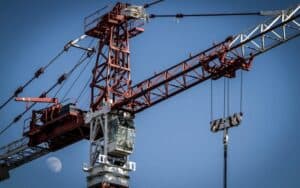
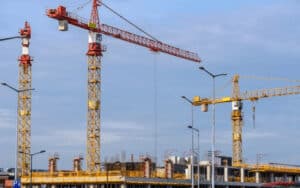
A tower crane features a vertical mast with a horizontal jib that rotates 360 degrees around the tower which used to lifting and moving heavy loads.
The mast can be fixed to the ground or attached to a building structure.
Self-climbing tower cranes can add sections through their center as buildings grow taller.
Main Elements of Tower Crane
The mast forms the vertical tower that gives these cranes their name. It supports all other crane components and determines how high the crane can reach.
The jib is the horizontal arm that extends from the top of the mast. You’ll see it working as the main boom that carries loads across the construction site.
The jib contains a trolley system that moves along its length, allowing you to position materials precisely where needed.
Counterweights sit on the opposite side of the jib to balance the crane. These heavy concrete or steel blocks prevent the crane from tipping when lifting maximum loads.
Main Types of Tower Cranes
Hammerhead tower cranes feature a horizontal jib that looks like an upside-down T. The jib stays at a fixed angle and rotates around the mast.
Flat top tower cranes eliminate the traditional crane top for easier assembly and disassembly.
Luffing tower cranes have jibs that can raise and lower at different angles. This lets you work in tight spaces or near other buildings.
What is a Derrick Crane?
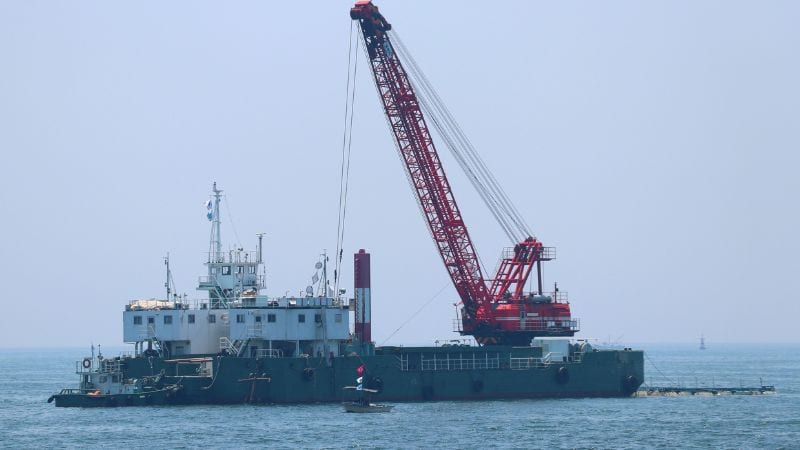
Derrick crane has a different setup.
The mast connects to a slewing platform where the jib, mechanism, and electrical parts sit.
This crane stays in one fixed location and cannot move around the site. The derrick’s base requires a stationary foundation, which limits where you can place it.
Mast and A Boom Design
The mast stays fixed in position and provides the anchor point for all other components.
The boom connects to the base of the mast with a hinge. This allows the boom to move up and down as needed.
Jib and Slewing Platform
Your derrick crane’s jib extends from the boom tip to help guide loads. The jib works with the main boom to control load positioning during lifts.
Some derrick designs include a slewing ring or trunnion that lets you rotate the boom horizontally.
The slewing platform sits at the base where the mast meets the ground or building structure.
Hoisting and Rope Systems
When you operate the hoist, it winds rope onto the drum to raise loads or releases rope to lower them.
More rope parts mean you can lift heavier weights but at slower speeds.
The hoisting equipment includes drums, motors, brakes, and controls that work together.
When to Choose Derrick Crane or Tower Crane

In a word, tower cranes work best for large construction projects where you need maximum height and lifting capacity.
Derrick cranes are better suited for confined spaces, rooftop work, and operations where you need a compact, stationary lifting solution.
Derrick cranes are exceptionally suited for rooftop and urban construction due to their compact size and ability to sit directly on structures, offering a safer and cheaper alternative to tall, ground-based cranes. They are also indispensable for industrial, dock, and cargo ship operations, providing a reliable, space-efficient solution for permanently installed, heavy-duty loading and unloading of cargo.
Tower cranes rarely appear in these settings.
Load Capacity Differences
Tower cranes typically offer variable lifting capacities depending on their configuration and size. Most tower cranes can lift between 4 to 20 tons, though larger models handle even heavier loads.
Derrick cranes often provide higher load capacity in a more concentrated area. Many derrick models feature 10-ton capacity or greater.
Summary the Differences of These Two Types of Crane
Frequently Asked Questions
What are the main differences between a derrick crane and a tower crane?
The biggest difference between these two cranes is how they’re built and where they can move.
Can you explain the typical use cases for derrick cranes compared to tower cranes?
Derrick cranes used in situations where space is limited or when a crane needs to work from a rooftop.
Tower cranes are your go-to choice for high-rise construction projects.
How does the lifting capacity of a tower crane compare to that of a derrick crane?
Tower cranes typically handle a wider range of lifting capacities depending on their size and configuration.