Main Components of a Scissor Lift
Platform and Work Table Features
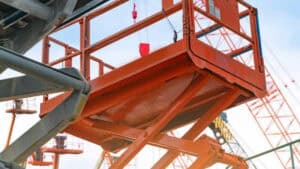
The platform (or lift table) is where you stand or place objects during scissor lift work. It’s the heart of the scissor lift where all the action happens. For safety, the platform usually has guardrails to protect you from falling. It’s designed to hold a certain amount of weight, so always check the weight limit before loading it. Some platforms also have electrical outlets or air connections for tools, making your scissor lift work up there easier. Most platforms include an emergency stop button for immediate shutdown in case of dangerous situations.
Base and Support Structure
The base forms the foundation of the scissor lift. Often fitted with wheels, it allows for easy movement across a job site. The base houses the controls, motor, and sometimes the power source, ensuring the lift remains stable and secure when the platform is raised.
Scissor Legs and Pantograph System
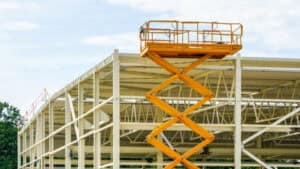
The scissor legs create the distinctive X-shaped pantograph system that gives the scissor lift its name. These connected scissor blades stretch between the platform and base, opening and closing to raise and lower the scissor lift. Rollers at the bottom of the scissor legs help guide smooth movement during operation. The pantograph design keeps the platform stable and level, which is crucial for safe scissor lift work at any height.
Cylinders and Their Function
Cylinders are the muscle of scissor lifts. When activated, the cylinder pushes the scissor legs apart, causing the lift to rise. The cylinder fills with compressed air or hydraulic fluid, and the pressure is what powers the lifting mechanism. Some types of scissor lifts use pneumatic cylinders (powered by compressed air), while others use hydraulic cylinders filled with hydraulic fluid. Most scissor lifts have four cylinders for balanced lifting capacity. The cylinders are also involved in lowering scissor lifts; this happens when the pressure is released, and the legs constrict back together. It’s important to maintain these cylinders regularly for safe and smooth operation. A valve controls the flow of fluid or air to the cylinders attached to the scissor mechanism, which are key for both the raise and lower function of the platform.
How Does a Scissor Lift Work?
Step-By-Step Lift Operation
When you operate a scissor lift, the process starts with powering the device. This could be through an electric, hydraulic, pneumatic, or diesel power source. If using a hydraulic scissor lift, you engage a valve to pump hydraulic fluid into the lift’s cylinders. These cylinders are connected to the scissor lift mechanism – a series of crossed metal supports known as scissor legs or sets of connected scissor blades. As the hydraulic fluid enters the cylinder, it creates pressure that extends the scissor lift mechanism, pushing the platform upwards so you can reach high-up spots with stability. Pneumatic scissor lifts use air pressure instead, filling the cylinder with compressed air to achieve the same effect. The roller at the base of the scissor legs helps guide the movement as the lift raises and lowers.
The Role of Hydraulic Fluid and Compressed Air
Hydraulic fluid or compressed air is crucial for the operation of scissor lifts. In hydraulic models, the cylinders are filled with hydraulic fluid, and the pressure lifts the platform. Pneumatic scissor lifts use compressed air to achieve the same result, with a pneumatic pump providing the necessary pressure. Both methods rely on controlled pressure inside the cylinder to raise and lower the scissor lift safely and efficiently. Pneumatic lifts are especially useful in environments where you want to avoid fluid leaks or fumes because they don’t emit harmful gases.
Controlled Descent and Stability
Lowering the scissor lift is controlled by a down valve that allows hydraulic fluid or compressed air to return to the reservoir. A flow control valve lets you adjust the speed of descent, ensuring the platform comes down steadily. The scissor lift mechanism and the stability of the base work together to keep the platform level and secure while raising or lowering the scissor lift.
Types and Power Sources of Scissor Lifts
Hydraulic Scissor Lifts
A hydraulic scissor lift uses an electric motor or engine to pump hydraulic fluid into the cylinders. This pressure causes the scissor legs to extend, raising the platform. Hydraulic scissor lifts are valued for their simplicity, reliability, and ability to handle both indoor and outdoor jobs. They’re easy to operate and maintain, making them a popular choice for construction, maintenance, and warehousing tasks.
Electric Scissor Lifts
Electric scissor lifts are powered by batteries, making them quiet and emission-free—ideal for indoor scissor lift work or spaces where fumes are a concern. Their compact size allows for easy maneuvering in tight spots. A fully charged electric scissor lift can typically handle a full day’s work, making them efficient and eco-friendly for building maintenance or installation projects and building repairs.
Pneumatic Scissor Lifts
Pneumatic scissor lifts use compressed air instead of hydraulic fluid. With no need for electricity or oil, they are well-suited for clean environments such as food processing or pharmaceuticals where leaks and fumes must be avoided. This type of scissor lift requires minimal maintenance and is a good fit where an air compressor is available to supply the pneumatic power source.
Diesel and Rough Terrain Models
Diesel scissor lifts and rough terrain models are built for outdoor use. Their diesel engines provide robust power source capability, and large tires help navigate uneven ground. Many feature four-wheel drive and outriggers for extra stability. These types of scissor lifts have higher load capacities, making them perfect for construction sites or projects that require lifting heavy materials outdoors, even in challenging terrain.
Partner with IHURMO for Your Crane Solutions
Ihurmo specializes in tower cranes, construction hoists, suspended platforms, and all essential components. With large-scale production capabilities and deep industry expertise, we deliver reliable equipment and professional support for your construction projects. Contact us today to find the perfect crane solution for your needs.
Frequently Asked Questions
How high can scissor lifts reach?
Scissor lifts typically range from 10 feet to 50 feet in working height, with most common models reaching between 20-40 feet. Compact models designed for indoor use usually max out around 20-30 feet, while larger outdoor models can reach 40-50 feet. The maximum height you need will determine which model is appropriate for your project requirements.
Can scissor lifts be used on slopes or uneven surfaces?
Most scissor lifts are designed for level, firm surfaces only. Operating on slopes exceeding manufacturer specifications (typically 3-5 degrees maximum) creates serious tip-over risks. Rough terrain models have enhanced stability features and can handle moderate inclines, but even these have limits. Always check the ground conditions and manufacturer guidelines before positioning a scissor lift on any surface that isn’t completely level.
In what scenarios are scissor lifts typically used?
Scissor lifts are very versatile and you will find them in many scenarios. They are common on construction sites for installing overhead structures or doing maintenance work. Inside buildings, they’re perfect for tasks like changing lights or other jobs at height. Scissor lifts are also used for building repairs and in warehouses for stock picking. Essentially, whenever you need a stable platform that goes straight up and down, a scissor lift is a good choice for safe and efficient scissor lift work.