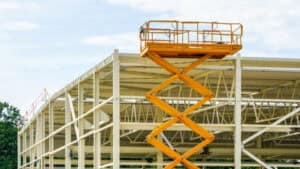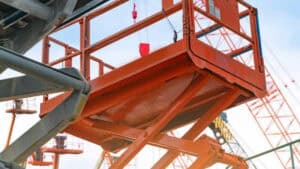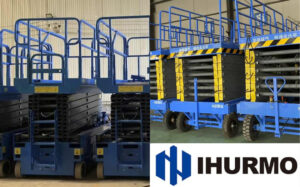
Cherry pickers and Scissor Lift are both popular options, but they serve different purposes and excel in different situations.
The main difference is that scissor lifts move straight up and down with a large stable platform, while cherry pickers have an extendable arm that reaches both vertically and horizontally around obstacles.
You’ll learn how to pick the right equipment based on your project needs, understand safety requirements, and get practical tips on costs and maintenance.
Core Differences between Cherry Picker and Scissor Lift
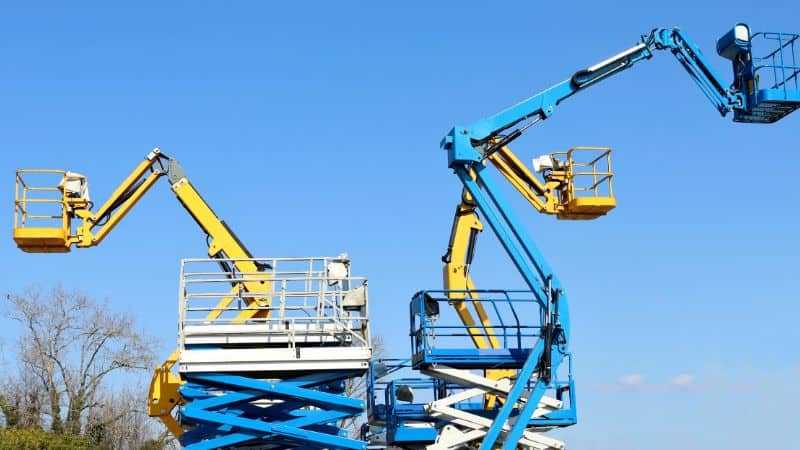
The main differences come down to how each machine moves, how much weight they can hold, and where they can operate safely.
Movement and Reach Capabilities
| Feature | Scissor Lift | Cherry Picker (Boom Lift) |
| Vertical Reach | Generally 6 m to 18 m. | Can reach much higher, often 15 m to 50+ m. |
| Horizontal Reach | Limited to the size of the extension deck (usually 0.9 m to 1.5 m). | Significant; can extend 10 m to 25 m away from the base. |
| “Up and Over” Ability | None. Requires a clear vertical path to the work area. | Excellent. Articulated models can bend over obstacles like walls or machinery. |
Scissor lifts move straight up and down like an elevator. They give you solid vertical reach. You get very little horizontal movement with these work platforms.
Cherry pickers (also called boom lifts) work differently. They use an articulating boom or telescopic arm that lets you move both up and out. This means you can reach over obstacles, around corners, and into tight spots.
Platform Size and Load Capacity
Unlike scissor lifts, cherry pickers utilize smaller, more concentrated platforms. The focus is on reaching difficult points rather than providing a large floor area for multiple workers and heavy materials.
| Feature | Articulated Boom Lifts (Cherry Picker) | Telescopic Boom Lifts (Stick Boom) |
| Typical Power Source | Diesel / Electric (Lithium Battery) | Diesel / High-Capacity Battery |
| Load Capacity (kg) | 230 kg−300 kg | 250 kg−450 kg |
| Load Capacity (lb) | 507 lb−661 lb | 551 lb−992 lb |
| Platform Length | 1.4 m−1.8 m | 1.8 m−2.4 m |
| Platform Width | 0.7 m−0.8 m | 0.8 m−0.9 m |
| Tire Type | Rough Terrain Foam-Filled / Solid | Rough Terrain Lugged / Foam-Filled |
| Best Used For | Tight spaces, “Up-and-Over” obstacles | Maximum outreach, height, and speed |
Scissor lifts typically have larger platforms. This gives you more room to move around and store tools.
| Feature | Electric Scissor Lifts (Indoor/Flat Surface) | Rough Terrain Scissor Lifts (Outdoor/Heavy Duty) |
| Typical Power Source | Battery / Electric Motor | Diesel or Large Battery Packs |
| Load Capacity (kg) | 150 kg−450 kg | 450 kg−1,000 kg+ |
| Load Capacity (lb) | 330 lb−992 lb | 992 lb−2,204 lb+ |
| Platform Length | 1.2 m−2.5 m | 2.5 m−5.0 m+ |
| Platform Width | 0.7 m−1.2 m | 1.5 m−2.3 m |
| Extension Deck | Single rollout (0.9 m−1.2 m) | Often Dual (at both ends) |
| Tire Type | Non-marking solid rubber | Foam-filled or Lugged (Rough Terrain) |
| Best Used For | Warehouses, retail, finished floors | Construction sites, mud, gravel, slopes |
Terrain and Access Flexibility
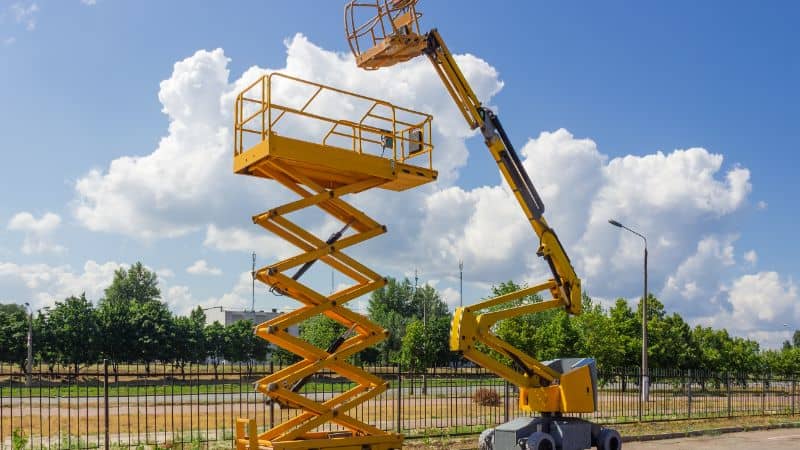
Scissor lifts work best on smooth, level ground indoors. Cherry pickers handle rough terrain better outdoors and navigate uneven surfaces more easily. The right platform depends on your work environment, the tasks you need to complete, and the space you have available.
Project Requirements and Job Site
Think about what you need to accomplish when working at height. Scissor lifts work best when you need vertical access directly above your position. They handle heavier loads and fit multiple workers with tools on their platform.
Cherry pickers shine when you need outreach capability. If you’re working around obstacles like building overhangs or trees, their boom arms extend horizontally and vertically. They reach spots that scissor lifts simply can’t access.
Check your ground conditions too. Uneven terrain requires a rough-terrain cherry picker. Smooth, level surfaces work fine for most scissor lifts.
Indoor vs Outdoor Tasks
An electric scissor lift or electric cherry picker suits indoor work. They produce zero emissions and operate quietly in warehouses or buildings.
Outdoor tasks often need diesel-powered equipment. These machines handle weather and rough ground better than electric models.
Maneuverability and Space Constraints
Tight spaces favor scissor lifts. Their compact base and vertical lift design fits through standard doorways and narrow aisles.
Cherry pickers need more room to position their outriggers and swing their boom arms. They excel in open areas where you need to reach multiple work zones without repositioning the base.
Safety, Training, and Operational Considerations
Stability and Outriggers
Cherry pickers often use outriggers to stabilize the machine when the boom extends. You need to deploy these supports on firm, level ground before raising the platform. Scissor lifts rely on a wider base for stability and don’t typically use outriggers.
Always check weight limits and avoid overloading either lift type. Wind conditions matter more for cherry pickers because of their extended reach. Ground conditions affect both machines, but cherry pickers need extra attention to prevent tipping when the boom is fully extended.
Harnesses and Safety Equipment
You must wear a harness when operating a cherry picker or boom-style aerial platform. The harness connects to an anchor point on the platform to prevent falls if the equipment moves unexpectedly.
Scissor lifts require harnesses in most situations too, though some indoor models on smooth surfaces may have different rules. Always use guardrails and check that all safety gates close properly before lifting.
Ease of Use and Maintenance
Scissor lifts require less training to operate safely. The controls are straightforward—up, down, and drive. Cherry pickers need more skill because you’re managing boom extension, rotation, and articulation.
Maintenance is simpler on scissor lifts. You’ll check hydraulic fluid, inspect the scissor arms, and maintain batteries or fuel systems. Cherry pickers add complexity with more hydraulic lines, joints, and moving parts that need regular inspection.
Maximizing Uptime and Efficiency
Plan your maintenance schedule around your projects. Both machines need pre-use inspections—check tires, hydraulics, controls, and safety features.
Keep your equipment clean and store it properly. Hydraulic systems last longer when protected from debris and weather. Track service intervals and address small issues before they cause downtime.
Contact IHURMO for Expert Assistance
If you are ready to start your project or need a professional recommendation tailored to your specific site conditions, Ihurmo provides comprehensive support. Our team is equipped to handle international logistics and regional requirements.
Frequently Asked Questions
In terms of cost, how do cherry pickers and scissor lifts compare for various project scales?
Scissor lifts cost less to buy and maintain. They use less fuel and need simpler repairs, making them good for regular indoor tasks.
Cherry pickers cost more upfront and have higher operating expenses. Their complex hydraulic systems need specialized maintenance. You pay extra for their extended reach and positioning abilities.
How long does the battery typically last on an electric scissor lift, and how long is the recharge time?
For most electric scissor lifts, a full charge provides approximately 6 to 8 hours of continuous “duty cycle” operation, which usually covers a full 8-hour work shift. Recharging a fully depleted battery typically takes 8 to 10 hours. We recommend charging the units overnight to ensure they are ready for the next work day.
At what wind speed must I stop operating a cherry picker or scissor lift outdoors?
Safety is paramount when working at height. For most scissor lifts and boom lifts, the maximum safe wind speed is typically 12.5 m/s (approx. 28 mph). However, always check the specific “Beaufort Scale” rating on the machine’s ID plate, as some high-reach models may have lower limits to prevent tipping.
Do I need a specific license or certification to operate these machines?
Yes. Operating a Mobile Elevated Work Platform (MEWP) requires specialized training. In many regions, this is known as an IPAF (International Powered Access Federation) PAL Card or a similar local certification (such as OSHA-compliant training in the US). IHURMO strongly advises that only “Competent Persons” with documented training operate this machinery to ensure job site safety.
Can scissor lifts and cherry pickers operate in freezing temperatures?
Yes, but performance is affected. In cold weather, hydraulic fluid becomes more viscous (thicker), which can slow down lift speeds. Additionally, battery capacity can drop by 20% to 50% in sub-zero temperatures.