From ancient temples to today’s skyscrapers, cranes have been essential for lifting and building. The story of the crane’s invention shows how simple ideas grew into powerful machines that shape our construction sites and cities.
How Was the First Crane Built in Ancient Greece?
The ancient Greeks invented the first crane between 700-515 B.C. by adapting shipbuilding techniques and rope-based lifting systems for construction. They built simple wooden frameworks that used pulleys and levers to lift heavy stone blocks for temples.
Purpose and Motivations for Building the First Crane
The Greeks needed a more efficient way to construct their grand stone temples, as moving heavy blocks by hand was slow and risky. Temples at Isthmia and Corinth faced difficulties lifting these massive blocks high, leading to the development of cranes for larger structures like the Parthenon and the Temple of Poseidon. Corinthian shipbuilders adapted their nautical frameworks and rope systems to create cranes, which became essential for lifting and positioning stone blocks on construction sites.
Materials and Construction Techniques Used
The first Greek cranes featured strong wooden frameworks, with ropes made from natural fibers serving as lifting lines connecting to stone blocks. Grooves were cut into the bottoms of blocks to secure the ropes for accurate lifting. By around 600 B.C., the introduction of winches allowed workers to control the lifting process and handle heavier loads safely.
Mechanical Principles of the First Crane
These cranes operated by redirecting force through a framework above the load. Pulling on ropes through the frame and pulley lifted stone blocks, providing a mechanical advantage. The design enabled controlled vertical motion for precise placement, while levers paired with ropes facilitated horizontal movement, allowing builders to lift and position heavy objects accurately on site.
Roman and Medieval Evolutions of Crane Technology
Romans advanced what the Greeks started, creating construction cranes with greater lifting power. The Trispastos, a basic Roman crane, used a winch and three pulleys—one person could lift 150 kilograms. More complex designs like the Pentaspastos and Polyspastos used additional pulleys and masts, allowing four workers to lift 3,000 kilograms.
For massive stones, Romans built lifting towers with multiple winches and pulleys, sometimes powered by animals. Their treadwheel crane, operated by workers walking inside a giant wooden wheel, could lift up to 6 tons—far beyond earlier capabilities.
After the fall of Rome, crane technology declined in Europe but returned around 1225 in France. Medieval builders revived the treadwheel crane for cathedrals and castles. Notably, the Gdansk crane in Poland, built in the 15th century, could lift goods 27 meters high using human-powered treadwheels.
Ancient Cranes Vs Earlier Lifting Devices
Before cranes, people used basic tools like the shaduf, which appeared around 1250 BCE in ancient Egypt. The shaduf, a lever with a counterweight, was used for irrigation but could only lift light loads vertically.
| Feature | Earlier Lifting Devices | Ancient Cranes |
|---|---|---|
| Movement | Vertical only | Vertical, horizontal, and rotating |
| Mechanism | Simple lever and counterweight | Pulleys, winches, and levers combined |
| Load Capacity | Limited to light loads | Could lift several tons |
| Purpose | Mostly water drawing | Construction and heavy lifting |
The history of cranes changed dramatically when the ancient Greeks introduced pulley systems and levers for temple construction in the 6th century BCE. These early cranes could lift and precisely place stone blocks weighing several tons, a major leap from earlier irrigation devices. Roman treadwheel cranes further increased lifting power, enabling medieval builders to achieve even greater feats.
How the First Crane Impacted Construction and Inspired Future Machines
The first cranes revolutionized construction by making it possible to lift heavy objects with fewer workers and less risk. Ancient Greeks’ crane designs enabled faster, safer temple building and allowed for much larger structures.
- Smaller crews could handle bigger jobs
- Buildings reached new heights
- Heavier stone blocks could be used
- Worker safety improved
The Romans enhanced crane technology with treadwheels and multi-pulley systems, setting the stage for all future cranes. The same principles—using frameworks, pulleys, and winches—are still found in modern cranes on today’s construction sites.
Modern Cranes
Modern cranes are far more powerful and versatile than their wooden ancestors. Today’s cranes use electric motors or internal combustion engines and advanced hydraulic systems for precise control and greater lifting power.
The shift to modern cranes began in the 1800s. In 1845, William Armstrong invented the first hydraulic crane, making it possible to lift much heavier objects with improved control.
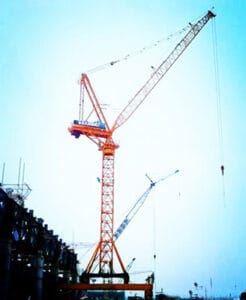
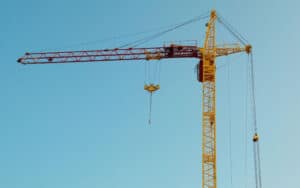
- Tower cranes – Used for building skyscrapers and large structures
- Mobile cranes – Truck-mounted for easy movement between construction sites
- All-terrain cranes – Designed for rough ground and uneven surfaces
- Telescopic cranes – Feature extending booms for variable heights
- Floating cranes – Used on water for building oil rigs and heavy marine work
Modern cranes use steel construction, making them stronger and more reliable on any construction site. Computer controls and advanced safety systems help operators work efficiently and safely, and some cranes can now lift hundreds of tons, far surpassing the capabilities of early cranes.
Elevate Your Next Project with IHURMO
Just as ancient builders revolutionized construction with the first cranes, Ihurmo continues that legacy today as a premier supplier of cutting-edge tower cranes, construction hoists, and advanced lifting platforms. With our top-tier manufacturing capabilities and strong focus on safety and innovation, we deliver reliable heavy-lifting solutions for your job site. For world-class machinery to support your next major project, contact us today>>>
Frequently Asked Questions
How did Roman cranes differ from Greek designs?
Roman cranes incorporated more complex systems, including multiple pulleys and winches, allowing them to lift heavier loads with fewer workers. Their treadwheel cranes could lift up to 6 tons, significantly surpassing Greek capabilities.
How do modern cranes enhance safety and efficiency on job sites?
Modern cranes utilize advanced hydraulic systems, computer controls, and safety features that improve operational efficiency, making it possible to lift heavy loads safely and accurately while minimizing the risk of accidents.